
Buy Premium Glycolic Acid Serum: 2026 Guide
Table of Contents
- What Glycolic Acid Serum Actually Does to Your Skin
- Glycolic Acid Serum Benefits Worth Knowing Before You Buy
- How to Use Glycolic Acid Serum for Best Results
- Skincare Tools to Improve Product Absorption
- EVERGRENE Glycolic Acid Serum: Full Review
- Who Should Buy a Premium Glycolic Acid Serum
- Conclusion
Last Updated: August 22, 2026
Glycolic acid serum is one of the most well-researched chemical exfoliants available for at-home use, yet most people either use it incorrectly or buy the wrong formulation for their skin type. This guide covers everything you need to know before purchasing premium glycolic acid serum: how it works, what benefits are realistic, which ingredients to pair it with, and why formulation quality matters more than marketing claims.

What Glycolic Acid Serum Actually Does to Your Skin
Glycolic acid serum is a liquid exfoliant that uses alpha hydroxy acid to dissolve the bonds holding dead skin cells to the surface, accelerating cell turnover and revealing fresher skin underneath. Unlike physical scrubs, glycolic acid works at a chemical level, making it more precise and effective for dullness, hyperpigmentation, and uneven texture.
Glycolic acid performs better than many other AHAs because it has the smallest molecule in the alpha hydroxy acid family, allowing it to penetrate skin more efficiently at lower concentrations. However, pH balance is critical: a serum must be formulated at the right pH to be active without causing unnecessary irritation.
How It Works as a Chemical Exfoliant
Chemical exfoliation with glycolic acid works by loosening the bonds between dead skin cells at the stratum corneum, the outermost layer of skin. Once those bonds break down, dead cells shed more evenly, reducing dullness and rough texture. Over time, consistent use supports collagen production in deeper skin layers, improving firmness and reducing fine lines.
The practical result is brighter, smoother skin within a few weeks of regular use. For dark spots and post-acne marks, accelerated cell turnover gradually brings new, evenly pigmented skin to the surface, fading hyperpigmentation over several weeks.
Glycolic Acid Serum Benefits Worth Knowing Before You Buy
The benefits of a well-formulated glycolic acid serum are specific and measurable. This is not a product that delivers vague "glow" claims. The changes it produces are structural, which is why dermatologists consistently recommend it as a frontline treatment for several common skin concerns.
Hyperpigmentation, Texture, and Anti-Aging
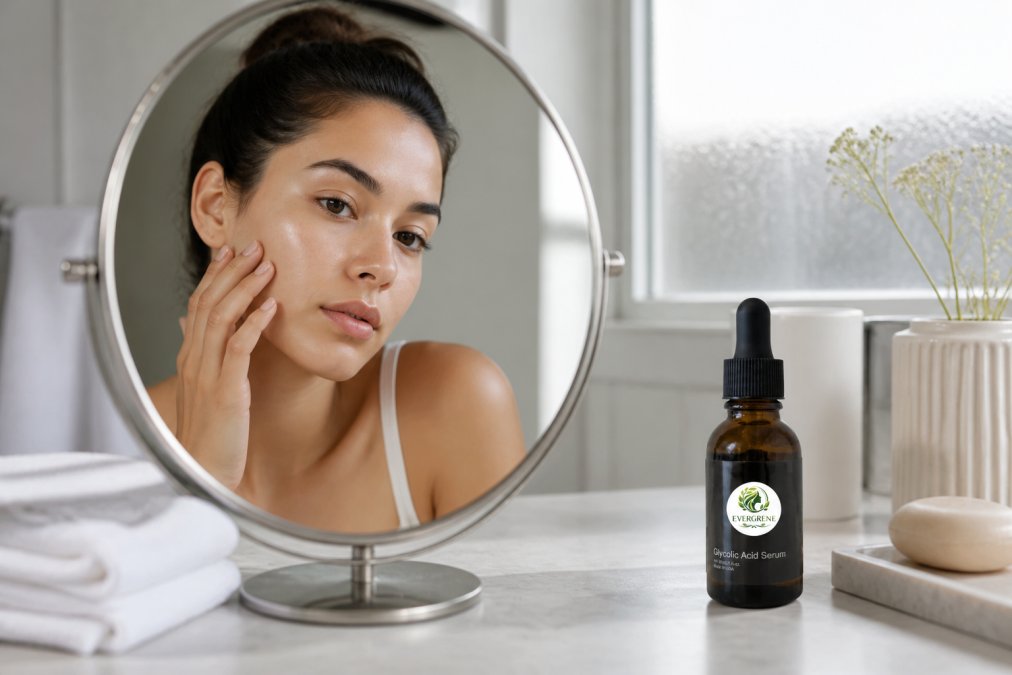
Regular use speeds up the natural shedding of pigmented skin cells, gradually fading post-inflammatory marks from acne and sun exposure. The removal of dead skin cells allows the skin's surface to reflect light more evenly, creating the "radiance" effect people notice after a few weeks of consistent use. Stimulation of collagen production over time reduces the depth of fine lines and wrinkles.
According to the American Academy of Dermatology's guidance on chemical exfoliants, AHAs like glycolic acid are among the most effective over-the-counter ingredients for improving skin texture and tone when used consistently and correctly. A glycolic acid serum used twice a week for three months will outperform one used sporadically for a year.
Skin Barrier Considerations and Photosensitivity
Glycolic acid increases photosensitivity. Because it removes the outermost layer of dead skin cells, the newer skin underneath is more vulnerable to UV damage. This is not a reason to avoid it, but it is a reason to take SPF seriously every morning after use.
Over-exfoliation is one of the most common mistakes with glycolic acid serums. Using too high a concentration too frequently, especially without adequate moisturization afterward, can compromise the skin barrier and lead to redness, sensitivity, and breakouts. The solution is straightforward: start slow, moisturize well, and always apply SPF during the day.
How to Use Glycolic Acid Serum for Best Results
The correct application sequence is: cleanse, apply serum to dry skin, wait a few minutes, then follow with moisturizer. At night, skip SPF and substitute a richer moisturizer. In the morning, always finish with sunscreen.
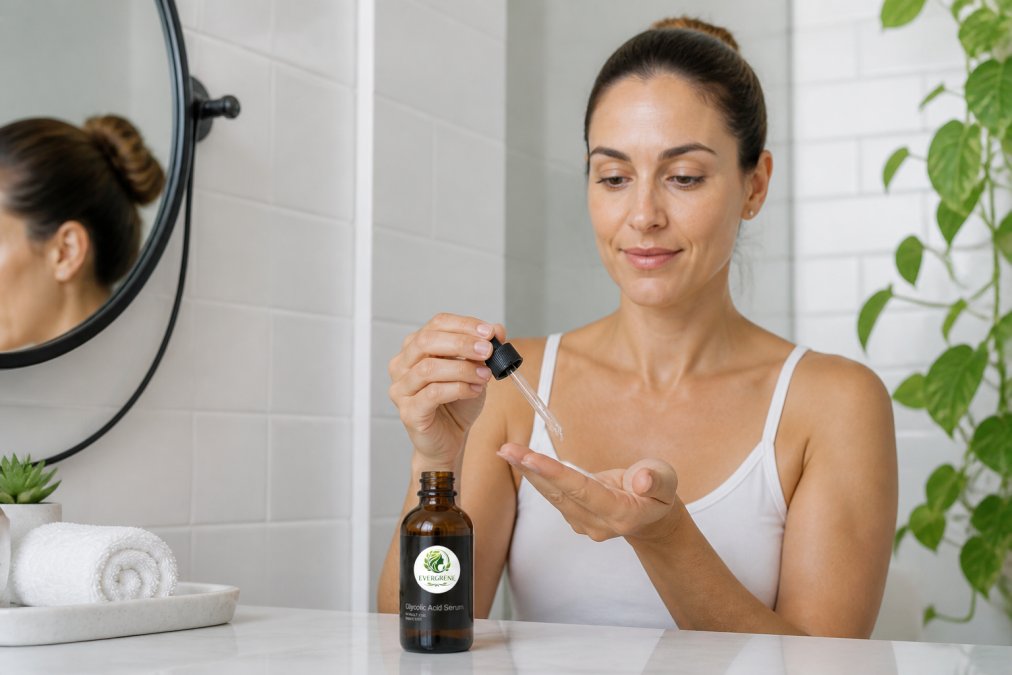
Apply 2-3 drops to the palm, then press gently into the face and neck. Avoid rubbing aggressively, which can cause uneven distribution and irritation.
Frequency, Concentration, and Patch Testing
For beginners, starting with two to three applications per week is appropriate. This gives the skin time to acclimate before moving to more frequent use. Many people settle at three to four times per week for ongoing maintenance.
Lower concentrations (around 5-10%) are appropriate for daily or near-daily use and for those new to chemical exfoliation. Higher concentrations are typically reserved for professional treatments or experienced users. For at-home serums, the sweet spot for most people is a moderate concentration that delivers results without compromising the skin barrier.
Patch testing is non-negotiable before full-face application. Apply a small amount to the inner arm or behind the ear and wait 24-48 hours. If no irritation develops, proceed with use on the face.
| Skin Type | Recommended Frequency | Starting Concentration | Key Concern |
|---|---|---|---|
| Oily / Acne-prone | 3-4x per week | Moderate | Pore refinement, texture |
| Normal / Combination | 2-3x per week | Moderate | Brightening, tone evening |
| Sensitive / Dry | 1-2x per week | Lower | Barrier protection, hydration |
| Mature / Anti-aging focus | 2-3x per week | Moderate | Collagen support, fine lines |
Ingredient Synergy: What to Pair and What to Avoid
Glycolic acid works well with several supporting ingredients.
Pair glycolic acid with:
- Hyaluronic acid / sodium hyaluronate - replenishes hydration lost during exfoliation and supports skin barrier recovery
- Vitamin E (tocopheryl acetate) - provides antioxidant protection and supports skin healing
- Squalane - a lightweight, non-comedogenic moisturizer that locks in hydration without clogging pores
- Aloe vera - a soothing agent that calms post-exfoliation sensitivity
Avoid layering glycolic acid with:
- Retinol - using both in the same routine at the same time increases irritation risk significantly; alternate nights instead
- Other AHAs or BHAs - stacking chemical exfoliants in one application is too aggressive for most skin types
- Vitamin C (ascorbic acid form) - can cause pH conflicts and irritation when applied simultaneously; use one in the morning and one at night
As documented in guidance from the National Institutes of Health on skin barrier function, maintaining the skin's natural moisture barrier is critical when using active exfoliating ingredients. Pairing glycolic acid with barrier-supporting ingredients like squalane and hyaluronic acid is the most effective way to get results without compromising skin health.
Skincare Tools to Improve Product Absorption
Gua sha and facial rollers can improve blood flow and may help serums absorb more evenly when used after cleansing and before serum application. Microneedling tools are more aggressive and should not be used on the same night as glycolic acid serum, as the combination significantly increases irritation risk.
The most practical tool for improving product absorption is clean hands. Pressing serum into the skin with gentle upward pressure is more effective than dragging or rubbing. The real variable in absorption rate is the serum's formulation itself. A serum with a well-balanced pH, appropriate emulsifiers, and penetration-enhancing ingredients will outperform any tool-assisted application of a poorly formulated product.
EVERGRENE Glycolic Acid Serum: Full Review
The EVERGRENE Glycolic Acid Serum ($46.70) is a well-constructed, multi-functional exfoliant that earns its place as a daily-driver glycolic acid serum for most skin types. The formulation prioritizes both efficacy and skin comfort.
Formulation Breakdown and Key Ingredients
Glycolic acid provides the core chemical exfoliation. Sodium hyaluronate delivers deep hydration to counteract the drying effect of exfoliation. Squalane locks in moisture. Vitamin E (tocopheryl acetate) adds antioxidant protection. Aloe barbadensis leaf juice serves as a soothing agent. Phytic acid brightens skin tone and supports the glycolic acid's work on hyperpigmentation without adding irritation.
The serum also contains acetyl hexapeptide-8, a peptide that supports skin firmness, and Coenzyme Q10, an antioxidant that supports cellular energy and skin repair. Lemon fruit extract and apple fruit extract contribute additional brightening and mild exfoliating properties.
The formula is parabens-free, cruelty-free, and vegan. It is made in North America. The 30 mL bottle (1 fl. oz.) is the standard size for a concentrated serum.
Key ingredients at a glance:
| Ingredient | Function | Benefit |
|---|---|---|
| Glycolic Acid | Chemical exfoliant | Cell turnover, texture, tone |
| Sodium Hyaluronate | Humectant | Deep hydration |
| Squalane | Emollient | Moisture lock, non-comedogenic |
| Tocopheryl Acetate (Vitamin E) | Antioxidant | Healing support, protection |
| Aloe Barbadensis | Soothing agent | Calms post-exfoliation sensitivity |
| Phytic Acid | Brightener | Hyperpigmentation support |
| Acetyl Hexapeptide-8 | Peptide | Firmness support |
| Coenzyme Q10 | Antioxidant | Cellular repair |
The texture is lightweight and absorbs quickly, making it practical for both morning and evening use. There is a light fragrance in the formula, worth noting for those with fragrance sensitivity.
How It Compares to Other EVERGRENE Serums
The Collagen and Retinol Serum ($49.80) is the natural companion to the glycolic acid serum, but should not be used on the same night. Retinol increases cell turnover through a different mechanism, and pairing it with glycolic acid in the same application is too aggressive for most skin. The right approach is to alternate: glycolic acid serum on some nights, retinol serum on others.

The Age Defying Serum ($55.00) focuses on hydration and brightening through squalane, glycerin, hydrolyzed soy protein, caffeine, and vitamin C. This is a good morning serum to pair with the glycolic acid serum used at night.
The Anti-aging Rose Gold Oil ($41.60) is a rosehip-based facial oil rich in omega fatty acids, vitamin E, and antioxidants. Apply it last in your routine, after serum and before any cream, sealing in moisture and providing an additional antioxidant layer.
As noted in the FDA's overview of cosmetic ingredient safety, consumers benefit from understanding how individual ingredients function before combining multiple active products.
Who Should Buy a Premium Glycolic Acid Serum
A premium glycolic acid serum is the right investment for anyone dealing with uneven skin texture, dullness, hyperpigmentation, or early signs of aging who wants a proven, at-home chemical exfoliation solution. It is particularly effective for oily and acne-prone skin types.
It is also the right choice for people who have been relying on physical scrubs and want to switch to a gentler, more effective approach to skin resurfacing. Chemical exfoliation with a well-formulated serum is more consistent and less likely to cause microtears than physical exfoliants.
People with highly reactive or compromised skin barriers should approach with more caution. The answer is not to avoid glycolic acid entirely but to start at a lower frequency, prioritize barrier-supporting ingredients alongside it, and patch test carefully. The EVERGRENE serum, with its squalane, aloe, and sodium hyaluronate, is designed with this balance in mind.
Drugstore serums often use glycolic acid as a label ingredient at concentrations too low to be meaningfully active, or in formulations with a pH that renders the acid ineffective. The premium difference is formulation integrity, ingredient quality, and the presence of supporting actives that make the product both effective and tolerable for regular use. According to peer-reviewed research on AHA efficacy published in the Journal of the American Academy of Dermatology, the clinical effectiveness of glycolic acid is directly tied to its concentration and the formulation's pH, which is precisely where lower-cost products frequently fall short.
Choosing the right glycolic acid serum comes down to formulation quality, the right supporting ingredients, and a consistent routine. The EVERGRENE Glycolic Acid Serum delivers all three: a well-balanced formula with active glycolic acid, barrier-supportive squalane and sodium hyaluronate, and antioxidant protection from vitamin E and CoQ10. Pair it with the Age Defying Serum in the morning and the Collagen and Retinol Serum on alternate evenings for a complete, multi-functional routine. Get started with EVERGRENE and experience the difference that formulation quality makes for your skin.

Frequently Asked Questions
How often should you use a premium glycolic acid serum?
Beginners should start with two to three applications per week, applied in the evening. Once your skin adjusts over three to four weeks without signs of irritation, you can increase to every other night or nightly if your skin tolerates it. Glycolic acid increases photosensitivity, so always apply SPF during the day when using it in your routine. Oily and acne-prone skin types generally tolerate more frequent use than sensitive skin types.
What should you never mix with glycolic acid in your routine?
Avoid layering glycolic acid directly with retinol, vitamin C (ascorbic acid), benzoyl peroxide, or other AHAs and BHAs in the same application. These combinations can over-exfoliate the skin, disrupt pH balance, and compromise the skin barrier. You can use these ingredients on alternating nights instead. Niacinamide is generally safe to pair with glycolic acid, and hydrating ingredients like hyaluronic acid and glycerin complement it well.
What percentage of glycolic acid is safe for home use?
For at-home serums, concentrations between 5% and 10% are considered safe and effective for most skin types. Products in this range promote cell turnover and chemical exfoliation without the aggressive resurfacing associated with professional peels, which can reach 20% to 70%. Sensitive skin types should start at the lower end of the range. The FDA does not restrict home-use glycolic acid concentrations, but dermatologists generally recommend staying at or below 10% for daily or near-daily use.
How do I know if a glycolic acid serum is high quality?
A high-quality glycolic acid serum lists glycolic acid clearly in the ingredients, is formulated at a pH between 3 and 4 for effective chemical exfoliation, and includes supporting ingredients like hyaluronic acid, glycerin, or squalane to offset dryness. Avoid formulas with excessive fragrance or alcohol near the top of the ingredient list. Paraben-free, cruelty-free, and vegan certifications are also indicators of cleaner formulation standards. EVERGRENE's Glycolic Acid Serum meets all of these criteria at $46.70.
Which glycolic acid serum is best for sensitive skin?
Sensitive skin types should look for a glycolic acid serum with a lower concentration (around 5%), paired with soothing agents like aloe vera, glycerin, or squalane to offset irritation. Avoid formulas that also contain salicylic acid or retinol if your skin is reactive. Always do a patch test before full-face application. EVERGRENE's Glycolic Acid Serum includes aloe barbadensis leaf juice, glycerin, and squalane, making it a gentler option for those new to AHA exfoliation.
This article was written using GrandRanker