
Effective Exfoliation for Glowing Skin: 2026 Guide
Table of Contents
- Mechanical vs. Chemical Exfoliation: Which Method Works Best?
- Best Frequency for Facial Exfoliation by Skin Type
- Signs of Damaged Skin Barrier from Exfoliation
- Effective Exfoliation for Glowing Skin: Step-by-Step Routine
- How to Use Retinol and Exfoliants in a Routine Without Irritation
- Age-Specific Exfoliation: Adjusting Your Approach Over Time
- Effective Exfoliation and Your Skin Microbiome
- Conclusion
Last Updated: August 21, 2026
Effective exfoliation for glowing skin requires matching the right method to your skin's current state. Most routines either under-deliver because the approach doesn't fit the skin type, or cause damage from over-exfoliation. This guide covers every major method, how often to use each one, and how to combine actives without triggering irritation.
Mechanical vs. Chemical Exfoliation: Which Method Works Best?
Mechanical exfoliation physically removes dead skin cells using friction, while chemical exfoliation dissolves the bonds holding dead cells together, allowing them to shed naturally. For most skin types, chemical exfoliation produces more consistent results with less risk of micro-tears or barrier disruption.
Physical Scrubs and Tools
Physical scrubs use particles like sugar, salt, or rice bran to buff the skin's surface. The biggest mistake is using them too aggressively, coarse particles on sensitive or acne-prone skin can create micro-tears that worsen inflammation. If you prefer mechanical exfoliation, choose fine-grain formulas and use light pressure. Silicone cleansing tools are gentler than nylon brushes because they create less friction.
Physical exfoliation works best for normal to oily skin without active breakouts or rosacea.
Chemical Exfoliation: AHAs, BHAs, and PHAs
Chemical exfoliants are the workhorses of any serious skincare routine. The three main categories each target different concerns:
| Acid Type | Key Examples | Best For | Skin Penetration |
|---|---|---|---|
| Alpha Hydroxy Acids (AHAs) | Glycolic acid, lactic acid, mandelic acid | Dullness, hyperpigmentation, uneven texture | Surface level |
| Beta Hydroxy Acids (BHAs) | Salicylic acid | Pore congestion, oily skin, acne | Deep into pores |
| Polyhydroxy Acids (PHAs) | Gluconolactone, lactobionic acid | Sensitive skin, rosacea, dry skin | Surface, gentler |
Glycolic acid has the smallest molecular size of the AHAs, delivering fast results on cell turnover and radiance. Lactic acid is gentler and functions as a humectant, making it ideal for dry or sensitive skin. Mandelic acid absorbs slowly and is well-tolerated by darker skin tones concerned about post-inflammatory hyperpigmentation.
Salicylic acid is oil-soluble, allowing it to cut through sebum and reach deep inside pores, something AHAs cannot do. For blackheads or persistent pore congestion, BHAs are the more targeted option.
Polyhydroxy acids are gentler due to their larger molecular size, making them appropriate for reactive skin or compromised barrier phases.
Enzymatic Exfoliation
Enzymes, typically derived from papaya or pineapple, digest protein bonds in dead skin cells without acid activity. There's no pH balance concern or sun sensitivity risk comparable to AHAs, and no physical friction. This makes enzymatic exfoliation ideal for reactive skin, rosacea-prone skin, or anyone in a compromised barrier phase. Results are subtler than acid exfoliation, but the lack of irritation potential is a genuine advantage for the right candidate.
Best Frequency for Facial Exfoliation by Skin Type
Exfoliation frequency is where most people go wrong. The right frequency depends entirely on your skin type, the strength of the product, and whether you're combining it with other actives like retinol.
How to Determine Your Skin Type Before You Start
The most reliable self-assessment is the "bare face test": cleanse your face, apply nothing, and observe after 30 minutes.
- Oily skin: Visible shine across the T-zone and cheeks; enlarged pores
- Dry skin: Tight feeling, possible flaking, no visible shine
- Combination skin: Oily T-zone with normal or dry cheeks
- Sensitive skin: Redness, reactivity, or stinging after applying products
- Normal skin: Balanced moisture, no tightness, minimal shine
Use this as a starting guide for exfoliation frequency:
| Skin Type | Recommended Frequency | Preferred Method |
|---|---|---|
| Oily | 3-4x per week | BHAs (salicylic acid) |
| Normal | 2-3x per week | AHAs or mild physical |
| Dry | 1-2x per week | PHAs or lactic acid |
| Combination | 2-3x per week | AHAs on cheeks, BHA on T-zone |
| Sensitive | 1x per week or less | PHAs or enzymatic |
Signs of Damaged Skin Barrier from Exfoliation
Over-exfoliation is one of the most common skincare mistakes, and it's often misread as a need for more exfoliation. Signs of a compromised barrier include:
- Persistent redness or stinging when applying any product
- Skin that feels tight immediately after cleansing
- Sudden breakouts in previously clear areas
- Increased sensitivity to products that previously caused no reaction
- Flaking or peeling without improved texture underneath
The stratum corneum functions as a physical and chemical barrier against environmental stressors. According to American Academy of Dermatology guidance on skin barrier function, disrupting this layer increases transepidermal water loss and leaves skin vulnerable to irritants and pathogens.
If you recognize these signs, stop all exfoliation immediately. Focus on gentle cleansing, hydration, and barrier-repairing ingredients like ceramides and panthenol for at least two weeks before reintroducing any exfoliant at a lower frequency.
Effective Exfoliation for Glowing Skin: Step-by-Step Routine
A structured approach removes guesswork and reduces over-exfoliation risk. Adjust frequency based on your skin type.
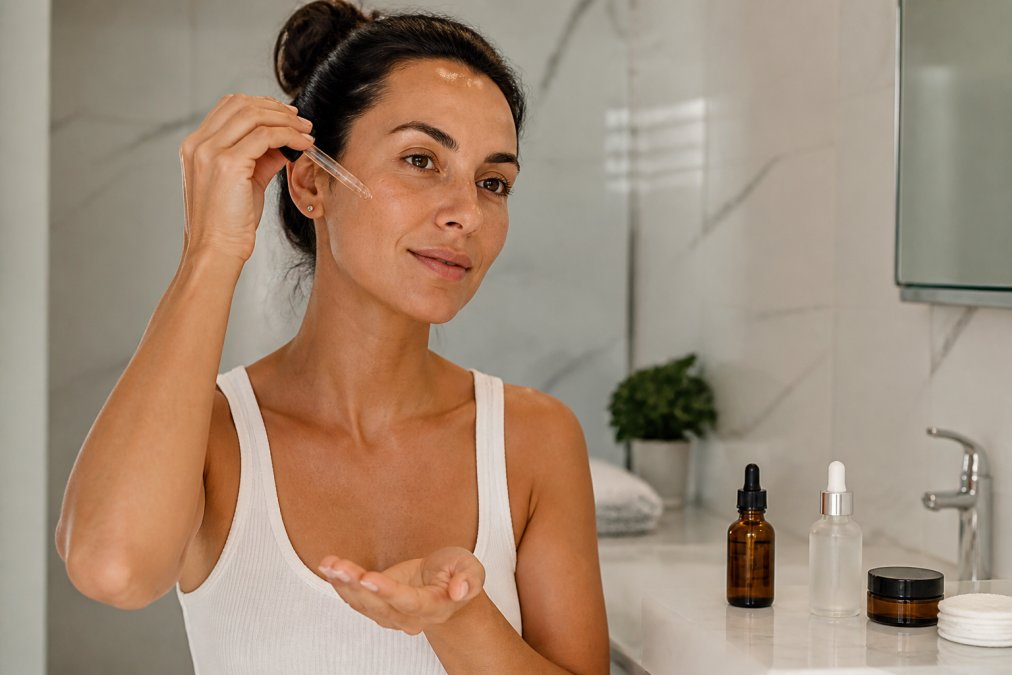
Step 1: Cleanse thoroughly. Use a gentle, non-comedogenic cleanser to remove makeup, sunscreen, and surface debris.
Step 2: Apply your exfoliant to dry skin. For most chemical exfoliants, dry skin application improves penetration consistency.
Step 3: Wait the full contact time. Most leave-on AHA and BHA products don't need to be rinsed. Follow product instructions.
Step 4: Follow with a hydrating serum. Exfoliation temporarily increases skin permeability, so ingredients absorb more effectively. A hyaluronic acid serum or niacinamide formula works well.
Step 5: Apply moisturizer. Lock in hydration and support the skin barrier with formulas containing ceramides, fatty acids, or peptides.
Step 6: Apply SPF in the morning. AHAs increase photosensitivity, and unprotected post-exfoliation skin is significantly more vulnerable to UV-induced hyperpigmentation.
Post-Exfoliation Skincare: Moisturizing and SPF
Post-exfoliation care determines whether your routine delivers radiance or strips the skin. Skipping moisturizer after exfoliation is one of the fastest ways to end up with a reactive, tight complexion.
SPF deserves particular emphasis. The FDA guidance on sunscreen and photosensitivity confirms that alpha hydroxy acids increase sun sensitivity, with effects persisting up to a week after use. A broad-spectrum SPF 30 or higher applied every morning is the baseline.
How to Use Retinol and Exfoliants in a Routine Without Irritation
Combining retinol and exfoliating acids requires a clear strategy. Both actives promote cell turnover, and using them together without planning leads to irritation and barrier compromise.
Don't use both on the same night until your skin has adapted to each individually. Start by introducing one active at a time, using it twice a week, and observing your skin's response over three to four weeks before adding the second.
Once your skin tolerates both, alternate nights rather than layering. Retinol on Monday and Wednesday, your AHA or BHA on Tuesday and Thursday, with at least two nights per week of no actives. This "active cycling" approach delivers benefits of both without cumulative irritation.
Ingredient Interactions to Know Before Layering Actives
Key interactions to understand:
- Vitamin C (L-ascorbic acid) + AHAs: Both are low-pH actives. Apply vitamin C in the morning and AHAs at night.
- Retinol + AHAs: Retinol is most stable at higher pH than AHAs require. Alternate nights.
- Niacinamide + AHAs: This combination is well-tolerated and can reduce irritation potential. Niacinamide applied after an AHA is effective.
- BHAs + retinol: The alternating-night principle applies. Together they increase dryness and peeling significantly.
Age-Specific Exfoliation: Adjusting Your Approach Over Time
Skin responds to exfoliants differently across decades, and a routine that worked at 25 may harm skin at 45.
In your 20s: Skin cell turnover is fast and the barrier is resilient. Mild AHAs or gentle BHA two to three times per week is sufficient. Over-exfoliation is a bigger risk than under-exfoliation.
In your 30s: Cell turnover begins to slow, causing dullness and uneven texture. This is when effective exfoliation delivers the most visible results. Glycolic acid or lactic acid two to three times per week, combined with low-concentration retinol, is well-tolerated and productive.
In your 40s and beyond: The skin barrier becomes thinner and more permeable, amplifying both benefits and risks of exfoliation. Reduce frequency rather than strength. PHAs or lactic acid once or twice per week, with consistent moisturization and SPF, typically outperforms aggressive acid use. As the National Institute on Aging skin care guidance notes, aging skin produces less natural oil and recovers more slowly from barrier disruption.
The goal in every decade is the same: support cell turnover without compromising the barrier.
Effective Exfoliation and Your Skin Microbiome
The skin microbiome is the ecosystem of bacteria, fungi, and microorganisms that live on the skin's surface. A balanced microbiome supports barrier function, regulates inflammation, and defends against pathogens. Aggressive exfoliation can disrupt this balance by altering the skin's surface environment.
The skin's natural pH sits between 4.5 and 5.5, favoring beneficial bacteria like Staphylococcus epidermidis while inhibiting harmful strains. Many chemical exfoliants temporarily lower surface pH further. Used at appropriate frequencies, this is manageable. Used too often, the microbiome cannot recover between sessions.
Practical implications:
- Allow recovery nights between exfoliation sessions, these are when the microbiome rebalances
- Consider probiotic or prebiotic skincare as a complement to exfoliation, particularly if prone to sensitivity or post-exfoliation breakouts
- Avoid antibacterial cleansers immediately before or after exfoliation
Many physical scrubs contain synthetic microbeads now restricted under the Microbead-Free Waters Act. Choosing biodegradable exfoliants like rice bran, sugar, or enzyme-based formulas reduces environmental impact without sacrificing performance.
Conclusion
Building an effective exfoliation routine is less about finding the strongest acid and more about consistency, timing, and protecting the skin barrier between sessions. Skin that's over-exfoliated looks worse than skin that's barely exfoliated at all. The goal is calibrated, not aggressive. EVERGRENE's collection of glycolic acid and retinol formulations is built specifically for this kind of intentional routine: products designed to work together at the right concentrations. Get started with EVERGRENE and build a routine that actually delivers the radiance you're after.
Frequently Asked Questions
What is the difference between physical and chemical exfoliation?
Physical exfoliation uses friction, scrubs, brushes, or textured tools, to manually remove dead skin cells from the stratum corneum. Chemical exfoliation uses acids like glycolic acid, lactic acid, or salicylic acid to dissolve the bonds holding dead cells together, allowing them to shed without scrubbing. Chemical exfoliation tends to produce more even results with less risk of micro-tears, while physical scrubs offer immediate smoothing but can cause irritation if used too aggressively. Your skin type and sensitivity should guide which approach you choose.
How often should you exfoliate to maintain a healthy glow?
Most skin types do well with effective exfoliation two to three times per week. Sensitive or dry skin may only tolerate once a week, while oilier skin types prone to pore congestion can sometimes manage three to four sessions. The best frequency for facial exfoliation depends on the method: enzymatic and low-concentration polyhydroxy acid formulas are gentler and can be used more often, while stronger glycolic acid or retinol-adjacent routines need more recovery time between uses. Watch for redness or tightness as signals to scale back.
Can you use retinol and exfoliants together safely?
Yes, but timing and concentration matter. Using retinol and exfoliants in a routine on the same night, especially at full strength, raises the risk of skin irritation and a compromised skin barrier. A common approach is to alternate nights: exfoliating acids one evening, retinol the next. If you want to use both in one routine, apply your exfoliant first, wait for the pH to normalize, then apply retinol. Start with lower concentrations of each and patch test before committing to the combination.
What are the signs of over-exfoliation?
Signs of a damaged skin barrier from over-exfoliation include persistent redness, a tight or burning sensation after cleansing, increased sensitivity to products that previously caused no reaction, flaking that worsens rather than improves, and a shiny but rough texture. Breakouts that appear suddenly after starting a new exfoliation routine can also indicate barrier disruption. If you notice these signs, stop exfoliating for at least one to two weeks, focus on gentle hydration, and reintroduce exfoliants slowly at a lower frequency.
What do dermatologists recommend for exfoliation?
Dermatologists generally favor chemical exfoliation over physical scrubs because acids like glycolic acid, lactic acid, and salicylic acid work at the cellular level without causing micro-tears. They recommend patch testing any new exfoliant before full-face application, always applying SPF the morning after chemical exfoliation due to increased sun sensitivity, and avoiding exfoliation on broken or actively irritated skin. For anti-aging goals, combining a low-concentration alpha hydroxy acid with a retinol on alternating nights is a widely supported approach.
What is the best exfoliator for glowing skin?
Glycolic acid is one of the most studied alpha hydroxy acids for improving skin texture, radiance, and hyperpigmentation because its small molecular size allows deeper penetration into the stratum corneum. Lactic acid is a gentler alternative with added hydration benefits, making it better for drier or more sensitive skin. For those with oily or acne-prone skin, salicylic acid, a beta hydroxy acid, addresses pore congestion without over-drying. The best choice depends on your skin type and tolerance, not which ingredient is most popular.
This article was written using GrandRanker