
How Long Does Retinol Take to Work on Wrinkles
Table of Contents
- Realistic Timeline: How Long Retinol Takes to Work on Wrinkles
- What Happens to Your Skin During the First 4-6 Weeks
- Understanding the Retinol Purging Timeline
- How to Start Retinol Without Irritation
- Combining Retinol and Glycolic Acid for Faster Results
- Factors That Speed Up or Slow Down Retinol Results
- Maintaining Results and Avoiding Plateaus
- Frequently Asked Questions
Last Updated: September 27, 2026
Realistic Timeline: How Long Retinol Takes to Work on Wrinkles
How long does retinol take to work on wrinkles? Visible improvements typically emerge between 8 to 12 weeks of consistent use, though some skin types see changes earlier. Retinol works through cell turnover and collagen production, which doesn't happen overnight.
Understanding how long does retinol take to work on wrinkles depends heavily on concentration, skin sensitivity, and how you introduce retinol. Starting too aggressively causes irritation and peeling that derails progress before results appear. The key is patience and a strategic approach that minimizes disruption while maximizing efficacy.
Understanding what happens during those first weeks transforms retinol from a frustrating experiment into a reliable anti-aging tool. EVERGRENE's Collagen and Retinol Serum combines retinol with hydrating ingredients like hyaluronic acid and collagen to support skin elasticity while minimizing harsh side effects.

What Happens to Your Skin During the First 4-6 Weeks
During the initial phase, retinol converts to retinoic acid, the active form that triggers cellular responses and increases skin cell turnover, which is why visible peeling often appears in week two or three.
Low-Concentration Retinol (0.25% to 0.3%)
At 0.25% to 0.3%, the first 2-3 weeks feel uneventful with minimal dryness or redness. By week 3-4, mild flaking may appear but is manageable with moisturizer. Sensitive skin types tolerate this range well, though visible results on fine lines take 10-12 weeks.
Medium-Concentration Retinol (0.5% to 1%)
At 0.5% to 1%, weeks 1-2 bring noticeable dryness and mild redness, with pronounced peeling by week 2-3. Oily and combination skin types handle this well; dry or sensitive skin may struggle. Visible improvements emerge by week 6-8, but irritation risk is higher.
Prescription-Strength Retinoids (Tretinoin, Adapalene)
Prescription retinoids convert directly to retinoic acid without multi-step conversion. Week 1 brings significant redness, peeling, and sensitivity; dermatologists recommend starting at 0.025% tretinoin, 2-3 times weekly. Visible wrinkle reduction appears by week 8-10, but these require medical supervision.
How Skin Type Modifies the Timeline
Oily skin tolerates retinol better and sees faster texture refinement and pore improvement. Natural sebum buffers irritation, allowing faster progression to higher concentrations or nightly use.
Dry skin experiences pronounced dryness and peeling during weeks 2-4, a sign of accelerated cell turnover. The "sandwich method" (moisturizer, then retinol, then moisturizer) reduces irritation while maintaining efficacy.
Sensitive skin is most challenging, with redness or breakouts possible even at 0.25%. Consider starting with bakuchiol or retinaldehyde before traditional retinol. Expect the timeline to visible results to extend to 12-16 weeks.
Combination skin responds well to 0.5% applied selectively to oily zones, achieving results in 8-12 weeks.
Increased dryness, mild redness, or sensitivity during this window is normal, your skin barrier is adjusting to increased cell turnover. This is proof the mechanism is active, not a sign retinol isn't working.
By week 4, fine lines may appear slightly less pronounced and skin texture smooths. Dramatic wrinkle reduction doesn't occur until after week 8, as the dermis requires sustained collagen remodeling.
Understanding the Retinol Purging Timeline
Retinol purging brings congestion and impurities to the surface faster than normal, appearing as temporary breakouts between weeks 2 and 4.
Purging occurs in areas where you already have congestion; irritation appears as redness, burning, or sensitivity across the face. True irritation signals you're using retinol too frequently or at too high a concentration.
The purging phase resolves within 4-6 weeks with consistent application. Clearer, more refined skin emerges after purging subsides, a positive sign retinol is working.
How to Start Retinol Without Irritation
Begin with 0.25% to 0.3% retinol, applied 2-3 times per week. This conservative approach prevents the irritation that derails most first-time users.
Apply retinol to completely dry skin, at least 20 minutes after cleansing. Use a pea-sized amount, gently pat into face and neck, avoiding eyes initially. Follow with hydrating moisturizer to buffer retinol and support skin barrier.
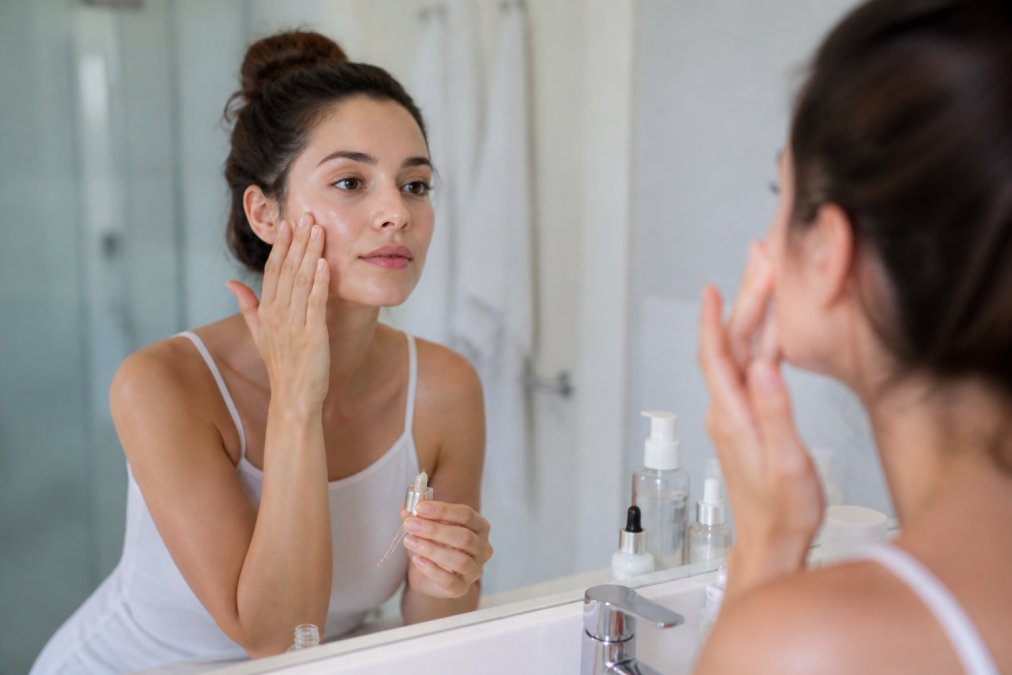
Avoid applying retinol to wet skin or layering with other actives immediately; this accelerates irritation. Give your skin 4-6 weeks at conservative frequency before increasing to nightly use.
EVERGRENE's Collagen and Retinol Serum works well for beginners, including hyaluronic acid and collagen to reduce dryness and peeling while supporting skin elasticity.
After 4-6 weeks, gradually increase frequency if tolerated. Many people achieve excellent results with 3-4 applications per week indefinitely.
Combining Retinol and Glycolic Acid for Faster Results
Retinol and glycolic acid together accelerate results: glycolic acid removes dead cells while retinol stimulates cell turnover and collagen production. Together they address photoaging from multiple angles.
Never use both on the same night when starting retinol. Alternate: retinol on Monday, Wednesday, Friday; glycolic acid on Tuesday, Thursday, Saturday; rest on Sunday.
After 8-12 weeks, experiment with glycolic acid on alternate nights. Monitor your skin's response; increased redness signals you should reduce frequency.
Glycolic acid enhances retinol penetration by removing dead cells, accelerating improvements in fine lines and texture. Both actives increase photosensitivity, requiring diligent sun protection.
Factors That Speed Up or Slow Down Retinol Results
Concentration: The Primary Timeline Driver
Concentration is the single most powerful variable affecting results timeline:
- 0.25% retinol: 12-16 weeks to visible fine line reduction. Best for sensitive skin and first-time users. Irritation is minimal, but results are slower.
- 0.3% to 0.5% retinol: 8-12 weeks to noticeable improvement. This is the "sweet spot" for most people, strong enough to deliver results in a reasonable timeframe without excessive irritation.
- 0.75% to 1% retinol: 6-10 weeks for visible results. Faster timeline, but irritation risk increases significantly. Requires careful introduction and is best for oily or resilient skin.
- Prescription retinoids (0.025% tretinoin or adapalene): 4-8 weeks for visible wrinkle reduction. Fastest results because these convert directly to retinoic acid without the multi-step conversion process. However, they require medical oversight and carry higher irritation risk.
Jumping to higher concentration doesn't always accelerate results proportionally. Consistent use at tolerable strength beats aggressive use that causes abandonment.
Skin Type: The Modifier
Oily skin tolerates retinol better and sees results 2-4 weeks earlier than sensitive skin. Dry skin requires lower concentrations and slower progression, extending the timeline 2-4 weeks but showing dramatic texture improvement. Sensitive skin may extend the timeline 4-8 weeks; rushing leads to abandonment. Combination skin achieves results in 8-12 weeks with 0.5% targeted application.
Age and Existing Sun Damage
Younger skin with early fine lines sees improvement within 8-10 weeks. Deeper wrinkles require 12-16 weeks or longer for sustained collagen remodeling. Severe photoaging may need professional treatments alongside retinol.
Consistency: Non-Negotiable
Consistency matters more than concentration. People using retinol 2-3 times weekly consistently see better results than those using it nightly sporadically. A missed week sets progress back 1-2 weeks.
Sun Protection: The Hidden Multiplier
Sun exposure directly undermines retinol's benefits. UV damage accelerates photoaging and collagen breakdown, counteracting the improvements retinol is building. Daily sunscreen use (SPF 30 minimum, ideally SPF 50) is essential. Without it, retinol's anti-aging effects are significantly compromised, and your timeline to visible results extends by 4-6 weeks or more.
Synergistic Ingredients: The Accelerator
Sleep Quality and Hydration
The Compounding Effect
Maintaining Results and Avoiding Plateaus
After 12-16 weeks of consistent retinol use, many people notice their skin reaches a plateau, improvements slow or stop entirely. This happens because skin adapts to the stimulus. The solution isn't to increase concentration recklessly; it's to introduce strategic variation.
Frequently Asked Questions
How long does retinol take to work on wrinkles?
Most people see visible reduction in fine lines within 8-12 weeks of consistent retinol use. Deeper wrinkles may require 12-16 weeks or longer. Results depend on retinol concentration, skin type, and how often you apply it. Consistency matters more than speed, daily or near-daily application produces better outcomes than sporadic use. The Collagen and Retinol Serum from EVERGRENE is formulated to support skin cell turnover and collagen production, two key mechanisms that reduce wrinkle appearance over time.
What causes retinol purging, and how long does it last?
Retinol purging occurs because the ingredient accelerates cell turnover and brings congestion to the skin's surface. You may experience temporary breakouts, flaking, or redness during the first 2-4 weeks. This is a sign retinol is working, not a sign you should stop. Purging typically resolves within 4-6 weeks as your skin adapts. Starting with a low concentration and using retinol just 2-3 times per week minimizes purging severity. If irritation persists beyond 6 weeks or worsens, reduce frequency or switch to a gentler retinol formulation.
Can you use retinol and glycolic acid together?
Yes, but timing and frequency matter. Both ingredients increase cell turnover, so using them simultaneously can cause excessive irritation. The safest approach is alternating nights: retinol one night, glycolic acid the next, with rest days in between. Beginners should master retinol alone for 4-6 weeks before adding glycolic acid. Once your skin is adapted, combining these actives can accelerate results for fine lines and skin texture. Always use sunscreen during the day, both ingredients increase sun sensitivity and photoaging risk without protection.
How do I know if my retinol is actually working?
Early signs of efficacy include smoother skin texture, improved radiance, and reduced redness from sun damage within 4-8 weeks. Fine lines appear less pronounced as skin hydration and elasticity improve. After 12 weeks, you should notice visible wrinkle reduction, especially around the eyes and forehead. Take photos under the same lighting every 4 weeks to track progress objectively. If you see no change after 16 weeks of consistent use, your concentration may be too low, or your skin may need a different active ingredient. Patience and consistent application are critical, results compound over months and years, not days.