
How to Choose Gentle Glycolic Acid for Sensitive Skin
Table of Contents
- Understanding Glycolic Acid and Sensitive Skin
- Glycolic Acid Percentage for Beginners
- How to Patch Test Glycolic Acid Before Full Application
- How Often to Use Glycolic Acid When You Have Sensitive Skin
- Glycolic Acid vs Lactic Acid for Sensitive Skin
- Ingredients to Pair With and Avoid
- Recognizing Good Irritation vs Irritation That Signals You Should Stop
- Sun Protection and Photosensitivity When Using Glycolic Acid
- Frequently Asked Questions
Last Updated: October 6, 2026
Understanding Glycolic Acid and Sensitive Skin
Glycolic acid is an alpha hydroxy acid that exfoliates your skin by breaking down the bonds between dead skin cells. It works on the surface layer called the stratum corneum.

The key difference between glycolic acid and harsher exfoliants is that it doesn't require friction. You apply it and let it work. This makes it easier to control how much exfoliation happens. But sensitive skin needs extra care. Your skin barrier is already compromised.
Understanding how to choose gentle glycolic acid for sensitive skin means the goal isn't to avoid it entirely. The goal is to find the right formulation and use it correctly. Most people fail because they start too strong or use it too often.
Here's what you need to understand first: glycolic acid concentration matters, but pH matters more. A high-concentration formula with the wrong pH can sit on your skin and cause prolonged irritation. A lower-concentration formula with the right pH penetrates efficiently and does its job without lingering damage.
Glycolic Acid Percentage for Beginners
Start with a glycolic acid concentration between 5% and 10% if you have sensitive skin. This range is low enough to minimize irritation risk but strong enough to show results over time.
Most beginners make the mistake of jumping to 15% or higher concentrations. They see the percentage and think "more active ingredient equals faster results." That's not how it works. A 10% formula with proper pH penetrates more effectively and causes less irritation than a 15% formula with poor pH balance.
The percentage tells you how much glycolic acid is in the product. But it doesn't tell you how much will actually penetrate your skin or how long it will stay active. That's where pH comes in.
pH Balance and Penetration Depth
The pH of a glycolic acid product determines how deeply it penetrates and how long it stays active on your skin. For sensitive skin, you want a pH between 3 and 4. This range allows the acid to work effectively without over-penetrating into deeper skin layers.
A pH above 4 means the acid is buffered. It works more slowly and gently. A pH below 3 is very strong and can cause significant irritation, even at lower concentrations.
The EVERGRENE Glycolic Acid Serum is formulated to work gently on all skin types. It includes glycerin for hydration and squalane to lock in moisture. This combination helps counteract the drying effect that exfoliants can cause.
When pH is right, the acid molecule can penetrate the stratum corneum efficiently. It breaks down the bonds between dead skin cells without triggering excessive inflammation. Your skin barrier stays intact.
Think of pH balance as the difference between a controlled chemical reaction and a chaotic one. You want control.
How to Patch Test Glycolic Acid Before Full Application
Patch testing is non-negotiable for sensitive skin. Never apply a new glycolic acid product to your entire face without testing it first.
Here's the process:
-
Choose a test area. The inside of your forearm or behind your ear works best. These areas have thin, sensitive skin similar to your face but are less visible if irritation occurs.
-
Apply a small amount. Use 2-3 drops. This is enough to see how your skin reacts without committing to a full application.
-
Leave it on for 10 minutes. Don't rinse it off immediately. Your skin needs time to show a reaction.
-
Rinse with cool water. Use your regular cleanser and lukewarm water.
-
Wait 24 hours. Don't apply anything else to that area. Watch for redness, burning, itching, or any signs of irritation.
-
Assess the result. If you see no irritation, you can try a small application on your face. If you see redness or feel burning, the product is too strong for you right now.
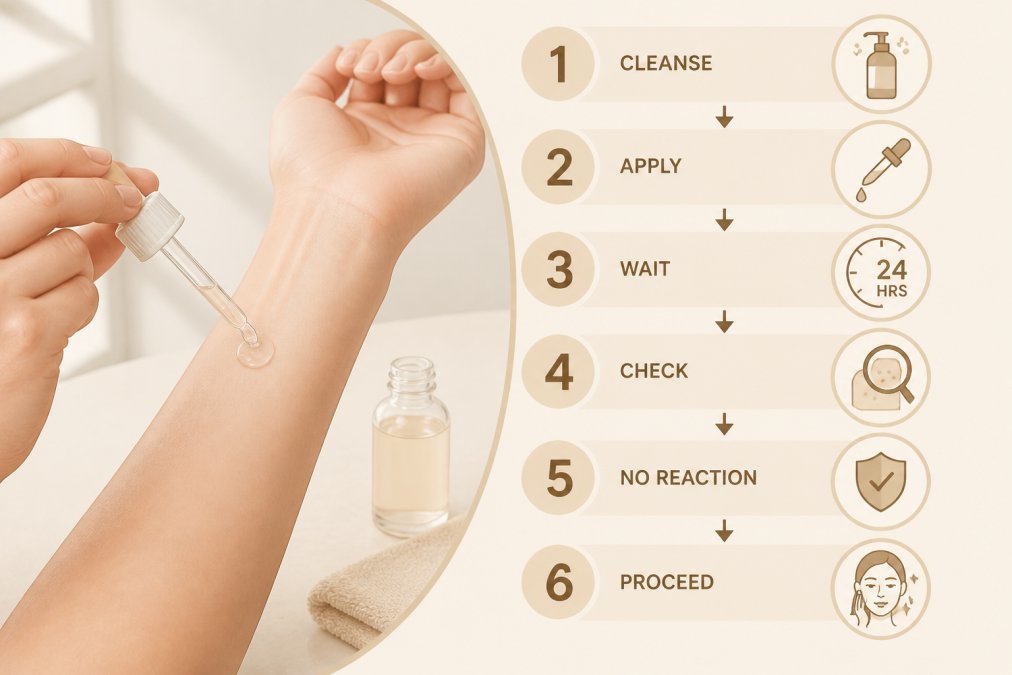
A common mistake is skipping the patch test because you've used other exfoliants before. Sensitive skin can react differently to different formulations. Just because you tolerated one glycolic acid product doesn't mean you'll tolerate another.
Another mistake is testing for only a few hours. Real irritation can take time to develop. Twenty-four hours gives your skin enough time to show a genuine reaction.
How Often to Use Glycolic Acid When You Have Sensitive Skin
Start with once per week. This is the safest frequency for sensitive skin when you're new to chemical exfoliation.
After 4 weeks at once per week, assess your skin. If you see improvement in texture and tone with no signs of irritation, you can move to twice per week. But don't rush this.
The key phrase here is "building tolerance." Your skin doesn't adapt instantly to exfoliation. It takes weeks.
Never use glycolic acid every day, even if you have resilient skin. Daily use strips your skin barrier of protective oils and damages the living cells underneath.
Frequency also depends on the concentration you're using. If you're at 5%, you might eventually tolerate twice per week.
Pay attention to signs that you're using it too often: persistent redness, sensitivity to other products, a tight or burning feeling during the day, or increased breakouts. These are all signals to reduce frequency immediately.
Glycolic Acid vs Lactic Acid for Sensitive Skin
Both glycolic acid and lactic acid are alpha hydroxy acids (pubmed.ncbi.nlm.nih.gov). They work similarly, but lactic acid has a larger molecular weight. This means it penetrates more slowly and stays on the surface longer.
Lactic acid is often gentler for beginners. If you've tried glycolic acid and found it too irritating, lactic acid might work better. Many people with sensitive skin tolerate lactic acid at higher concentrations than they would tolerate glycolic acid.
The trade-off is speed. Glycolic acid works faster because it penetrates deeper. If you want results quickly, glycolic acid is the better choice. If you want to minimize irritation risk, lactic acid is worth trying first.
Some people use lactic acid to build tolerance, then switch to glycolic acid later. This is a smart approach if your skin is very reactive. Start with lactic acid at 5-8% once per week for 8 weeks.
The EVERGRENE Glycolic Acid Serum works well for people ready to move to glycolic acid.
Ingredients to Pair With and Avoid
What to Pair for Barrier Repair
When you use glycolic acid, you're disrupting your skin barrier. You need to repair it with hydrating and soothing ingredients. The best partners for glycolic acid are:
- Hyaluronic acid. This ingredient holds water in your skin. It plumps cells and reduces the appearance of irritation.
- Ceramides. These lipids are part of your natural skin barrier. They seal in moisture and protect against irritants.
- Glycerin. A humectant that draws water into your skin. It reduces the drying effect of exfoliation.
- Squalane. A lightweight oil that locks in moisture without feeling heavy.
The EVERGRENE Glycolic Acid Serum includes glycerin and squalane for this reason. After exfoliation, your skin needs these ingredients to recover.
Use a hydrating moisturizer after your glycolic acid treatment. Apply it to damp skin so it seals in water. Wait 15-20 minutes after rinsing off the glycolic acid before applying other products. This gives your skin time to stabilize.
What Never to Mix With Glycolic Acid
Do not use glycolic acid on the same day as these ingredients:
- Retinol or retinoids. Both are exfoliating. Using them together causes excessive irritation and barrier damage.
- Vitamin C serums. These are acidic and can compound the pH stress on your skin.
- Niacinamide at high concentrations. While niacinamide is generally safe, high concentrations can increase irritation when combined with glycolic acid.
- Other chemical exfoliants. Don't mix glycolic acid with salicylic acid, lactic acid, or any other AHA or BHA on the same day.
- Benzoyl peroxide. This can increase irritation and reduce the effectiveness of both ingredients.
The rule is simple: on the day you use glycolic acid, use only gentle, hydrating products. Save your other actives for different days.
Recognizing Good Irritation vs Irritation That Signals You Should Stop
Not all irritation is bad. When you first use glycolic acid, your skin might feel a slight tingling sensation or show mild erythema (redness). This is normal. It means the acid is working.
Good irritation feels like:
- Mild tingling during application
- Light redness that fades within 1-2 hours
- A slight warm feeling
- No itching or burning
Bad irritation feels like:
- Intense burning that doesn't stop
- Severe redness that lasts more than 2 hours
- Itching or hives
- Swelling or puffiness
- Blistering or open sores
If you experience bad irritation, stop using the product immediately. Rinse your face thoroughly with cool water. Apply a soothing moisturizer or a barrier repair cream. If irritation persists beyond a few hours, contact a dermatologist.
The "good irritation" threshold is different for everyone. Some people tolerate more tingling than others. Pay attention to your own skin's signals. If tingling makes you uncomfortable, reduce the frequency or concentration.
One insider tip: if you feel mild irritation during application but it completely disappears within 30 minutes and your skin looks normal, the product is likely fine for you. But if redness lingers or gets worse over the next hour, the concentration or pH is too strong.
Sun Protection and Photosensitivity When Using Glycolic Acid
Glycolic acid increases your skin's photosensitivity. This means your skin is more vulnerable to UV damage while you're using the product and for days after. Sunscreen is not optional. It's essential.
Use an SPF 30 or higher every single day you use glycolic acid, and for at least 3 days afterward. This applies even on cloudy days. UV rays penetrate clouds.
The reason photosensitivity happens is that exfoliation removes the top layer of skin that provides some natural UV protection. Your newer, more vulnerable skin is exposed to the sun.
Many people with sensitive skin skip sunscreen because they think it will irritate their skin.
A practical approach: apply your glycolic acid serum at night. This eliminates the photosensitivity concern during the day.
Learning how to choose gentle glycolic acid for sensitive skin comes down to three things: starting low with concentration, respecting pH balance, and using sun protection consistently.
| Approach | Frequency | Concentration | Best For |
|---|---|---|---|
| Beginner (very sensitive) | Once per week | 5-7% | New to chemical exfoliation |
| Building tolerance | Twice per week | 7-10% | After 4-6 weeks of weekly use |
| Established routine | 2-3 times per week | 10% | Skin with proven tolerance |
Frequently Asked Questions
What glycolic acid concentration should beginners with sensitive skin start with?
Beginners with sensitive skin should start with concentrations between 5-10%. The EVERGRENE Glycolic Acid Serum is formulated as a gentle yet fast-acting exfoliant suitable for all skin types. Always patch test first and introduce it slowly into your routine, starting with once or twice weekly to allow your skin barrier to build tolerance gradually.
Is lactic acid a gentler alternative to glycolic acid for sensitive skin?
Lactic acid has a larger molecular weight than glycolic acid, which means it penetrates more slowly and can be less irritating for some people. If glycolic acid causes persistent redness or tingling, lactic acid may be worth trying. However, glycolic acid's smaller molecular size also means faster results. The best choice depends on your individual skin sensitivity and tolerance level.
What should you never mix with glycolic acid?
Avoid combining glycolic acid with retinoids, vitamin C, niacinamide at high concentrations, and other strong actives in the same routine, as this increases irritation risk and dermal irritation. Do not mix with physical scrubs or other exfoliants. If you use multiple actives, apply them on separate days or at different times. Always introduce one active at a time to monitor how your skin responds.
Should you use sunscreen after applying glycolic acid?
Yes, absolutely. Glycolic acid increases photosensitivity, meaning your skin is more vulnerable to UV damage. Apply broad-spectrum SPF 30 or higher during the day, every day you use glycolic acid. This protects against sunburn, prevents post-inflammatory hyperpigmentation, and supports your skin barrier's healing process. Sunscreen is non-negotiable when using any chemical exfoliant.