
How to Fix Dull Skin After Pregnancy
Last Updated: October 22, 2026
Quick Summary
Dull skin after pregnancy results from hormonal crashes that disrupt oil production and your skin barrier, combined with sleep deprivation that breaks down collagen and elastin. Most women see noticeable improvement within 3-6 months by using a simple routine of gentle cleansing, hydrating serums with hyaluronic acid, barrier-repair moisturizers, and gentle exfoliation.
- Postpartum hormones crash within days after delivery, disrupting skin barrier function and oil production
- Sleep deprivation elevates cortisol, which breaks down collagen and elastin in your skin
- Most women recover within 3-6 months as hormone levels stabilize, with full recovery taking 6-12 months
- A four-step routine of cleanse, hydrate, moisturize, and gentle exfoliation takes just 5 minutes daily
- Hyaluronic acid serums hold up to 1000 times their weight in water, significantly reducing dullness appearance
Table of Contents
- Why Your Skin Looks Dull After Pregnancy
- How Long Does Postpartum Skin Take to Recover
- Building a Simple Skincare Routine for Busy Moms
- Skincare Ingredients Safe While Breastfeeding
- Your Postpartum Skincare Routine at a Glance
- Common Mistakes to Avoid When Treating Dull Postpartum Skin
- When to Consult a Healthcare Professional
- Frequently Asked Questions
Why Your Skin Looks Dull After Pregnancy
Your skin doesn't just feel different after pregnancy, it looks different too. Dull skin after pregnancy is one of the most common complaints new mothers report. The dullness isn't vanity. It's a real physiological response to the massive changes your body just went through.
Postpartum hormonal changes and their effects on skin
Pregnancy floods your body with hormones. Estrogen and progesterone surge. Then, after delivery, they crash. This hormonal cliff happens fast, sometimes within days. Your skin feels the impact immediately.
When hormone levels drop, your skin's oil production shifts. Some areas dry out. Others become more sensitive.
Your skin's natural glow comes partly from increased blood flow and oil production during pregnancy. Once those hormones normalize, that glow fades. This isn't temporary irritation.
Dryness, dehydration, and the skin barrier
Postpartum skin often becomes severely dehydrated. Your skin barrier, the outermost layer that holds moisture in, gets compromised. When this barrier weakens, water escapes from deeper skin layers.
Dehydrated skin and dry skin are different problems. Dry skin lacks oil. Dehydrated skin lacks water. You can have both at once after pregnancy.
The skin barrier also protects against irritants. A damaged barrier means your skin reacts more easily to products it previously tolerated. This is why new mothers often experience unexpected sensitivity during postpartum recovery.
Sleep deprivation and fatigue impact on skin
You're not sleeping. Your skin knows it.
Sleep deprivation triggers stress hormones like cortisol. Elevated cortisol breaks down collagen and elastin, the proteins that keep skin firm and glowing (AP Collagen Peptides Prevent Cortisol-Induced Decrease of Collagen Type I in Human Dermal...).
When you sleep, your skin enters repair mode. Blood flow increases to the face. Growth hormones rise. Cellular turnover accelerates. Without adequate sleep, none of this happens. Your skin can't recover from daily damage.
Even two or three nights of broken sleep shows on your skin. Weeks of fragmented sleep creates persistent dullness that no serum can completely mask.
How Long Does Postpartum Skin Take to Recover
Most women see noticeable improvement in dull skin after pregnancy within 3-6 months as hormone levels stabilize. However, recovery isn't linear. Some days look better than others.
The timeline depends on several factors:
- Breastfeeding status: Hormones stay elevated longer while breastfeeding, which can extend the dull skin phase
- Sleep quality: Better sleep accelerates recovery
- Skincare consistency: A targeted routine speeds improvement significantly
- Overall health: Nutrition, hydration, and stress management affect how quickly your skin bounces back
Full skin recovery typically takes 6-12 months. Your skin won't return to exactly how it looked pre-pregnancy, but it will stabilize into a new normal. The key is supporting your skin during this transition rather than waiting passively for improvement.
Building a Simple Skincare Routine for Busy Moms
You don't have time for a ten-step routine. You need something that works fast and actually fits into your life.
A simple postpartum skincare routine addresses the core problems: dehydration, barrier damage, and dullness. The routine below takes 5 minutes total and uses just four steps.
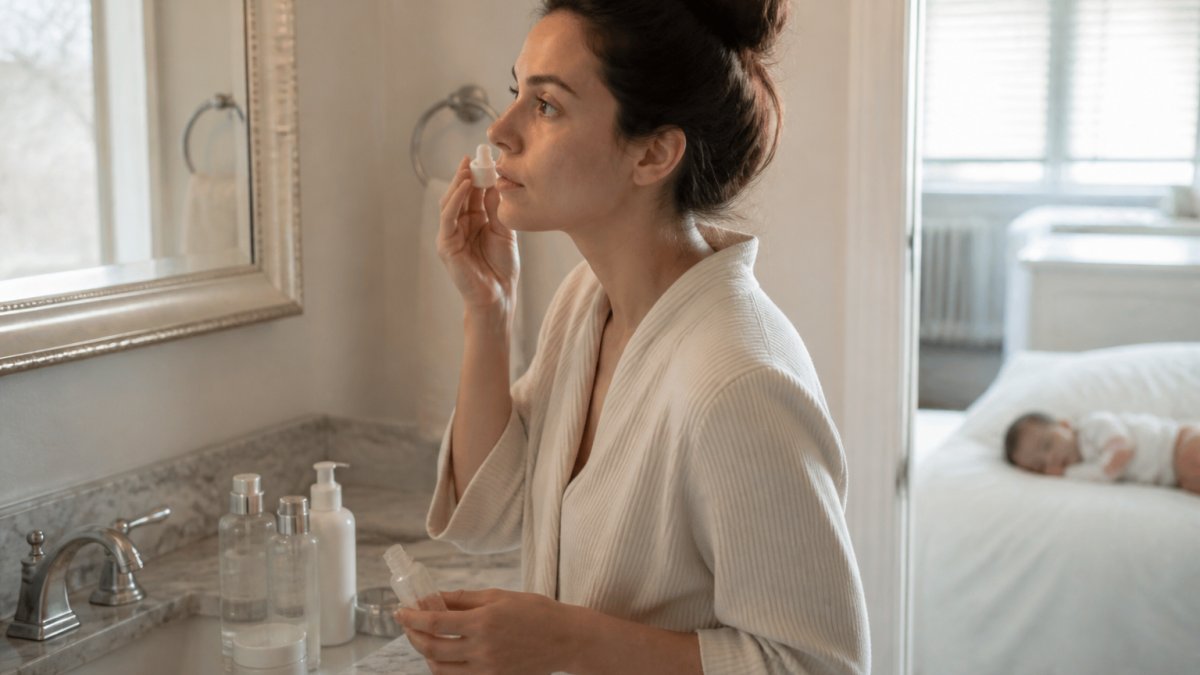
Step 1: Gentle cleansing without stripping
Start with a cleanser that removes dirt and makeup without destroying your already-compromised skin barrier.
Skip harsh foaming cleansers right now. They strip away natural oils your skin desperately needs. Instead, use a gentle, creamy cleanser that rinses clean but leaves skin feeling soft, not tight.
How to do it:
- Wet your face with lukewarm water
- Apply cleanser to damp skin
- Massage gently for 30-45 seconds
- Rinse thoroughly with lukewarm water
- Pat dry with a soft towel (don't rub)
The goal isn't squeaky-clean skin. It's clean skin that still feels hydrated. If your face feels tight after cleansing, your cleanser is too strong.
Step 2: Hydrate with the right serums
After cleansing, apply a hydrating serum while your skin is still slightly damp. This traps water in your skin.
Hyaluronic acid serums work exceptionally well for postpartum dullness. Hyaluronic acid holds up to 1000 times its weight in water.
The Hyaluronic Acid Serum from EVERGRENE contains hyaluronic acid plus glycerin, which both draw moisture into the skin.
Wait 60 seconds for the serum to absorb before moving to the next step. This matters. Rushing defeats the purpose.
Step 3: Moisturize and protect your skin barrier
Once your serum has absorbed, apply a lightweight moisturizer. This seals in the hydration and protects your skin barrier.
Look for moisturizers with ceramides, fatty acids, or squalane, ingredients that repair and reinforce the skin barrier.
The Oil-Free Daily Moisturizer from EVERGRENE contains fatty acids and squalane to restore barrier function without feeling greasy.
In the morning, follow with broad-spectrum SPF 30 or higher. Sun exposure darkens postpartum hyperpigmentation and makes dull skin look worse.
Step 4: Add gentle exfoliation
Once your skin barrier is recovering (usually after 2-3 weeks of the routine above), add gentle exfoliation 1-2 times per week.
Chemical exfoliation works better than physical scrubbing for postpartum skin. Glycolic acid, a gentle chemical exfoliant, dissolves the bonds between dead skin cells without harsh scrubbing.

The Glycolic Acid Serum from EVERGRENE contains 8-10% glycolic acid plus glycerin and vitamin E.
Start with once weekly. If your skin tolerates it well after two weeks, increase to twice weekly.
| Step | Product Type | Frequency | Time |
|---|---|---|---|
| Cleanse | Gentle cream cleanser | Twice daily | 1 minute |
| Hydrate | Hyaluronic acid serum | Twice daily | 1 minute |
| Moisturize | Barrier-repair moisturizer | Twice daily | 1 minute |
| Exfoliate | Glycolic acid serum | 1-2x per week | 1 minute |
Skincare Ingredients Safe While Breastfeeding
If you're breastfeeding, ingredient safety matters. Some skincare actives pass into breast milk in small amounts. You need to know which ones are safe and which to avoid.
Safe while breastfeeding:
- Hyaluronic acid (not absorbed systemically)
- Glycerin (not absorbed into bloodstream)
- Glycolic acid (minimal systemic absorption at low concentrations)
- Vitamin E (fat-soluble, minimal breast milk transfer)
- Squalane (plant-derived, not absorbed systemically)
- Ceramides (not absorbed systemically)
- Panthenol (not absorbed systemically)
Avoid while breastfeeding:

- Retinol and retinoids (vitamin A derivatives accumulate in breast milk)
- Salicylic acid (higher absorption than glycolic acid)
- Benzoyl peroxide (systemic absorption possible)
- High-dose vitamin C (potential for systemic effects)
The products in this guide are all breastfeeding-safe. The EVERGRENE collection emphasizes hydration and barrier repair without relying on ingredients that transfer into breast milk.
If you're using any prescription skincare (tretinoin, adapalene), discuss it with your healthcare provider. Over-the-counter products like those listed above are generally considered safe, but individual circumstances vary.
Your Postpartum Skincare Routine at a Glance
Morning routine (3 minutes):
- Cleanse with gentle cleanser
- Apply hyaluronic acid serum to damp skin
- Apply moisturizer
- Apply SPF 30+
Evening routine (4 minutes):
- Cleanse with gentle cleanser
- Apply hyaluronic acid serum to damp skin
- Apply moisturizer
- Once or twice weekly: apply glycolic acid serum instead of (or before) moisturizer
This routine addresses the core causes of postpartum dullness without overwhelming your schedule. Consistency matters more than complexity. Doing this simple routine every single day produces better results than a complicated routine done sporadically.
Common Mistakes to Avoid When Treating Dull Postpartum Skin
Mistake 1: Over-exfoliating
New mothers often think aggressive exfoliation will fix dullness faster. It doesn't.
Start with gentle exfoliation once weekly.
Mistake 2: Using too many actives at once
Retinol, vitamin C, glycolic acid, salicylic acid, you don't need all of them.
Focus on hydration and barrier repair first.
Mistake 3: Skipping moisturizer
Some women think moisturizer makes their skin greasier.
Use a lightweight, oil-free moisturizer. It hydrates without heaviness.
Mistake 4: Not protecting from sun
Sun exposure darkens postpartum hyperpigmentation and makes dull skin look worse.
Mistake 5: Ignoring sleep and hydration
No skincare product fixes the damage from severe sleep deprivation and dehydration. Drink water consistently.
These lifestyle factors determine 50% of your skin's recovery. Products handle the other 50%.
When to Consult a Healthcare Professional
Most postpartum dullness resolves with time and consistent skincare. However, contact your healthcare provider if you experience:
- Persistent redness or rash that doesn't improve after 2 weeks of gentle care
- Severe dryness or flaking that causes pain or bleeding
- Signs of postpartum dermatitis or eczema flares
- Dullness accompanied by other postpartum symptoms (excessive hair loss, mood changes, extreme fatigue)
- Skin changes that worsen instead of improve after 3 months
These symptoms may indicate a condition requiring professional treatment. Postpartum hormonal changes sometimes trigger dermatitis or other skin conditions that need medical attention.
Also consult your healthcare provider before using any skincare active if you're breastfeeding and have concerns about ingredient safety. Your doctor can review specific products and ingredients for your situation.
Postpartum skin recovery takes time, but it doesn't require complicated routines or expensive treatments.
A consistent routine using hydrating serums, barrier-repair moisturizers, and gentle exfoliation delivers visible results within 4-6 weeks. The Hyaluronic Acid Serum and Glycolic Acid Serum from EVERGRENE work together to restore hydration and remove the dull, dead skin cells that make postpartum skin look tired. Start with the four-step routine above, stay consistent, and watch your skin transform back to its pre-pregnancy glow.
Frequently Asked Questions
Why does skin look dull after having a baby?
Postpartum dullness results from multiple factors working together. Hormonal shifts after delivery reduce estrogen and progesterone, which affects skin's natural oil production and elasticity. Sleep deprivation common in new parenthood reduces blood circulation to the skin and impairs the skin's repair processes overnight. Dehydration is also common when breastfeeding, as it increases your body's fluid demands. Together, these factors cause the skin barrier to weaken, leading to dryness, reduced radiance, and a tired appearance.
What skincare ingredients help brighten dull skin after pregnancy?
Glycolic acid gently exfoliates dead skin cells that dull your complexion while improving skin tone and texture. Hyaluronic acid deeply hydrates and supports skin elasticity, restoring plumpness and glow. Vitamin E provides antioxidant protection and supports healing. Squalane locks in moisture without a greasy feel. Glycerin strengthens your skin barrier and brings bounce back to tired skin. These ingredients work best when layered in a simple routine: cleanse, apply hydrating serums, then moisturize and protect with SPF.
How long does postpartum dull skin last?
Most women see noticeable improvement in skin dullness within 6 to 12 weeks with a consistent skincare routine that prioritizes hydration and gentle exfoliation. Hormonal stabilization typically occurs around 3 to 6 months postpartum as estrogen and progesterone levels normalize. However, if you're breastfeeding, hormonal recovery may take longer, sometimes extending to 12 months or more after weaning. Sleep quality and nutrition also influence recovery speed, so prioritizing rest and hydration accelerates visible results.
Is it safe to use exfoliating acids like glycolic acid while breastfeeding?
Yes, topical skincare ingredients like glycolic acid are safe while breastfeeding because they work on the skin's surface and are not absorbed systemically in significant amounts. The amount that enters your bloodstream is negligible and does not transfer into breast milk in concentrations that would affect your baby. However, start with lower concentrations and use 2-3 times per week to avoid irritating already-sensitive postpartum skin. Always follow with a moisturizer and SPF to protect your skin barrier, and discontinue use if you experience persistent redness or irritation.
