
How to Organize Beauty Tools Effectively
Table of Contents
- Assess Your Collection and Declutter
- Categorize by Usage Frequency and Product Type
- How to Clean and Maintain Skincare Tools
- Skincare Tools to Improve Product Absorption
- Organizing Beauty Products for Small Spaces
- Storage Solutions That Work for Your Routine
- Maintain Your Organized System Long-Term
- Frequently Asked Questions
Last Updated: September 4, 2026
Assess Your Collection and Declutter
Before you can organize beauty tools effectively, you need to know what you actually have. Many people accumulate products over months or years without realizing duplicates, expired items, or tools they never use are taking up valuable space.
Start by pulling everything out. This includes makeup brushes, gua sha stones, jade rollers, cleansing devices, and any other beauty tools scattered across your bathroom, vanity, or drawers. Lay them out where you can see the full collection at once.
Next, check expiration dates and condition. Brushes with frayed bristles, tools with cracks, or products past their prime should be discarded. This isn't just about aesthetics, sanitization matters. Tools that are worn or degraded can harbor bacteria and won't perform as intended.
As you declutter, ask yourself honest questions: Have I used this in the last three months? Does it serve a specific purpose in my routine? If the answer is no to both, it's a candidate for purging. Keep only what you actually reach for and what genuinely improves your skincare results.
Categorize by Usage Frequency and Product Type
Organizing beauty tools effectively means grouping items in ways that match how you actually use them. The most practical approach is to categorize by both frequency and type.
Daily essentials should be the most accessible. These are tools you use every morning or evening, perhaps a facial roller, cleansing brush, or jade stone. Keep these front and center, whether in a drawer, on a shelf, or in a countertop container.
Weekly or occasional tools can be stored slightly less accessibly. Exfoliating devices, deeper cleansing tools, or specialized applicators fall into this category. Group these together so you know where to find them when you need them.
Organize by product type as well: skincare application tools in one section, makeup brushes in another, and specialized devices in a third. This prevents you from hunting through everything when you're looking for a specific brush or roller. Clear compartments and labeled containers make this system work without requiring you to remember where everything lives.
How to Clean and Maintain Skincare Tools
Tools that aren't properly maintained become less effective and can introduce bacteria into your routine. Regular cleaning is essential for both performance and hygiene. The sanitization step is often overlooked during organization, but it should happen before tools are stored, not after.
Daily Rinse Protocol
After each use, rinse tools under warm running water to remove product residue. For most tools, jade rollers, gua sha stones, and metal facial devices, a quick rinse takes 30 seconds and prevents product buildup that can degrade the tool's surface over time (the American Academy of Dermatology). Pat dry with a clean cloth and leave tools on a towel to air dry completely before storing. Never return damp tools to closed containers; moisture creates an environment where bacteria and mold thrive.
Weekly Deep Clean
Once weekly, perform a deeper clean depending on tool type:
-
Cleansing brushes and sonic devices: Soak bristles in warm water with a drop of gentle facial cleanser or baby shampoo for 10-15 minutes. Gently work the cleanser through bristles with your fingers, then rinse thoroughly under running water until water runs clear. Stand brushes upright in a cup or holder to air dry; never lay them flat, which bends bristles and traps moisture at the base.
-
Jade rollers and gua sha stones: Wash with warm soapy water and a soft cloth, paying attention to any grooves or textured edges where product can accumulate. Dry immediately with a microfiber cloth to prevent water spots and mineral deposits.
-
Metal facial tools and microcurrent devices: Wipe with a damp cloth, then dry thoroughly. For devices with electronic components, avoid submerging; instead, dampen a cloth and wipe the surface, then dry with a lint-free cloth.
Storage for Cleanliness
Store cleaned tools in containers that promote air circulation. Open drawer dividers, mesh organizers, or cup holders work better than sealed cases for long-term storage. If using drawer dividers, ensure they're not trapping moisture, avoid storing tools in plastic bags or airtight containers unless they're completely dry. Some organizers use small silica gel packets in storage areas to absorb ambient moisture, which is especially helpful in humid bathrooms.
Sanitizing Problem Tools
If a tool develops visible mold, discoloration, or an odor despite regular cleaning, it may need sanitizing. Soak brushes in a solution of one part white vinegar to three parts water for 30 minutes, then rinse and air dry completely (the CDC). For non-porous tools like rollers, a 70% isopropyl alcohol wipe followed by air drying works well (the CDC). If sanitizing doesn't restore the tool, it's time to replace it, degraded tools won't perform effectively and pose a hygiene risk.
Frequency by Tool Type
Create a maintenance schedule that matches how often you use each tool. Daily-use tools need a rinse after each use and a deep clean weekly. Weekly-use tools need a deep clean every two weeks. Seasonal or occasional tools should be cleaned before storage and again before returning to your routine.
Skincare Tools to Improve Product Absorption
The right tools don't just organize your routine, they actually improve how well your skincare products work. When you organize beauty tools effectively, you're also setting yourself up to use them consistently, which amplifies their benefits.
Facial rollers help with product absorption by gently massaging serums and moisturizers into skin. The rolling motion increases circulation and helps products penetrate deeper rather than sitting on the surface. Jade and stainless steel rollers are popular choices because they're durable and feel cooling on skin.
Gua sha stones serve a similar function while also supporting lymphatic drainage. Using one after applying serums helps lock in hydration and can reduce puffiness. The flat edge works for broader areas, while the curved edge targets specific points.
Cleansing brushes ensure your skin is properly prepped before applying treatment products. Removing dead skin and impurities allows serums and treatments to absorb more effectively. If you're using retinol or glycolic acid formulations, starting with truly clean skin makes those products work better.
Organizing Beauty Products for Small Spaces
Limited space doesn't mean you can't keep your tools organized, it means being strategic about what you store and how you track it. Small-space organization works best when combined with intentional inventory management to prevent over-buying, which compounds space constraints.
Vertical Storage Systems
Maximize wall and vertical drawer space rather than expanding horizontally. Wall-mounted pegboards, magnetic strips, and adhesive shelves are ideal for bathrooms or dorm rooms where counter and drawer space is minimal. Magnetic strips work well for metal tools like certain facial devices; adhesive hooks (rated for 5-10 pounds) hold brushes, rollers, and lightweight organizers without damaging walls. Measure your available wall space before purchasing, most pegboards come in 16-inch, 24-inch, or 32-inch widths. stylish organization solutions.
Vertical drawer dividers and stackable acrylic organizers let you build upward rather than outward. A standard bathroom drawer is typically 16-20 inches wide and 4-6 inches deep; stackable organizers in 2-tier or 3-tier configurations can double or triple your storage capacity in the same footprint. Clear acrylic allows you to see contents without opening each tier, reducing the time spent searching.
Under-Sink and Cabinet Storage
Under-sink areas often go unused because of plumbing obstacles. A tiered shelf unit (typically 12-18 inches tall) or a slim rolling cart (8-10 inches wide) fits in most under-sink spaces and keeps tools organized vertically. Ensure whatever you store there stays dry, use shelf liners to protect against minor leaks, and avoid storing tools directly on the cabinet floor where standing water can accumulate.
For cabinets above or beside the sink, use stackable drawer organizers or pull-out baskets to make items at the back of the cabinet accessible without removing everything in front.
Inventory Tracking for Small Spaces
Small spaces make over-buying easier to hide until the problem is acute. Implement a simple inventory system to prevent duplicates and expired products from consuming precious storage:
-
Digital tracking: Use a notes app or spreadsheet to list each tool, its purchase date, and expiration date (if applicable). Before buying a new tool, check your list to confirm you don't already own something that serves the same purpose. This prevents the accumulation that forces you to reorganize every few months.
-
One-in, one-out rule: When adding a new tool to your collection, remove one you don't use. This keeps your total count stable and prevents creep.
-
Expiration visibility: For products with expiration dates, use small colored stickers or a marker to note the date on the container itself. In a small space, expired items take up room you can't afford to lose.
Drawer Divider Sizing
Measure your drawer dimensions before purchasing dividers. Standard bathroom drawers are 16-20 inches wide; dividers come in modular sizes (2-inch, 3-inch, 4-inch compartments). For makeup brushes, a 2-3 inch compartment per brush type works well. For rollers and larger tools, 4-6 inch compartments prevent crowding. Adjustable dividers offer flexibility if your collection changes seasonally.
Sustainable Small-Space Storage
For those prioritizing eco-friendly options in tight quarters, bamboo drawer organizers and glass containers serve double duty: they're durable enough to last years (reducing replacement waste) and take up less visual clutter than plastic acrylic, making small spaces feel less cramped. Bamboo is naturally antimicrobial, which is a bonus for tool storage. Glass containers are easy to sanitize and don't off-gas like some plastics in humid bathroom environments.
Storage Solutions That Work for Your Routine
The best storage system is one you'll actually use and maintain. This means choosing containers and organization methods that feel natural to your daily routine.
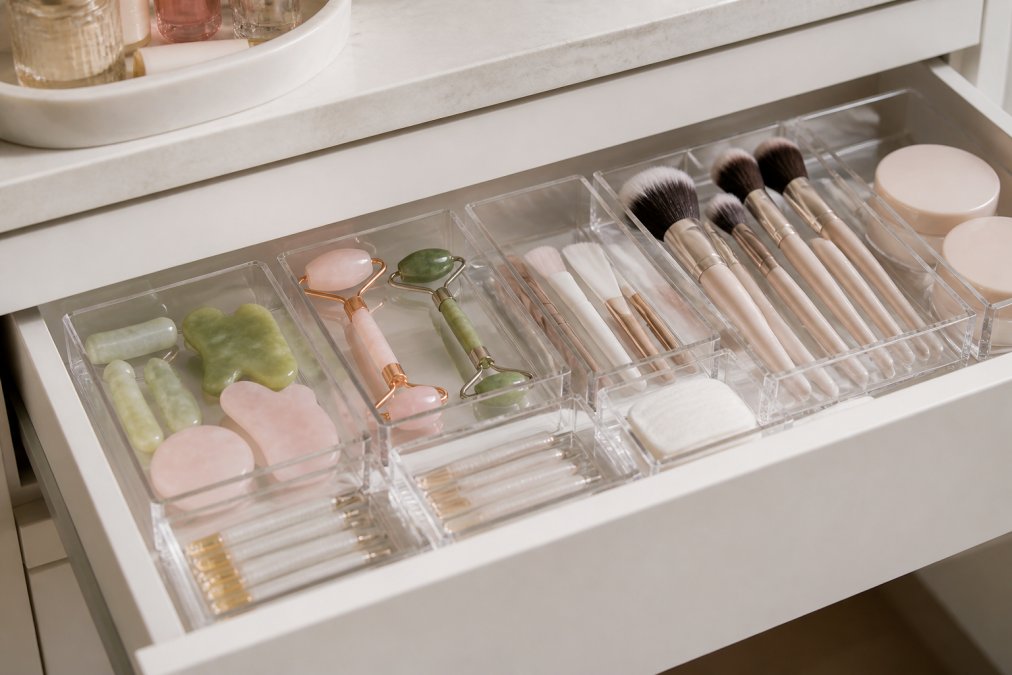
Clear acrylic organizers are popular because they prevent the "out of sight, out of mind" problem. When you can see your tools, you're more likely to use them consistently. They also look clean and modern on a vanity or shelf, which matters if your storage is visible.
Drawer dividers work well if you prefer keeping tools hidden away. They compartmentalize space so each tool has a designated spot, making it easy to put things back in the right place and find what you need quickly.
Labeled containers add an extra layer of organization, especially helpful if you're storing tools in cabinets or under-sink spaces. Labels don't need to be elaborate, simple tags or a label maker work fine. The point is removing any guesswork about where something belongs.
Consider your actual routine when choosing storage. If you use the same tools every single day, they should be the most accessible. If you rotate between different tools depending on your skin's needs that week, group similar tools together so you can swap them easily.
At EVERGRENE, we understand that organization supports consistency. When your tools are properly stored and easy to access, you're more likely to follow through with your skincare routine. That consistency is what drives real results over time.
Maintain Your Organized System Long-Term
Organization isn't a one-time project, it requires ongoing maintenance to stay functional. The good news is that a well-designed system makes maintenance simple.
Set a monthly review schedule. Spend 15 minutes checking that everything is still in its designated spot, that no tools need cleaning, and that nothing has expired. This prevents the slow creep of clutter that eventually undoes your organization.
Rotate tools seasonally if your skincare needs change. Winter might call for different hydration tools than summer, for example. When you swap tools, clean the ones you're putting away before storing them long-term.
Keep a small donation or trash bin nearby. If you notice a tool isn't getting used or has started to degrade, remove it immediately rather than letting it take up space. This prevents your organized system from becoming a storage space for things you don't actually need.
Resist the urge to accumulate. Before adding a new tool to your collection, consider whether it serves a purpose you don't already have covered. More tools doesn't mean better results, the right tools used consistently does.
Frequently Asked Questions
What is the best way to store skincare tools like rollers and gua sha?
Store rollers and gua sha tools in a cool, dry location away from direct sunlight to prevent damage and material degradation. Use acrylic organizers or drawer dividers to keep them compartmentalized and prevent them from rolling around. Stand them upright in a drawer or on a shelf, or lay them flat in a designated container. This approach maintains visibility, ensures easy accessibility, and protects your tools from dust and damage while keeping your collection organized.
How do skincare tools improve product absorption?
Quality skincare tools enhance absorption by improving circulation and promoting deeper penetration of serums and treatments into the skin. Rollers and gua sha stones help massage products into the skin while increasing blood flow, which allows active ingredients like retinol and glycolic acid to work more effectively. This mechanical action also helps break down product barriers on the skin's surface, enabling better nutrient delivery. Using these tools consistently as part of your routine amplifies the results of your skincare products.
How often should I clean my beauty tools?
Clean your beauty tools at least once per week, or more frequently if you use them daily. For tools that contact your face directly, such as brushes and rollers, wash them with mild soap and warm water, then air-dry completely before storage. Gua sha stones and metal tools can be wiped down with a damp cloth and sanitized with a gentle cleanser. Regular cleaning prevents bacteria buildup, extends tool lifespan, and ensures hygiene during your skincare routine.
What storage solutions work best for small spaces?
In small spaces, maximize vertical storage by using wall-mounted shelves, magnetic strips, or adhesive organizers to keep beauty tools off countertops. Stackable drawer dividers and compact acrylic compartments allow you to organize tools efficiently within existing drawers. Consider under-sink storage with pull-out organizers, or use a narrow rolling cart that fits beside a vanity. Labeling each compartment helps you maintain inventory and access tools quickly without taking up extra floor or counter space.
Staying on top of your beauty tool organization means your routine stays efficient and effective. When tools are easy to find and properly maintained, you're far more likely to use them consistently. EVERGRENE's curated selection of high-quality beauty tools is designed to simplify this process, with durable products that integrate seamlessly into any routine. Start organizing today, and you'll notice the difference in both your results and your daily experience.
This article was written using GrandRanker