
European Touch Alternative for Retinol: 2026 Guide
Table of Contents
- Why Retinol Has a Reputation Problem
- How European Skincare Regulation Shaped Gentler Actives
- Bakuchiol vs Retinol Benefits: What the Research Shows
- Retinaldehyde: The Closest Non-Retinol Performer
- Best Retinol Alternatives for Pregnancy and Sensitive Skin
- Layering Protocols for Non-Retinol Actives
- Building a Retinol-Free Routine with EVERGRENE
- Conclusion: Choosing Your Retinol Alternative
- Frequently Asked Questions
Last Updated: September 20, 2026
Why Retinol Has a Reputation Problem
Retinol works. That is exactly why so many people abandon it. This guide from EVERGRENE examines the retinol alternative options that deliver similar results without the peeling, redness, and frustration that push users to quit within weeks.
The Irritation Cycle: Redness, Peeling, and Giving Up
A common mistake is starting too strong, too fast. Daily use of a high-concentration retinol overwhelms the skin barrier before it adapts.
The pattern looks like this:
- Days 1-3: mild tingling, easy to ignore
- Days 4-10: visible peeling around the nose and mouth
- Week 2: stinging when applying anything, even moisturizer
- Week 3: product gets pushed to the back of the shelf
How European Skincare Regulation Shaped Gentler Actives
Most articles wave at "European skincare philosophy" without explaining what actually changed. The shift toward gentler actives was not a marketing trend. It was a regulatory one, and the specifics matter if you want to understand why the formulas landing on shelves look the way they do.
What the Caps Actually Changed
When a regulator caps how much retinol a formula can contain, formulators lose their main lever for boosting results. The old playbook, raise the concentration, accept the irritation, stops working. So the industry did what industries do under constraint: it looked for actives that deliver turnover and collagen support through a different mechanism.
Why This Matters to What You Buy
A product built under tighter concentration limits tends to prioritize tolerance. That means:
- Lower irritation risk out of the box, because the formula cannot lean on a high active load
- More emphasis on delivery systems and supporting ingredients, since raw potency is capped
- Clearer labeling about what the product does and does not contain
The Trade-Off Nobody Mentions
Tighter rules cut both ways. A concentration cap protects the average user, but it also means some people who tolerated higher-strength retinol fine now have fewer strong options in leave-on formats. The gentler category is not strictly better. It is better for the people it was designed around: those who could never get past the irritation phase in the first place.
Bakuchiol vs Retinol Benefits: What the Research Shows
The bakuchiol vs retinol benefits comparison comes down to speed versus tolerance. Bakuchiol is a plant-based compound derived from the seeds of the Psoralea corylifolia plant (pubmed.ncbi.nlm.nih.gov). It is not a vitamin A derivative, so it does not trigger the same irritation pathway.
Where bakuchiol wins:
- No peeling or purging phase
- Safe for sensitive skin and during pregnancy
- Stable in formulas, so it does not degrade in sunlight
Where it falls short:
- Results take longer to appear
- Fewer studies back its long-term anti-aging effects
- Not as effective on deep-set wrinkles
Where Bakuchiol Wins and Where It Falls Short
Bakuchiol suits anyone who has failed on retinol before. It also works for people who want preventative skincare without a weeks-long adjustment period. It falls short for anyone targeting established deep wrinkles, where prescription-strength options remain the standard.
Retinaldehyde: The Closest Non-Retinol Performer
Retinaldehyde sits one conversion step away from retinoic acid, the active form your skin actually uses. Retinol needs two conversions. That shorter path means retinaldehyde works faster at lower concentrations, which translates to less irritation for many users.
Best Retinol Alternatives for Pregnancy and Sensitive Skin
The best retinol alternatives for pregnancy avoid vitamin A derivatives entirely. Bakuchiol, peptides, and rosehip oil all fit that category and are generally considered safe during pregnancy, though it is always worth confirming with your doctor.
| Alternative | Best For | Key Benefit | Pregnancy-Safe |
|---|---|---|---|
| Bakuchiol | Sensitive skin, beginners | No irritation phase | Yes |
| Peptides | Fine lines, firmness | Supports collagen synthesis | Yes |
| Rosehip oil | Dry, dull skin | Omega fatty acids, antioxidants | Yes |
| Glycolic acid | Uneven texture, dark spots | Chemical exfoliation | Yes |
| Retinaldehyde | Tolerant skin seeking faster results | One-step conversion | No |
Peptides, Rosehip Oil, and Glycolic Acid: What Actually Works
Peptides are short chains of amino acids that signal the skin to build more collagen. They are gentle and pair well with almost anything. Rosehip oil delivers omega fatty acids and antioxidants that support skin healing and defend against collagen loss. Glycolic acid, an alpha-hydroxy acid, exfoliates the surface to improve skin texture and fade hyperpigmentation.

Layering Protocols for Non-Retinol Actives
Layering is where most retinol-free routines fall apart. The ingredients are gentle individually, but the wrong combination in the wrong order still overwhelms the barrier. The goal is not to stack everything. It is to sequence actives so each one works without canceling the next.
The Order That Actually Works
Apply products from thinnest to thickest, and put water-based actives before oil-based ones. A reliable sequence:
- Cleanser
- Water-based active serum (glycolic acid, peptide, or bakuchiol, not all three)
- Hydrating serum (hyaluronic acid)
- Moisturizer
- Facial oil, if using one
- SPF in the morning, always last
Conflict Rules Worth Memorizing
Some pairings undermine each other. A few that matter:

- Glycolic acid and retinaldehyde: do not use the same night. The combined exfoliation strips the barrier and produces the irritation you switched away from retinol to avoid.
- Glycolic acid and bakuchiol: can work, but not back-to-back. Give the skin a recovery night between them.
- Peptides and acids: keep them on separate nights. Low pH from acids can degrade some peptide chains before they do their job.
- Vitamin C and glycolic acid: both are acidic. Stacking them in the morning raises irritation risk for sensitive skin. Alternate or use vitamin C in the morning and glycolic at night.
A Rotation That Respects the Barrier
A simple weekly framework that avoids stacking:
- Monday, Wednesday, Friday: glycolic acid serum after cleansing
- Tuesday, Thursday: peptide or bakuchiol serum
- Saturday, Sunday: hydration only, no actives
- Every morning: antioxidant serum plus SPF
This rhythm gives the barrier time to recover while still delivering consistent active ingredients. Most people see improved texture within four to six weeks.
Wait Times and pH: The Details Competitors Skip
Two variables decide whether layering helps or hurts.
pH. Glycolic acid needs a low pH to exfoliate effectively, but that same low pH can disrupt peptides and bakuchiol applied immediately after. If you use an acid, let it sit and then move to hydration rather than another active.
How to Tell It Is Working
Signs the rotation is right: skin feels comfortable after application, texture improves gradually, and you are not reaching for extra moisturizer by midday. Signs it is wrong: stinging on application, flaking around the nose, or new redness that lasts more than a day. If you see the second set, drop to hydration-only nights for a week and restart with one active.
Building a Retinol-Free Routine with EVERGRENE
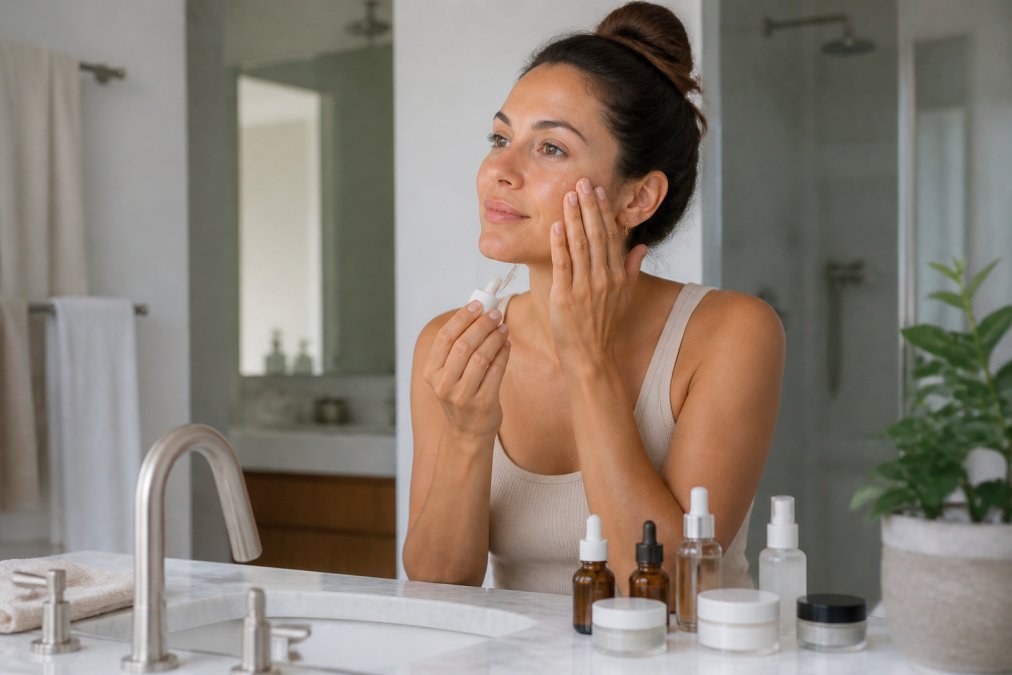
A retinol-free routine works best when each product has a clear job. EVERGRENE builds its collection around that principle: fewer products, each formulated to do one thing well.
Conclusion: Choosing Your Retinol Alternative
Finding a retinol alternative that actually fits your skin takes less guesswork than it used to. Bakuchiol and peptides suit sensitive skin and pregnancy. Glycolic acid handles texture and tone. Retinaldehyde sits in the middle for anyone who wants faster results and can tolerate mild actives.
Frequently Asked Questions
Is European skincare generally better than American skincare?
European skincare is not automatically better, but the EU's stricter cosmetic regulation has pushed formulators toward gentler active ingredients. That regulatory pressure led European brands to develop alternatives like bakuchiol and retinaldehyde that deliver anti-aging results with less skin irritation. What matters is the formulation, not the flag on the bottle.
What are the most effective natural alternatives to retinol?
Bakuchiol is the most studied plant-based retinol alternative, with clinical trials showing comparable improvements in fine lines and wrinkle reduction. Rosehip oil provides omega fatty acids that support collagen synthesis and defend against natural collagen loss. Peptides, including the acetyl hexapeptide-8 found in some serum formulations, signal the skin to support its own renewal process. Each works differently, and combining them in a layered routine often produces better results than any single ingredient alone.
Is bakuchiol a good alternative to retinol for sensitive skin?
Bakuchiol is well suited to sensitive skin because it does not trigger the peeling and redness that vitamin A derivatives often cause. Clinical trials comparing the two found similar improvements in fine lines and skin texture, but bakuchiol users reported far less stinging and flaking. For anyone who has abandoned retinol because of skin irritation, bakuchiol offers a realistic path to anti-aging results without damaging the skin barrier.
How do glycolic acid and retinol differ in skincare routines?
Glycolic acid is an exfoliant that dissolves dead cells on the surface, improving skin texture and evening hyperpigmentation. Retinol works deeper, accelerating cell turnover and supporting collagen synthesis. They target different layers of the skin, which is why they can complement each other when layered correctly. A glycolic acid serum used two to three evenings per week, alternated with a gentle anti-aging serum, delivers both surface refinement and deeper dermal support without the irritation that combining strong actives can cause.
What should I look for in a retinol-free anti-aging serum?
Look for ingredients with evidence behind them: bakuchiol or retinaldehyde for cell turnover, peptides for elasticity, hyaluronic acid for hydration, and vitamin C for brightening and antioxidant protection. Check that the formula is non-comedogenic and hypoallergenic if your skin reacts easily. A well-built retinol-free serum should address multiple signs of aging, including fine lines, uneven skin texture, and loss of firmness, without the peeling associated with vitamin A derivatives.
If irritation has derailed your skincare routine before, the fix is not a stronger product. It is a gentler, more consistent system. EVERGRENE offers a curated lineup built for exactly that: a glycolic acid serum for exfoliation, an age-defying serum for firmness, a hyaluronic acid serum for hydration, and a rosehip-based oil to lock it all in. Get started with EVERGRENE and build a retinol-free routine you will actually stick with.