
Glo Skin Beauty Alternatives for Sensitive Skin
Table of Contents
- Why Sensitive Skin Needs Different Alternatives
- Key Ingredients for Sensitive Skin Protection
- How to Transition to New Skincare Products Without Irritation
- Gentle Exfoliation for Sensitive Skin: What Works
- Building a Dermatologist-Recommended Sensitive Skin Routine
- Budget-Friendly vs. Premium Options for Reactive Skin
- Patch Testing Protocols Before Full Commitment
- Conclusion
- Frequently Asked Questions
Last Updated: September 3, 2026
Why Sensitive Skin Needs Different Alternatives
Sensitive skin doesn't respond well to generic formulations. When your skin barrier is compromised or reactive, standard skincare products can trigger redness, stinging, or flaking within hours. This is where a gloskinbeauty alternative for sensitive skin becomes essential. Your skin needs products formulated specifically to calm inflammation, strengthen your barrier, and deliver hydration without triggering reactions.
Many people with sensitive skin abandon active ingredients entirely, assuming they'll cause irritation. That's the wrong trade-off. The right alternatives combine clinically proven ingredients with formulations designed to minimize irritation risk. At EVERGRENE, we've curated a selection of sensitive skin alternatives that prove you don't have to sacrifice results. Our approach focuses on products that support your skin barrier while delivering real performance. Whether you're transitioning away from a brand that no longer works or building a routine from scratch, the products we recommend share a common philosophy: they use skin-strengthening ingredients like hyaluronic acid, squalane, and panthenol alongside soothing botanicals like chamomile and aloe vera. They're formulated to be non-comedogenic and hypoallergenic.

Key Ingredients for Sensitive Skin Protection
Understanding what to look for before switching to a new gloskinbeauty alternative for sensitive skin is crucial.
Hyaluronic acid is foundational for sensitive skin routines. This humectant draws moisture into the skin and holds it there, plumping the skin barrier and reducing the appearance of irritation. Our Hyaluronic Acid Serum delivers this benefit in a lightweight formula that won't overwhelm reactive skin.
Squalane is a lipid that mimics your skin's natural sebum. Unlike heavier oils, squalane absorbs quickly and reinforces your skin barrier without leaving a greasy residue. It's non-comedogenic, meaning it won't trigger breakouts even on acne-prone sensitive skin.
Panthenol (provitamin B5) reduces redness and improves barrier function. Research consistently shows that panthenol helps sensitive skin recover faster from irritation and builds long-term resilience (peer-reviewed research). Our Oil-Free Daily Moisturizer includes panthenol specifically to address redness and support barrier repair.

Botanical extracts like chamomile, aloe vera, and green tea provide antioxidant and anti-inflammatory benefits without the irritation risk of synthetic actives. These botanicals work best as supporting ingredients paired with hydrating bases like hyaluronic acid.
Avoid these ingredients if your skin is reactive: fragrance (synthetic or natural), essential oils, high-concentration acids without proper buffering, and denatured alcohols. Products claiming to be "clean" or "natural" aren't automatically safer; some plant extracts are more irritating than synthetic alternatives.
How to Transition to New Skincare Products Without Irritation
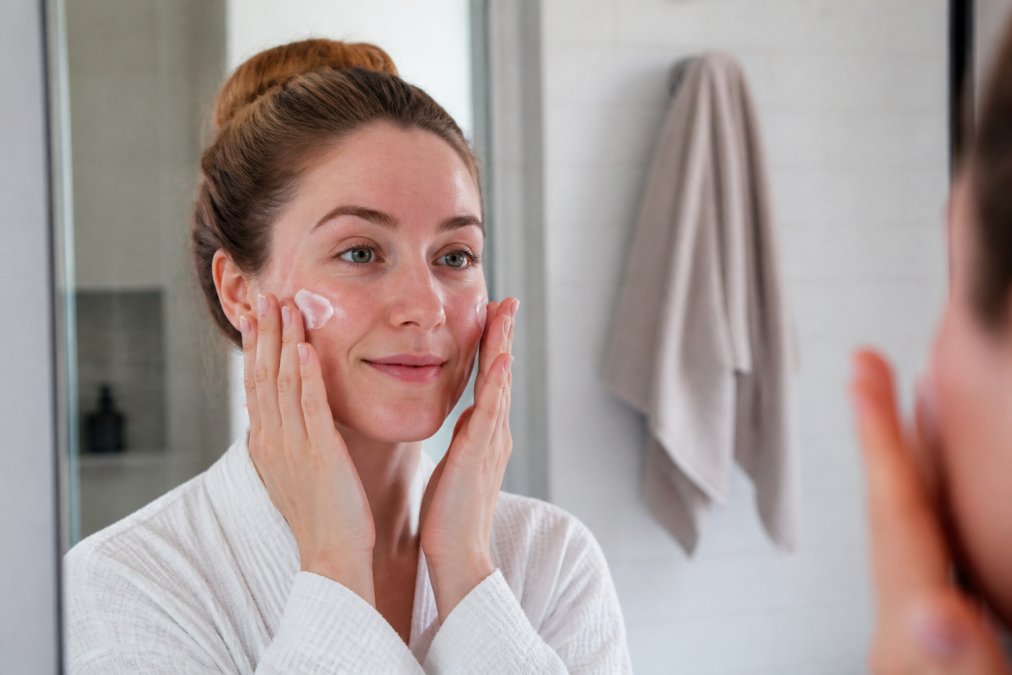
Switching to a new gloskinbeauty alternative for sensitive skin requires a deliberate transition strategy. Introducing new products too quickly is the fastest way to trigger irritation.
Start with a single product swap. Don't overhaul your entire routine at once. Choose one product, typically a cleanser or moisturizer, and use it exclusively for 7-10 days before introducing anything else new. This gives your skin time to acclimate and helps you identify whether irritation comes from the new product.
Use the "low and slow" introduction method. On day one, use the new product once, in the evening. If your skin tolerates it without redness or stinging by morning, use it twice on day two. Gradually increase frequency over a week. This approach lets your barrier adapt without shock.
Avoid mixing actives during transition. If you're switching to a product containing an active ingredient like glycolic acid or retinol, pause any other actives you're using. Wait until your skin has stabilized on the new product (typically 3-4 weeks) before reintroducing other treatments.
Keep your routine minimal during the switch. Use only a cleanser, hydrating serum, and moisturizer while transitioning. Skip masks, exfoliants, and treatments temporarily. Our Kale Face Cleanser is specifically formulated to clean without stripping your barrier, making it an ideal base for a simplified transition routine.

Timing matters. Introduce new products during a low-stress period when you're not traveling or experiencing hormonal shifts. The transition period typically lasts 4-6 weeks. During this time, your skin is rebuilding its barrier and adjusting to new ingredients. You may see temporary dryness or slight congestion before improvement; this is normal.
Gentle Exfoliation for Sensitive Skin: What Works
Sensitive skin doesn't mean no exfoliation. It means choosing exfoliation methods that remove dead skin without compromising your barrier.
Chemical exfoliation is superior for sensitive skin. Gentle acids like lactic acid and mandelic acid work at lower concentrations than glycolic acid, making them ideal for reactive skin. Lactic acid is particularly valuable because it's also a humectant; it hydrates while it exfoliates (peer-reviewed research).
Start with low concentrations. A 5-10% lactic acid product used once or twice weekly is far safer than a 20% glycolic acid used daily (the American Academy of Dermatology). Many people with sensitive skin never need to go beyond 10% concentration to see results.
Avoid physical scrubs entirely. Microbeads and other abrasive particles create micro-tears in sensitive skin, triggering inflammation and compromising your barrier.
Pair exfoliation with barrier support. On the days you exfoliate, skip other actives and focus on hydration. Use a hydrating serum like our Hyaluronic Acid Serum followed by a rich moisturizer. Exfoliation frequency for sensitive skin should be conservative: once or twice weekly maximum. Your skin will tell you when it's ready for more through improved texture and fewer breakouts.
Building a Dermatologist-Recommended Sensitive Skin Routine
A solid sensitive skin alternatives routine follows a logical structure: cleanse, hydrate, support, protect.
Step 1: Cleanse gently. Your cleanser should remove oil and dirt without stripping your skin's natural lipids. Our Kale Face Cleanser combines gentle surfactants with hydrating ingredients like aloe vera and chamomile, leaving your skin clean but not tight.
Step 2: Hydrate immediately. Apply a hydrating serum or essence while your skin is still slightly damp. Hyaluronic acid serums are the standard here, but glycerin-based hydrating toners work equally well.
Step 3: Strengthen your barrier. Follow hydration with a moisturizer that contains barrier-supporting ingredients like squalane, ceramides, or fatty acids. For sensitive skin, lightweight formulas often work better than heavy creams.
Step 4: Protect and treat. If you're using an active ingredient, this is where it goes after your base routine. For sensitive skin, one targeted treatment per routine is ideal.
Step 5: Seal overnight (optional). A final occlusive layer like a lightweight facial oil can help sensitive skin recover overnight, particularly if your skin tends toward dryness.
Budget-Friendly vs. Premium Options for Reactive Skin
Cost shouldn't determine whether you get effective skincare. Many budget-friendly formulations outperform premium alternatives for sensitive skin.
Where premium products add real value: formulation sophistication with buffering systems that make actives safer, ingredient purity with fewer fillers, and research backing through clinical testing on reactive skin.
Where budget alternatives compete effectively: basic hydration, cleansing, and barrier support. A $20 hydrating serum with hyaluronic acid and glycerin performs nearly identically to an $80 alternative if the core formula is sound.
EVERGRENE's approach bridges this gap. Our Oil-Free Daily Moisturizer at $45 delivers barrier-supporting ingredients and panthenol without premium markup. Our Hyaluronic Acid Serum at $34 includes a straightforward, effective formula.
Budget allocation strategy for sensitive skin: Invest in your cleanser and moisturizer (used twice daily). Save on serums and treatments (you use less product, and benefit differences are smaller). For most people, a $100-150 monthly budget covers everything needed: a gentle cleanser ($40-50), hydrating serum ($30-40), daily moisturizer ($40-50), and one targeted treatment ($20-30).
| Product Category | Budget Option | Premium Option | Recommendation |
|---|---|---|---|
| Cleanser | $15-25 | $50-80 | Budget often sufficient; focus on gentle formula |
| Hydrating Serum | $20-30 | $60-100 | Budget alternatives perform equally well |
| Moisturizer | $30-40 | $80-150 | Invest here; daily use justifies quality |
| Active Treatment | $25-40 | $70-120 | Budget options adequate if formulated well |
Patch Testing Protocols Before Full Commitment
Patch testing is essential insurance against wasting money and triggering irritation. A proper patch test takes 48-72 hours.
Choose your test area carefully. The inside of your forearm is ideal because the skin there is thin and reactive, similar to your facial skin.
Apply a small amount. Use roughly the size of a rice grain on clean, dry skin. Don't wash the area for 24 hours.
Monitor for reactions. Check immediately after application, then at 24 hours and 48 hours. Look for redness, itching, burning, swelling, or any visible irritation. If you see any reaction, wash the area immediately and don't use the product on your face.
If the patch test passes, proceed cautiously. Even a negative patch test doesn't guarantee your face will tolerate the product. Facial skin is more sensitive than forearm skin. Start with a small amount on a localized area before incorporating the product into your full routine.
Document your results. Keep a simple log of products tested, dates, and outcomes. Over time, you'll identify patterns of ingredients or brands that consistently trigger reactions versus those your skin tolerates well.
Conclusion
Finding the right gloskinbeauty alternative for sensitive skin comes down to understanding your skin's specific needs and choosing products formulated to address them. Sensitive skin requires gentle cleansing, consistent hydration, barrier support, and minimal irritation triggers. The alternatives that work best combine clinically proven ingredients like hyaluronic acid and panthenol with formulations designed specifically for reactive skin.
EVERGRENE's curated selection, including our Kale Face Cleanser, Hyaluronic Acid Serum, and Oil-Free Daily Moisturizer, provides the foundation for a simplified, effective routine. Start with a patch test, introduce products gradually, and give your skin 4-6 weeks to adapt. You'll see measurable improvements in redness reduction, hydration, and overall skin resilience.
Frequently Asked Questions
Q: What makes a skincare product safe for sensitive skin alternatives?
A: Safe alternatives for sensitive skin contain hypoallergenic, non-comedogenic ingredients like hyaluronic acid, squalane, and plant-based extracts such as aloe vera and chamomile. They avoid common irritants like synthetic fragrances, sulfates, and alcohol. EVERGRENE's Oil-Free Daily Moisturizer ($45) includes panthenol to reduce redness and support barrier function, making it ideal for reactive skin types.
Q: How do I safely switch to a new skincare brand if I have reactive skin?
A: Introduce one new product at a time over 1-2 weeks, using it every other day initially to monitor for irritation. Start with a cleanser and moisturizer before adding serums or exfoliants. Patch test on a small area of skin first. Avoid combining multiple active ingredients like retinol and glycolic acid simultaneously when transitioning.
Q: What ingredients should I avoid if I have sensitive skin?
A: Avoid synthetic fragrances, essential oils, high-concentration retinoids, strong acids without buffering, sulfates, and alcohol denat. Be cautious with salicylic acid and benzoyl peroxide unless specifically recommended. Always check ingredient lists for common irritants. EVERGRENE's Kale Face Cleanser ($42.60) uses natural botanicals and avoids harsh chemicals, making it suitable for all skin types including sensitive.
Q: How often should I exfoliate if I have sensitive skin?
A: Limit chemical exfoliation to 1-2 times per week maximum with gentle formulations. Avoid physical scrubs entirely on reactive skin. Opt for low-concentration glycolic acid or enzyme-based exfoliants. Start with once weekly and increase only if skin tolerates well. Always follow exfoliation with hydrating serums and moisturizers to restore the skin barrier. Patch test any new exfoliant before full-face application.
Sensitive skin doesn't require choosing between efficacy and safety. The right alternatives deliver both. Build your routine with intention, trust the process, and your skin will respond with clarity and calm.
This article was written using GrandRanker