
Simplified Skincare for Sensitive Skin: A Practical Guide
Table of Contents
- Why Simplified Skincare Works for Sensitive Skin
- Understanding Sensitive and Reactive Skin
- How to Simplify Your Skincare Routine
- Skincare Ingredients to Avoid for Sensitive Skin
- The Essential Elements of a Simple Skincare Routine for Sensitive Skin
- Patch Testing Skincare Products: A Safe Introduction Method
- Measuring Progress and Adjusting Your Routine
- Frequently Asked Questions
Last Updated: October 13, 2026
Why Simplified Skincare Works for Sensitive Skin
Simplified skincare sensitive skin routines are often best for reactive skin: fewer products mean less irritation and time to recover. Many people with sensitive skin need to strip back, not add more.
Complex routines cause cumulative irritation. Each product adds new ingredients, and layering enough of them overwhelms your skin barrier until manageable sensitivity becomes reactive skin that flares at any new product.
When you simplify, your skin barrier gets space to heal, you use fewer potential irritants, and you can identify which products actually work.
The benefits of simplified skincare sensitive skin routines go beyond comfort: lower cost, less time, easier travel. You're not juggling five bottles, just three or four essentials that do real work.
Understanding Sensitive and Reactive Skin
Sensitive skin reacts strongly to products, weather, or environmental triggers, stinging, burning, itching, redness. Reactive skin is skin oversensitized by overuse of actives or harsh products.
True sensitive skin needs gentle, minimal routines; reactive skin needs a recovery period: strip everything back, then slowly rebuild.
Both share one core issue: a compromised skin barrier. This outermost layer protects against irritants and locks in moisture. When damaged, water escapes and irritants penetrate, triggering inflammation, redness, dryness, and discomfort.
Common triggers for sensitive skin include:
- Fragrance (even "natural" essential oils)
- Alcohol in products
- Exfoliating acids used too frequently
- Retinol applied without proper introduction
- Products with multiple active ingredients
- Over-cleansing or using hot water
The good news: your barrier can heal. It usually takes 4 to 8 weeks, but a simplified routine lets recovery happen naturally.
How to Simplify Your Skincare Routine
Simplifying is a structured process: remove problem products while keeping what works. Follow these steps in order.
Step 1: Assess Your Current Routine
Write down every product you use: cleansers, toners, serums, moisturizers, treatments (retinol, acids, masks), sunscreen, spot treatments.
Note how long you've used each, whether it causes stinging, redness, or dryness, and how many actives it contains.
This audit reveals the likely culprits: products with multiple actives or those that sting are prime candidates for removal.
Step 2: Identify and Remove Problem Products
Cut anything causing visible irritation. If a product stings or reddens your skin, remove it now.
Remove products with overlapping functions: keep the gentler moisturizer, or pick one of a serum and a treatment. Redundancy creates irritation.
Finally, remove anything with fragrance or essential oils. Even "natural" fragrances irritate sensitive skin and serve no skin-health purpose.
Step 3: Build a Minimal Foundation
Your core routine needs three things: cleansing, hydration, and sun protection. Everything else is optional until your skin stabilizes.
Start with:
- A gentle cleanser (non-foaming, no fragrance)
- A lightweight moisturizer
- Broad-spectrum SPF 30+ sunscreen
Use this routine for 2-4 weeks. Your skin should feel calmer and redness should decrease. Once your barrier is stable, add one new product at a time.
Skincare Ingredients to Avoid for Sensitive Skin
Most sensitive-skin articles hand you a blacklist and stop there, but that's too blunt.
Here is how to think about the common suspects, with the caveats that matter.
Exfoliating acids (glycolic, lactic, salicylic, mandelic). These are effective and well studied; the issue for reactive skin is frequency and concentration, not the molecule.
Sulfates (sodium lauryl sulfate, sodium laureth sulfate). These effective surfactants can strip lipids and leave skin tight.
Benzoyl peroxide. Effective for inflammatory acne but drying and potentially irritating at higher concentrations.
Physical exfoliants and cleansing tools. Scrubs, brushes, and cleansing devices add mechanical irritation on top of chemical load. During recovery, skip them entirely. Fingertips are enough.
Preservatives and other contact allergens. Some people react to specific preservatives (for example, methylisothiazolinone) or propylene glycol.
If your skin reacts severely, repeatedly, or to products you've used without issue before, see a dermatologist. A simplified routine can reduce irritation but is not a substitute for diagnosing conditions like eczema, rosacea, or contact dermatitis.
The Essential Elements of a Simple Skincare Routine for Sensitive Skin
A working routine has three pillars: gentle cleansing, hydration, and sun protection. These address sensitive skin's core needs without overwhelming it.
Gentle Cleansing Without Stripping
Cleansing removes dirt, oil, and makeup. But harsh cleansing damages your barrier and triggers sensitivity. The goal is to clean without stripping.
Use a non-foaming, fragrance-free cleanser; cream cleansers or micellar water work well. Avoid foaming cleansers (they strip skin), bar soaps (too alkaline), cleansing oils (irritating for some), and anything with fragrance or essential oils.
Cleanse once in the evening. In the morning, rinse with cool or lukewarm water only. Hot water damages your barrier.
Use your fingertips, not a washcloth. Rub gently for 30-60 seconds. Pat dry, don't rub.
Hydration and Barrier Support
Hydration is critical, a dehydrated barrier is a damaged barrier. Your moisturizer should contain humectants (glycerin, hyaluronic acid) to draw water in, emollients (oils, butters) to soften and smooth, and occlusives (silicones, waxes) to seal in moisture.
EVERGRENE's Oil-Free Daily Moisturizer is designed for sensitive skin, with panthenol (provitamin B5) to reduce redness and support barrier function, plus amino acids and vitamin E derivatives that strengthen your skin's natural defenses. Apply to damp skin to lock in hydration.

For extra hydration, add a hydrating serum like EVERGRENE's Hyaluronic Acid Serum. Hyaluronic acid holds up to 1000 times its weight in water. Apply 2-3 drops to damp skin, then follow with your moisturizer. This layering technique, called "hydration sandwiching", maximizes moisture retention.
Apply moisturizer twice daily, morning and evening, using enough to cover face and neck without feeling greasy.
Daily Sun Protection
Sun exposure damages your barrier and triggers sensitivity. UV rays cause inflammation and redness. Sunscreen is non-negotiable, even on cloudy days.
Use broad-spectrum SPF 30 or higher, applying 1/4 teaspoon to your face and reapplying every 2 hours outdoors.
Choose mineral sunscreens (zinc oxide, titanium dioxide) if chemical sunscreens irritate you. Mineral sunscreens sit on top of skin and reflect UV rays. They're gentler for sensitive skin.
Look for sunscreens labeled "fragrance-free" and "hypoallergenic," and avoid added fragrance or essential oils.
Patch Testing Skincare Products: A Safe Introduction Method
Once your skin stabilizes, you'll want to add products back. Patch testing prevents reactions and identifies problem ingredients before they affect your whole face.
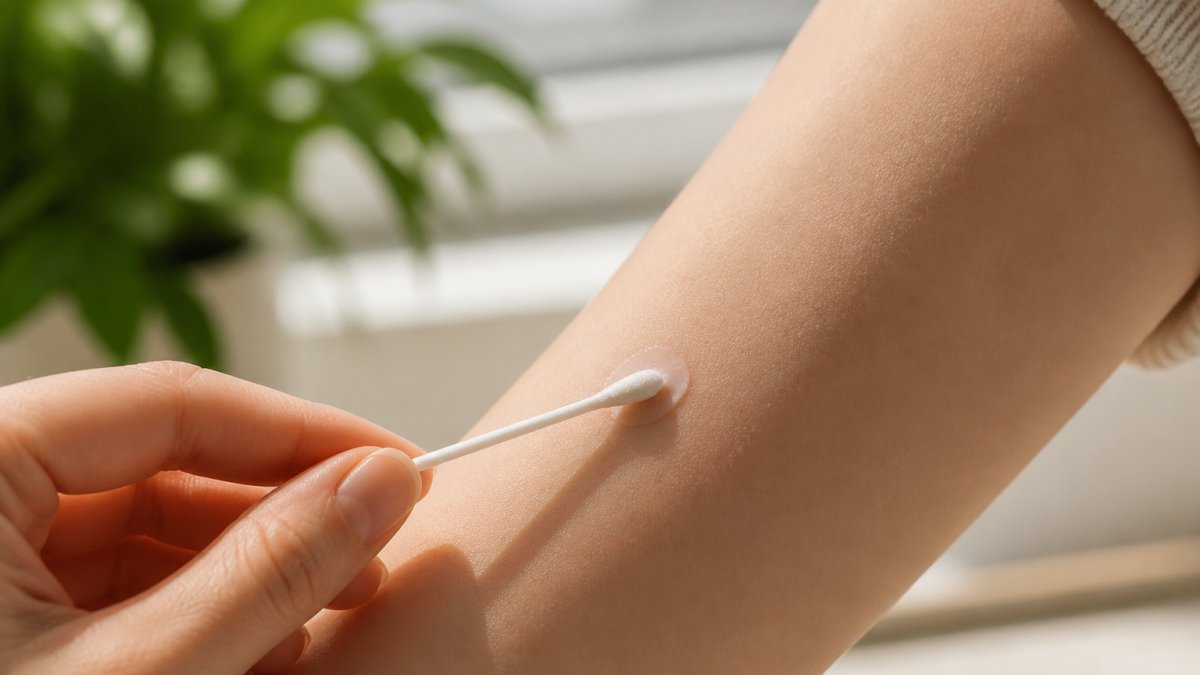
Patch testing is simple: apply a small amount of the new product to a small area, wait 24-48 hours, and watch for reactions. If no irritation appears, it's likely safe for your whole face.
Here's the step-by-step process:
-
Choose a test area. Behind your ear or on your inner arm, sensitive but hidden.
-
Apply a small amount. Use a cotton swab or fingertip, only a dime-sized amount.
-
Wait 24-48 hours. Don't apply other new products or wash the area excessively.
-
Observe. Look for redness, stinging, itching, swelling, or breakouts. Mild tingling is normal with some actives; burning or stinging means stop.
-
If no reaction, introduce to your face. Start 2-3 times per week, gradually increasing over 2-3 weeks.
-
If reaction occurs, wash it off immediately. Wait at least one week before patch testing another product.
Measuring Progress and Adjusting Your Routine
Simplification only works if you can tell whether it's working. Most articles say "track your progress" and stop there; a concrete method is more useful.
Use a simple symptom-and-product diary. No app needed, a notes file or paper notebook with four columns works:
- Date
- Products used (including anything new)
- Symptoms (redness, stinging, burning, itching, tightness, flaking, breakouts)
- Severity (rate each 0-10, where 0 is none and 10 is the worst you've experienced)
Log once a day at the same time in the same lighting, consistency matters more than detail.
Set an observation window. Barrier recovery is not fast.
Know what improvement looks like. Progress is gradual and easy to miss day to day. Practical indicators:
- Fewer irritation episodes per week, not just milder ones
- Less tightness after cleansing
- Reduced stinging when applying moisturizer
- Less frequent or intense redness
- Skin comfortable rather than reactive to temperature changes
- Fewer new breakouts or flares
Rule of thumb: if weekly severity scores trend down over four weeks, the routine is working. If they're flat or rising, something is still irritating.
Apply decision rules instead of guessing.
- Scores flat or rising after four weeks: strip back to cleanser, moisturizer, and sunscreen only; hold for another two to four weeks.
- Dryness or tightness persists: switch to a richer moisturizer or add a single hydrating serum, then re-observe for two weeks.
- New breakouts after adding a product: remove it and wait one week before testing anything else. The formula may be comedogenic, or you may be reacting to an ingredient.
- Symptoms improve and hold steady: you have a stable baseline, now you can patch test one new product.
Reintroduce one product at a time. Add it at low frequency, two or three times a week, keeping everything else constant for at least two weeks.
Adjust for factors beyond product count. Sensitivity isn't only about how many bottles you use. Weather, indoor heating and air conditioning, sun exposure, hot showers, stress, and sleep all affect reactivity. If scores rise during a cold snap or stressful week without any product change, the trigger is environmental or lifestyle, not your routine. Note those factors in your diary so you don't blame a product for something the season did.
Recheck your baseline periodically. Even a stable routine can drift: formulas get reformulated, skin changes with age and season, and a summer product may feel too light in winter.
Frequently Asked Questions
What are the benefits of a simplified skincare routine for sensitive skin?
A simplified routine reduces your skin's exposure to potential irritants and allows your barrier to recover. Fewer products mean fewer ingredients that could trigger inflammation or redness. Most importantly, you can identify which products actually work for you instead of guessing which item in a 10-step routine caused a reaction. Many people see calmer, more comfortable skin within 2-4 weeks of switching to a minimal approach focused on cleansing, hydration, and sun protection.
How many products should you use in a sensitive skin routine?
Start with three essentials: a gentle cleanser, a hydrating moisturizer, and a daily sunscreen. This foundation addresses cleansing, barrier repair, and protection without overwhelming your skin. Once your skin stabilizes, you can introduce one additional product at a time if needed, such as a hydrating serum. The goal is to use only what your skin actually requires, not what marketing suggests you need.
Which ingredients should people with sensitive skin avoid?
Common irritants include alcohol denat (drying), fragrance (natural or synthetic), essential oils, high-concentration acids without gradual introduction, and strong preservatives like formaldehyde releasers. Also limit exfoliants like physical scrubs and high-dose salicylic acid until your barrier is stable. Always check ingredient lists and introduce any active ingredient slowly through patch testing first.
How do you introduce a new skincare product to sensitive skin?
Patch test first by applying a small amount behind your ear or on your inner arm and waiting 24-48 hours for any reaction. If no redness or itching occurs, apply it to a small facial area for 3-5 days before full-face use. Introduce only one new product every 1-2 weeks so you can identify what works or causes problems. Keep a simple log of what you add and how your skin responds to track patterns.