
SkinBeautySolutions vs The European Touch: 2026 Guide
Table of Contents
- SkinBeautySolutions vs The European Touch: Key Differences at a Glance
- Service Methodology: Clinical Protocols vs European Facial Techniques
- Ingredient-Level Comparison: Active Ingredients and Formulation Standards
- Costs and Memberships: What You Actually Pay For
- Best Retinol Alternatives for Pregnancy: What to Use Instead
- Clinical vs Holistic Skincare: Which Approach Fits Your Skin
- Where Each Brand Wins: A Scenario-Based Guide
- Frequently Asked Questions
Last Updated: September 19, 2026
SkinBeautySolutions vs The European Touch: Key Differences at a Glance
Choosing between skinbeautysolutions vs the european touch comes down to one question: do you want clinical, protocol-driven treatment or a European facial experience built around technique and touch? SkinBeautySolutions leans clinical, with esthetician-led treatments and active-ingredient protocols. The European Touch leans holistic, with slower, massage-forward facials. This comparison from EVERGRENE breaks down methodology, ingredients, and real cost so you can pick with confidence.
Neither approach is wrong. They simply solve different problems. Clinical rooms target specific concerns like acne, pigmentation, and fine lines with dermatological standards and measured outcomes. European facial rooms target skin health as a whole, using botanical extracts, therapeutic massage, and hydration to support the skin barrier.
The bigger difference shows up in your wallet. Membership pricing, treatment frequency, and how much of the work you do at home all change the true cost.
| Factor | SkinBeautySolutions | The European Touch |
|---|---|---|
| Core approach | Clinical protocols, active ingredients | European facial techniques, holistic care |
| Signature service | Esthetician treatments for specific concerns | Therapeutic massage and skin rejuvenation |
| Ingredient focus | Pharmacy-grade actives, dermatological standards | Botanical extracts, hydration-first formulas |
| Pricing model | Per-treatment plus membership | Per-treatment plus membership |
| Best for | Corrective goals, sensitive skin under supervision | Preventative care, relaxation, glow maintenance |
Service Methodology: Clinical Protocols vs European Facial Techniques
This is where the two models separate most clearly, and where most comparison articles stay vague. A direct look at what actually happens in the room, sequence, timing, tools, and technique, is the fastest way to know which one fits your skin.
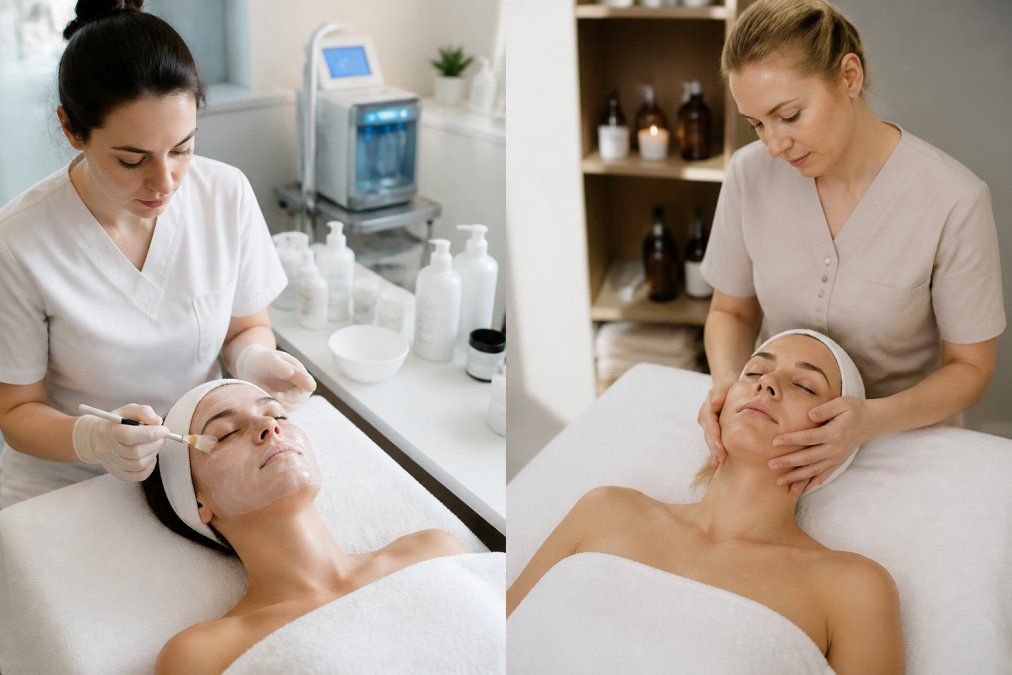
SkinBeautySolutions: protocol-driven, outcome-tracked
A clinical appointment runs on a fixed sequence: cleanse, analyze, treat, protect. The esthetician starts with a skin assessment, often under magnification and sometimes with a Wood's lamp to read pigmentation and dehydration, then builds the treatment around a named concern, acne, melasma, texture, fine lines. Expect some combination of:
- Chemical exfoliation with a controlled acid (glycolic, lactic, salicylic, or a blended peel), left on for a timed interval rather than applied and rinsed immediately
- Manual or vacuum extraction of comedones, done after softening the follicle
- A treatment mask selected for the concern, not the mood
- Targeted serums layered in a specific order so actives are not neutralized by the next step
- Broad-spectrum SPF as the closing step
Sessions typically run 45 to 60 minutes, and the esthetician usually photographs your skin at the start and again at a follow-up so progress is measured against a baseline rather than a feeling.
The European Touch: technique-driven, experience-led
- Extended facial massage, often 15 to 25 minutes, using effleurage, petrissage, and kneading strokes to stimulate circulation
- Manual lymphatic drainage with light, directional pressure to reduce puffiness and move fluid
- Steam to soften the follicle before any extractions, which are usually minimal
- A botanical or hydration mask chosen for skin comfort rather than a clinical target
- Slow, layered product application so the barrier stays calm
The mechanism difference, in plain terms
The hybrid pattern most guides ignore
Ingredient-Level Comparison: Active Ingredients and Formulation Standards
The ingredient lists tell the clearest story. Clinical-focused brands build around active ingredients at concentrations meant to change skin behavior: retinol, glycolic acid, vitamin C, and peptides. European-style brands lean on hydration and botanical extracts, with panthenol and glycerin doing the heavy lifting.
- Active-heavy formulas: faster visible change, but higher irritation risk on sensitive skin
- Hydration-first formulas: gentler, better for barrier repair, slower visible results
- Silicone-free and fragrance-free options: often the safer pick for reactive skin
Costs and Memberships: What You Actually Pay For
Most comparisons stop at "memberships save money if you use them." That is not useful. What matters is what is actually bundled, where the break-even sits, and whether the membership fits the cadence your skin needs. Here is the breakdown the other guides skip.
What each membership typically bundles
- Clinical memberships usually include a set number of treatments per month or quarter, a percentage off retail products, and sometimes priority booking or a complimentary add-on such as a LED session or a spot peel. The value is weighted toward product discounts and treatment frequency.
- European-style memberships usually include a fixed number of recurring facials at a flat monthly rate, with member pricing on upgrades like a longer massage or an added mask. The value is weighted toward time in the chair.
The break-even math
- If a membership includes two facials a month and you attend two, you are ahead.
- If you attend one, you are usually paying a premium for the second session you never used.
- If you attend zero in a given month, the membership is pure loss, most contracts do not refund unused sessions.
The hidden variables that change the math
- Contract length. Month-to-month memberships cost more per session but let you exit. Annual commitments lower the per-session rate but lock you in.
- Rollover policy. Some memberships let unused sessions roll forward for a limited window; others expire them at the end of the month. This single clause can swing the value significantly.
- Cancellation terms. Read the notice period. A 30-day written cancellation requirement is common and easy to miss.
- Product discounts. A 15% retail discount only saves you money if you were already buying the products. Otherwise it is a spending incentive, not a saving.
- Add-on pricing. Upgrades like extractions, LED, or an extended massage are often billed separately even for members.
Cost-benefit by skin goal
- Corrective goal (acne, pigmentation, texture): clinical memberships tend to pay off because the protocol requires consistent, closely spaced sessions to work. Skipping months undermines the treatment itself.
- Maintenance goal (glow, hydration, stress relief): European-style memberships tend to pay off because the benefit is cumulative and the cadence is flexible.
- Reactive or sensitive skin: pay-per-session is often the safer financial choice until you know how your skin responds to a given provider's products and technique.
At-home support between appointments
Best Retinol Alternatives for Pregnancy: What to Use Instead
Retinol is the one active most providers agree to pause during pregnancy. The best retinol alternatives for pregnancy are gentle, hydrating, and free of retinoids: hyaluronic acid, glycerin, vitamin C, and niacinamide. These support hydration and brightening without the risk profile of a retinoid.
- Hyaluronic acid: hydration and plumping without irritation
- Vitamin C: brightening and antioxidant support
- Niacinamide: barrier support and tone evening
- Glycerin: draws moisture into the skin
Clinical vs Holistic Skincare: Which Approach Fits Your Skin
Clinical vs holistic skincare is not a quality contest. It is a fit question. Clinical skincare is a results-first approach that uses active ingredients and measured protocols to correct specific concerns. Holistic skincare is a maintenance-first approach that supports the skin barrier through hydration, botanical extracts, and therapeutic touch.
Where Each Brand Wins: A Scenario-Based Guide
Match the model to your situation, not the other way around.
| Your Situation | Better Fit | Why |
|---|---|---|
| Active acne or pigmentation | SkinBeautySolutions | Clinical protocols target specific concerns |
| Reactive, sensitive skin | The European Touch | Gentler, hydration-first formulas |
| Preventative care under 30 | The European Touch | Maintenance and glow focus |
| Fine lines and texture | SkinBeautySolutions | Active ingredients and anti-aging protocols |
| Stress relief as a priority | The European Touch | Therapeutic massage built into the service |
| Post-treatment recovery support | Either | Depends on the esthetician's assessment |
Frequently Asked Questions
What are the primary differences between SkinBeautySolutions and The European Touch?
SkinBeautySolutions leans toward clinical, results-driven protocols that prioritize active ingredients like retinol and glycolic acid. The European Touch emphasizes holistic, botanical-based facials and therapeutic massage techniques. The core difference is philosophy: one focuses on corrective outcomes through dermatological standards, the other on relaxation and skin rejuvenation through gentle, plant-based formulations. Your choice depends on whether you want aggressive anti-aging protocols or a more nurturing, preventative care approach.
Is European skincare generally better than American skincare?
Neither is universally better. European formulations often emphasize botanical extracts, silicone-free textures, and pharmacy-grade ingredients, while American brands tend to focus on clinical actives and faster visible results. What matters is your skin type and goals. Sensitive skin may respond better to European-style gentle formulations, while those targeting fine lines and uneven texture might prefer clinical actives like retinol or glycolic acid. Look at ingredient lists, not country of origin.
How do I choose between a clinical skincare approach and a European-style facial?
Start with your primary concern. If you want to address fine lines, uneven texture, or acne scarring, a clinical approach with active ingredients like retinol or glycolic acid may deliver faster results. If your goal is hydration, barrier repair, or relaxation, a European-style facial with botanical extracts and therapeutic massage could suit you better. Many people benefit from combining both: clinical treatments for correction and holistic facials for maintenance and preventative care.
What should I look for when comparing professional skincare service providers?
Check four things: the ingredients used in treatments, the training and credentials of the estheticians, whether consultations are personalized or generic, and the cost structure including memberships. A provider that assesses your skin type and adjusts protocols accordingly will outperform one that applies the same treatment to every client.
What are the best retinol alternatives for pregnancy?
Retinol is not recommended during pregnancy, but several ingredients deliver similar anti-aging benefits. Hyaluronic acid deeply hydrates and supports skin elasticity. Vitamin C (tetrahexyldecyl ascorbate) brightens and provides antioxidant protection. Squalane and glycerin moisturize without irritation. Peptides, like those in firming serums, help tighten fine lines. Look for products with these ingredients to maintain skin health while avoiding retinoids. Always confirm with your healthcare provider before starting any new skincare ingredient during pregnancy.