
Why My Skincare Routine Is Failing: 9 Fixes That Work
Table of Contents
- Your Skin Changed, But Your Routine Didn't
- Skincare Layering Mistakes That Sabotage Results
- Why My Skincare Routine Is Failing: The Top 5 Culprits
- How Long for Skincare to Show Results? The 90-Day Rule
- Purging vs. Breaking Out: Know the Difference
- How to Build a Simple Skincare Routine That Actually Works
- Conclusion: Diagnose, Reset, and Rebuild
- Frequently Asked Questions
Last Updated: September 9, 2026
Your Skin Changed, But Your Routine Didn't
The most common reason a skincare routine stops working has nothing to do with the products themselves. Your skin shifts with hormones, seasons, stress, and age, yet most routines remain frozen in time. If you're asking "why my skincare routine is failing," the first suspect isn't your serum, it's the gap between what your skin needs now and what it needed six months ago.
The fix rarely requires buying more, it requires diagnosing what changed and adjusting your approach.
Skin cell turnover slows as we age, so the routine that worked at 25 may be too gentle or too harsh at 35. Environmental stressors like seasonal humidity shifts also alter product performance. Before abandoning your regimen, check whether your skin type assessment still matches reality.
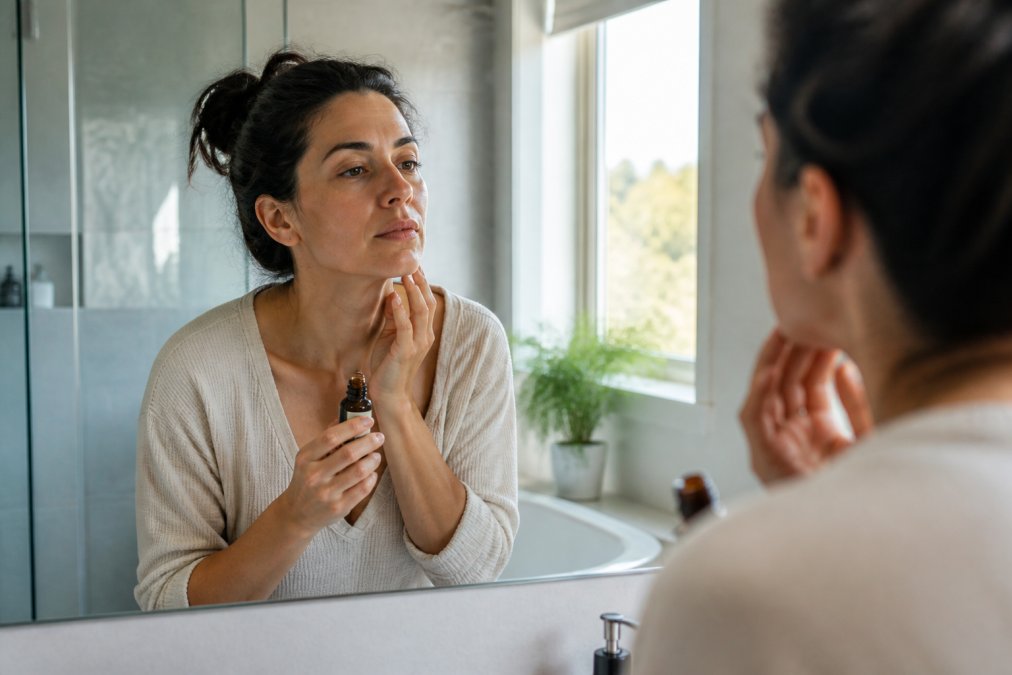
Skincare Layering Mistakes That Sabotage Results
Product layering is where most routines fall apart. The order you apply products determines whether active ingredients reach the skin or sit uselessly on the surface. Applying thick creams before lightweight serums blocks absorption entirely.
Layer from thinnest to thickest: cleanser, water-based serums, moisturizer, then SPF in the morning. Each layer should absorb for about 60 seconds before the next goes on; rushing means products never penetrate deeply enough.
Another frequent error involves pH balance. Exfoliants require a specific pH range to work; applying a high-pH cleanser right before a low-pH serum can neutralize the active ingredient. Wait a few minutes after cleansing before applying treatments.
Why My Skincare Routine Is Failing: The Top 5 Culprits
If your routine isn't delivering, one of five issues is almost always responsible.
- Over-exfoliation that damages the moisture barrier
- Product overload from layering too many active ingredients
- Inconsistent application that prevents cumulative benefits
- Expired or oxidized products that have lost potency
- Ignoring internal factors like hormones, stress, and sleep
Each culprit requires a different correction: exfoliation problems need a reset, overload needs simplification, and consistency issues need habit restructuring. The mistake most people make is applying the same fix to every problem.
The Hidden Culprit: Skincare Burnout
Before you audit your products, audit your mindset. "Skincare burnout" describes a pattern where the routine itself becomes a source of stress, leading to the inconsistencies that cause failure. It's fueled by social media-driven product churn: a new "hero" ingredient launches every few weeks, and the pressure to try it turns self-care into a chore.
This burnout manifests in two ways: impulsive over-purchasing, buying a new serum because a video went viral, and routine fatigue, where the number of steps makes you skip your regimen on busy days. Both lead to a cabinet full of half-used bottles and skin that never gets a consistent dose of any single active.
A common pattern is the "Sunday reset" cycle: you feel guilty, apply every product you own, your skin becomes irritated, you blame the products, and you stop until next Sunday. This bingeing-and-neglecting cycle is far more damaging than a basic daily routine.
To break the burnout loop, separate skincare from shopping. Commit to a "no new products" rule for 60 to 90 days; this forces you to work with what you have and removes the temptation to switch mid-cycle. When you finish a bottle, replace it with the same product unless you have a documented reason to change.
Over-Exfoliation and the Skin Barrier
The skin barrier is your first line of defense against irritation and moisture loss. Over-exfoliating with retinoids, glycolic acid, or physical scrubs strips away protective lipids, causing redness, stinging, and breakouts that look like purging but are actually inflammation.

Signs of a damaged moisture barrier include tightness after cleansing, increased sensitivity, and a shiny, waxy appearance. If this sounds familiar, stop all active ingredients for one to two weeks and focus only on cleansing, moisturizing, and SPF.
Product Overload: When More Is Less
Adding a new serum every few weeks is one of the fastest ways to sabotage results. Each active needs time to work, and stacking too many increases irritation risk without adding benefit. Introduce one new product at a time and use it consistently for at least four to six weeks before judging results.
Overloading also makes it impossible to know which product is working, if you start three new products and break out, you can't identify the culprit. Simplify to a cleanser, moisturizer, SPF, and one treatment serum.
How Long for Skincare to Show Results? The 90-Day Rule
The question "how long for skincare to show results" has a frustrating answer: longer than most people wait. Skin cell turnover takes roughly 28 days for younger skin but slows with age; for most adults, a full cycle runs 40 to 60 days, meaning visible changes require at least six to eight weeks of consistent use (peer-reviewed research).
The 90-day rule is a practical benchmark: commit to a simplified regimen for three full months before deciding it isn't working. Retinoids and chemical exfoliants often cause an initial adjustment period where skin looks worse before it looks better. Quitting at week three means missing improvements that would appear at week eight.
Why Your Skin Isn't Responding: The Lifestyle Interference Factor
You can apply a high-end serum perfectly every night and still see lackluster results if your lifestyle works against it. Topical products are only one input in a complex system. Here are the three most common invisible saboteurs.
Sleep deprivation. Your skin's repair cycle peaks during deep sleep. Cortisol rises when you're sleep-deprived, increasing inflammation and impairing collagen synthesis. A 2024 review found chronic poor sleep is associated with increased aging signs and delayed barrier recovery (PubMed). If you average less than seven hours, your night cream is fighting an uphill battle.
Blue light exposure. High-energy visible (HEV) light from screens penetrates deeper than UVB and generates free radicals that break down collagen. Most SPF moisturizers protect against UVB and UVA, but few offer significant HEV protection. If you spend eight-plus hours in front of a screen, your antioxidant serum, ideally with vitamin C or ferulic acid, is your primary defense.
Dehydration. When you're systemically dehydrated, the stratum corneum becomes less pliable and penetration of water-soluble ingredients like hyaluronic acid drops. The fix isn't more serum, it's more water. Aim for at least 64 ounces daily and apply humectants to damp skin.
The Adjustment Period: What's Normal and What's Not
The first two weeks of any new active ingredient are rarely pretty:
- Weeks 1-2: Possible dryness, flaking, or purging. This is the skin adjusting to increased cell turnover.
- Weeks 3-4: The skin begins to stabilize. Flaking subsides. You may notice a "glow" emerging.
- Weeks 5-8: Visible improvement in texture and tone. This is when most people see the first real changes.
- Weeks 9-12: Full effects become apparent. This is the point where you can judge whether a product is working.
The 90-Day Reset Protocol
If you're starting fresh, follow this timeline to give your skin the best chance to respond:
- Days 1-14: Strip back to cleanser, moisturizer, SPF. No actives. Let your barrier repair.
- Days 15-30: Introduce one treatment serum at night. Use every other day for the first week, then daily.
- Days 31-60: Maintain consistency. Do not add anything new. Expect possible purging.
- Days 61-90: Evaluate. If you see improvement, keep going. If not, consider swapping one product.
This protocol works because it isolates variables. You're not guessing which product caused a reaction, you're testing one change at a time over a full skin cycle.
Purging vs. Breaking Out: Know the Difference
Many people abandon effective products because they mistake purging for a bad reaction. Purging is the accelerated shedding of dead skin cells that happens when you introduce ingredients speeding up cell turnover (the American Academy of Dermatology). It occurs only where you normally break out and resolves within four to six weeks.
A true breakout appears in new areas and persists beyond the adjustment window. Purging is a sign the product is working; breaking out is a sign it isn't right for you. Giving up during the purge phase means quitting right before results appear.
| Reaction | Location | Duration | Response |
|---|---|---|---|
| Purging | Existing breakout zones only | 4-6 weeks | Continue use |
| Breaking out | New areas, including clear skin | Persists past 6 weeks | Discontinue product |
| Irritation | Redness, stinging, tightness | Immediate | Stop actives, repair barrier |
Patch testing new products on a small area of your jawline for one week helps distinguish purging from a genuine adverse reaction, preventing unnecessary breakouts and wasted money.
How to Build a Simple Skincare Routine That Actually Works
The most effective skincare routine is the one you can maintain consistently. Complex multi-step regimens fail not because the products are wrong, but because busy schedules make them unsustainable. A simple routine of cleanser, treatment, moisturizer, and SPF outperforms a ten-step routine you skip half the time.
Start with a gentle cleanser suited to your skin type. Follow with one treatment serum targeting your primary concern, hydration, texture, or early signs of aging. Lock everything in with a moisturizer that supports your moisture barrier, and apply SPF every morning without exception.
For those seeking to simplify while maintaining professional-grade results, EVERGRENE offers a curated selection of multi-functional products. Our Glycolic Acid Serum combines exfoliation with hydrating glycerin and squalane, while the [Hyaluronic Acid(/products/hyaluronic-acid-serum) Serum | evergrene.online] delivers deep moisture and supports elasticity. Both formulations are designed to slot into a minimal routine without sacrificing efficacy.
Conclusion: Diagnose, Reset, and Rebuild
The path to fixing a failing skincare routine follows three steps: diagnose the root cause, reset with a simplified regimen, and rebuild slowly with one product at a time. Most people skip the diagnosis phase and jump straight to buying new products, perpetuating the cycle of disappointment.
Start by identifying which of the five culprits applies to you. Give your skin a two-week reset with only gentle cleansing and moisturizing. Then introduce one treatment product and commit to the 90-day evaluation window before making changes.
For a simplified approach that supports hydration, repair, and exfoliation, EVERGRENE's curated collection pairs high-quality formulations with practical design built for consistent daily use. Products like the Oil-Free Daily Moisturizer and Mint Exfoliating Facial Polish work together to maintain a healthy skin barrier without overwhelming your routine. Get started with EVERGRENE and give your skin the consistent, simplified care it needs to show real results.
Frequently Asked Questions
How can I tell if my skincare routine is failing or if I'm just impatient?
Check the timeline. Skin cell turnover takes about 28 days, and most active ingredients need 8 to 12 weeks to show visible results. If you have used a product consistently for less than 90 days, you are likely in the adjustment phase, not experiencing failure. Give your routine a full cycle before judging it. Track changes with photos in consistent lighting to see subtle progress that mirrors don't reveal.
What are the signs of over-exfoliation in my skincare routine?
Signs include redness, stinging, flaking, tightness, and a shiny but irritated appearance. Your skin may also break out in small bumps as the moisture barrier weakens. If you use chemical exfoliants like glycolic acid daily, stop and give your skin a week to recover. Reduce frequency to two or three times per week and always pair exfoliation with a hydrating moisturizer.
Which serums should not be used together in a skincare routine?
Avoid layering retinoids with direct acids like glycolic or salicylic acid in the same session. This combination causes irritation that compromises your skin barrier. Use retinol at night and your acid exfoliant on alternate mornings. Also, avoid combining vitamin C with benzoyl peroxide, which neutralizes its effectiveness. When in doubt, simplify your routine to fewer, well-formulated products.
Should I change my skincare routine when the seasons change?
Yes. Humidity levels affect how your skin behaves. In summer, your skin produces more oil, so a lighter gel moisturizer works well. In winter, low humidity pulls moisture from your skin, so switch to a richer cream. If you notice your routine failing when the weather shifts, adjust your moisturizer and exfoliation frequency before changing your active ingredients.