
Best Retinol Serum for Beginners 2026: 3 Proven Options
Table of Contents
- How to Pick the Best Retinol Serum for Beginners in 2026
- What Is the Best Retinol Concentration for Beginners?
- Retinol Purging vs Breakout: How to Tell the Difference
- The Retinol Sandwich Method: A Beginner's Guide
- Top Retinol Serums for Beginners: A Comparison
- How to Build a Nighttime Routine with Retinol
- Common Mistakes to Avoid When Starting Retinol
- Frequently Asked Questions
Last Updated: September 12, 2026
How to Pick the Best Retinol Serum for Beginners in 2026
Finding the best retinol serum for beginners 2026 comes down to three things: a low concentration, a gentle delivery system, and a formula buffered with hydrating ingredients. According to the American Academy of Dermatology, retinol remains one of the most studied over-the-counter ingredients for fine lines and texture, yet irritation is the number one reason people stop using it. This guide breaks down concentrations, the retinol sandwich method, purging versus breakout, and which formulas actually suit a beginner's skin barrier.

The best retinol serum for beginners is a low-strength, slow-release formula that pairs vitamin A with barrier-supporting ingredients. That definition matters because it filters out most of what's marketed to new users.
Here's the short version before we get into the details:
| Factor | What to Look For | Why It Matters |
|---|---|---|
| Concentration | 0.2% to 0.3% retinol | Reduces irritation risk |
| Delivery | Slow-release or encapsulated | Limits sudden potency spikes |
| Buffering | Ceramides, hyaluronic acid, collagen | Supports the moisture barrier |
| Frequency | 2-3 nights per week to start | Builds tolerance gradually |
| Packaging | Opaque, airtight pump | Protects potency from light and air |
What Is the Best Retinol Concentration for Beginners?
The best retinol concentration for beginners is 0.2% to 0.3%, applied two to three nights per week (the American Academy of Dermatology). Higher percentages exist, but they belong to experienced users with an established tolerance. A common mistake is assuming stronger equals faster results. In practice, a lower percentage used consistently for twelve weeks outperforms a high percentage used twice and abandoned.
0.2% to 0.3%: The Safe Starting Range
Retinol works by speeding up cell turnover in the epidermis, which is why fine lines soften and texture improves over time. That same process is what causes peeling and redness when the dose is too high too soon.
Start here:
- 0.2% for sensitive or acne-prone skin
- 0.3% for normal skin with no active irritation
- 0.5% only after eight to twelve weeks at a lower strength
The dermis responds to retinol gradually. Collagen production does not spike overnight, so there is no benefit to rushing the ramp-up.
Retinol Purging vs Breakout: How to Tell the Difference
Retinol purging versus breakout is the question that decides whether you push through or stop. Purging is a temporary acceleration of cell turnover that brings existing clogged pores to the surface. It appears in the first two to six weeks, stays within your usual breakout zones, and resolves on its own (peer-reviewed research).
A true breakout from irritation looks different:
- It appears in new areas, not just where you normally break out
- It comes with stinging, burning, or flaking
- It starts after week six, not before
If your skin burns rather than tingles, that is irritation, not purging. Reduce frequency to once weekly and add a barrier cream on off nights.
The Retinol Sandwich Method: A Beginner's Guide
The retinol sandwich method is a layering technique that places moisturizer both before and after retinol to slow absorption and reduce irritation. It is the single most useful adjustment for anyone whose skin reacts to vitamin A derivatives.
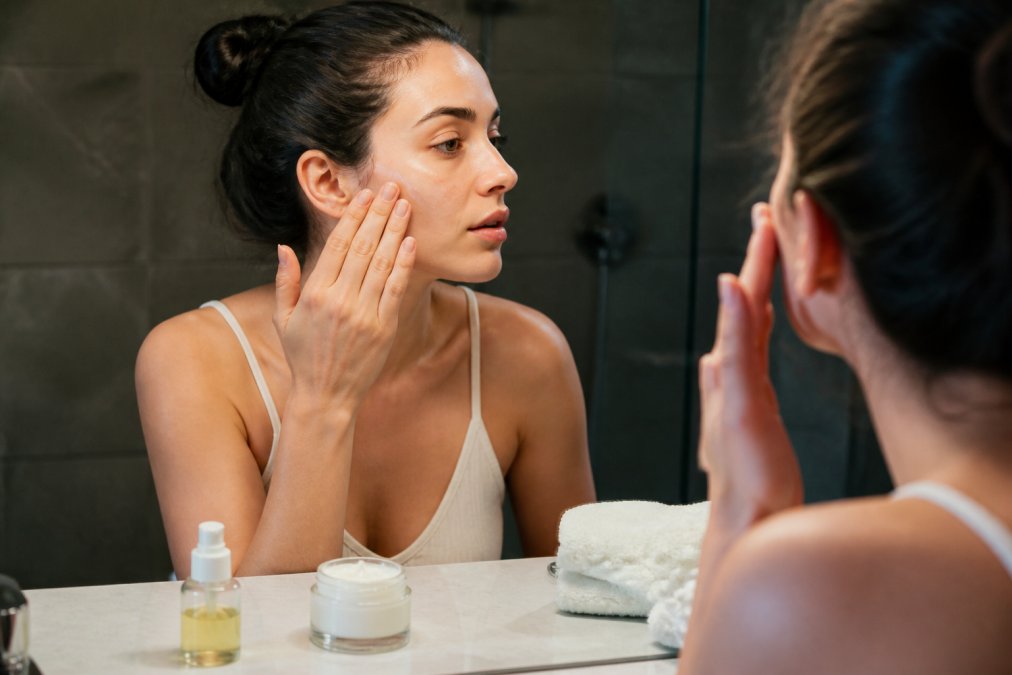
Here is the exact sequence:
- Cleanse with a gentle, non-comedogenic cleanser and pat dry
- Apply a thin layer of lightweight moisturizer and wait two minutes
- Apply a pea-sized amount of retinol serum across the face, avoiding the eye area
- Wait five minutes, then seal with a richer moisturizer or facial oil
A pea-sized amount covers the entire face. More product does not mean better results; it means more irritation. If you are coming from a drugstore retinol that felt too harsh, sandwiching is often enough to make the same strength tolerable.
Top Retinol Serums for Beginners: A Comparison
The best retinol serum for beginners balances three variables: concentration low enough to tolerate, buffering ingredients that protect the barrier, and a cost-per-use that survives the twelve weeks it takes to see results. Most roundups stop at the sticker price. That is the wrong number. A $12 serum abandoned at week two costs more per use than a $49.80 serum finished over six months.
Here is how the leading beginner-friendly formats compare on the factors that actually affect tolerance and value.
| Serum Type | Retinol Strength | Key Buffers | Best For | Typical Price | Cost Per Use (est.) |
|---|---|---|---|---|---|
| EVERGRENE Collagen and Retinol Serum | Gentle, beginner-suitable | Collagen, hyaluronic acid, soybean oil | Hydration plus firmness | $49.80 | ~$0.83 (2-3 nights/week over 6 months) |
| Budget drugstore retinol | 0.1% to 0.3% | Minimal, often fragrance | Lowest upfront cost | $10-$20 | ~$0.20-$0.40 if finished; far higher if abandoned |
| Sensitive-skin retinol | 0.2% or lower | Ceramides, niacinamide | Reactive skin | $25-$45 | ~$0.50-$0.90 |
| Encapsulated slow-release retinol | 0.2% to 0.3% | Squalane, panthenol | First-time users prone to flaking | $30-$60 | ~$0.60-$1.10 |
How to Run the Cost-Per-Use Math Yourself
A pea-sized amount is roughly 0.05 mL. A standard 1 oz (30 mL) serum bottle therefore holds about 600 applications. At two to three nights per week, that is roughly 46 to 69 weeks of product, well past the twelve-week mark where results appear.
Divide the price by 600, then multiply by the number of nights per week you actually plan to use it. If the answer is under a dollar per application and you will finish the bottle, the formula is a reasonable investment. If the answer is under a dollar but you quit at week three, you paid a premium for irritation.
Collagen and Retinol Serum: Best for Hydration and Firmness
EVERGRENE's Collagen and Retinol Serum is our top pick for beginners because it pairs retinol with collagen, hyaluronic acid, and soybean oil in a single formula. That combination addresses the main complaint about retinol: it dries skin out before it improves it.
The serum targets firmness and moisture at the same time. Soybean oil brings antioxidants to the formula, while hyaluronic acid holds water in the upper layers of the skin. For someone building a nighttime serum routine from scratch, one product that hydrates and treats beats three that fight each other.
Where it falls short: it is not a high-strength treatment, so users chasing aggressive resurfacing will eventually want to move up. For beginners, that is the point. It is available at EVERGRENE's Collagen and Retinol Serum.
Budget-Friendly Alternatives for Sensitive Skin
Sensitive skin needs a shorter ingredient list, not a weaker one. Look for retinol paired with ceramides or niacinamide, fragrance-free, and packaged in an opaque pump. Cost per ounce matters here: a $12 serum used twice and abandoned costs more than a $49.80 serum used for six months. Run the math on cost per ounce before deciding a drugstore option is cheaper.
Active Ingredient Compatibility for Beginners
Before you buy any serum, check what else is already on your shelf. Retinol does not play well with everything, and the interaction rules are simpler than most articles admit.
| Paired Active | Same Night? | Notes |
|---|---|---|
| Vitamin C | No | Use vitamin C in the morning, retinol at night. Layering both increases irritation without added benefit. |
| AHA (glycolic, lactic) | No | Alternate nights. Both accelerate turnover; stacking them strips the barrier. |
| BHA (salicylic) | Sometimes | A low-strength BHA cleanser in the morning is usually fine. A leave-on BHA at night with retinol is not. |
| Niacinamide | Yes | Well tolerated together. Niacinamide supports the barrier and can reduce retinol redness. |
| Hyaluronic acid | Yes | Apply before retinol to buffer absorption. |
| Benzoyl peroxide | No | Can destabilize retinol and compounds irritation. Use at a different time of day. |
How to Build a Nighttime Routine with Retinol
A nighttime routine with retinol works best when retinol is the only active ingredient you introduce that month. Adding glycolic acid, vitamin C, and retinol simultaneously makes it impossible to tell what caused a reaction.
A workable beginner schedule:
- Nights 1 and 4: retinol
- Nights 2, 3, 5, 6: gentle moisturizer only
- Night 7: rest, no actives
Once you tolerate that for four weeks, add a third retinol night. Keep exfoliation on separate nights entirely. If you use a glycolic acid product, alternate it with retinol rather than layering them.
Sun protection is not optional. Retinol increases photosensitivity, so a broad-spectrum sunscreen every morning protects the results you are paying for.
The Barrier Repair Protocol: What to Do When You Overdo It
Almost every beginner over-applies at some point. The skin signals are unmistakable: stinging when water touches your face, tightness that moisturizer does not fix, flaking around the nose and mouth, and redness that lasts past the morning. When those appear, stop retinol immediately. Do not push through. Pushing through is how a two-week setback becomes a two-month one.
The recovery protocol, in order:
- Pause all actives for 7 to 14 days. That means retinol, AHAs, BHAs, vitamin C, and any exfoliating toner. Cleanser, moisturizer, sunscreen. Nothing else.
- Switch to a barrier cream built on ceramides, cholesterol, and fatty acids. These three lipids mirror the skin's natural barrier ratio and rebuild it faster than a hyaluronic acid serum alone.
- Cleanse with lukewarm water only in the morning if your skin stings. Save the gentle cleanser for night.
- Skip hot showers and saunas during recovery. Heat worsens barrier disruption.
- Reintroduce retinol at half your previous frequency. If you were at two nights per week, restart at one night per week for two weeks before adding the second night back.
Most practitioners find the barrier recovers in one to two weeks with this approach. If stinging persists past two weeks, see a board-certified dermatologist, persistent barrier damage can mask an underlying condition like rosacea or perioral dermatitis that retinol will aggravate.
A Sample First Twelve Weeks
| Weeks | Retinol Nights | Off Nights | What to Watch |
|---|---|---|---|
| 1-2 | 1 night | Moisturizer only | Any stinging or redness |
| 3-4 | 2 nights | Moisturizer only | Flaking around nose and mouth |
| 5-8 | 2-3 nights | Moisturizer only | Purging in usual breakout zones |
| 9-12 | 3 nights | Moisturizer only | Texture and tone changes |
If any week produces stinging, drop back one row and hold there for two weeks. The schedule is a ceiling, not a target.
What to Keep on the Shelf During Your First Month
Keep the routine boring on purpose. A gentle non-comedogenic cleanser, a ceramide moisturizer, a broad-spectrum SPF 30 or higher, and your retinol. That is the entire list. Every additional active you add in month one makes it harder to identify what is working and what is causing the reaction.
Common Mistakes to Avoid When Starting Retinol
Most retinol failures trace back to five avoidable errors. Fixing them costs nothing and saves weeks of recovery.
- Applying too much product. A pea covers the whole face.
- Starting nightly instead of two to three times weekly.
- Skipping moisturizer because the retinol already feels "wet."
- Layering with other actives on the same night.
- Giving up at week three, right before results appear.
Texture improvement and softening of fine lines typically show between weeks eight and twelve. Judging a retinol at week three is judging it before it has done anything.
Frequently Asked Questions
How to calm skin irritation from retinol?
If you notice redness, flaking, or stinging, stop using retinol for a few days and focus on gentle cleansing and moisturizing. Apply a ceramide-rich moisturizer twice daily to help repair your skin barrier. When you restart, use the retinol sandwich method: moisturizer, then a pea-sized amount of retinol, then more moisturizer. This buffers the active ingredient and reduces irritation. If symptoms persist beyond a week, consult a dermatologist.
Can beginners use retinol every night?
Most beginners should start with two or three nights per week. Your skin needs time to build tolerance. After two to four weeks without irritation, add one more night. Eventually, you may be able to use it every other night or even nightly, but only if your skin stays calm. The best retinol concentration for beginners, around 0.2% to 0.3%, is designed for this gradual approach. Rushing leads to peeling and redness.
What ingredients should I avoid when using retinol?
Avoid combining retinol with strong exfoliating acids like glycolic acid or salicylic acid in the same routine. Also skip benzoyl peroxide, which can deactivate retinol. Vitamin C is fine in the morning, but not layered with retinol at night. Instead, use hydrating ingredients like hyaluronic acid, ceramides, and niacinamide to support your skin barrier. Always apply sunscreen the next morning, as retinol increases photosensitivity.
How long does the purging phase last for beginners?
Retinol purging typically lasts two to four weeks, though it can extend to six weeks for some people. You may see small bumps or flaking as your skin adjusts. Purging happens because retinol speeds up cell turnover, bringing existing clogs to the surface. If you experience deep, painful cysts or irritation that worsens after six weeks, it's likely a breakout, not purging. In that case, reduce frequency or switch to a lower concentration.
The hardest part of starting retinol is not choosing a formula. It is building a routine gentle enough to stick with past the irritation phase. EVERGRENE's Collagen and Retinol Serum is built for exactly that: a beginner-suitable retinol paired with collagen, hyaluronic acid, and soybean oil so hydration and firmness happen in one step. Get started with EVERGRENE and build a nighttime routine you can actually maintain.