
Best Curated Skincare Sets for Beginners: 2026 Picks
Table of Contents
- What to Look for in Curated Skincare Sets for Beginners
- Top 5 Curated Skincare Sets for Beginners Compared
- EVERGRENE Kale Face Cleanser + Hyaluronic Acid Serum: The Hydration Starter Duo
- EVERGRENE Glycolic Acid Serum + Oil-Free Moisturizer: The Texture Refining Kit
- EVERGRENE Mint Exfoliating Facial Polish + Kale Cleanser: The Gentle Reboot Set
- How to Build Your First Skincare Routine for Beginners
- Best Skincare Ingredients for Beginners: What Actually Works
- Common Mistakes to Avoid When Starting a Skincare Set
- Frequently Asked Questions
Last Updated: September 6, 2026
What to Look for in Curated Skincare Sets for Beginners
Curated skincare sets for beginners are pre-assembled collections of cleansers, serums, and moisturizers designed to work together, removing the guesswork from building a routine. The value lies in ingredient compatibility, because products from different lines can neutralize each other or cause irritation. A good set prioritizes hydration, barrier support, and one active ingredient.
Before you buy, check the ingredient list for non-comedogenic labels, which means the formula won't clog pores. Look for fragrance-free options if you have sensitive skin, and confirm the set includes sun protection factor guidance for daytime use. The American Academy of Dermatology recommends a gentle cleanser, moisturizer, and sunscreen as the foundation of any routine, which is exactly what a quality starter set should deliver.
Top 5 Curated Skincare Sets for Beginners Compared
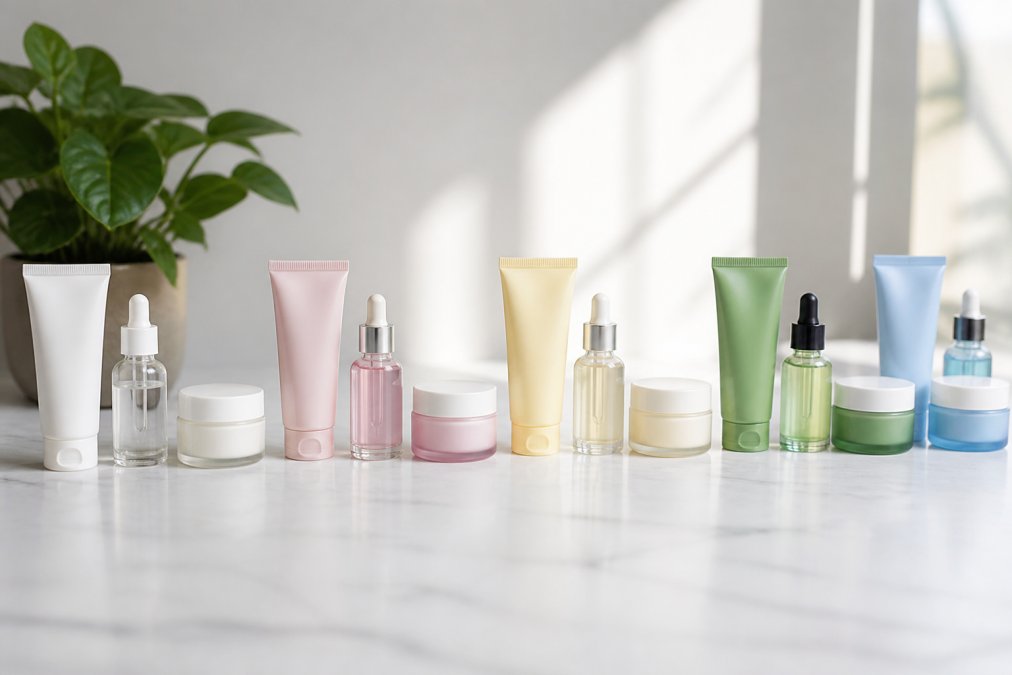
A curated set should simplify your morning and evening regimen without sacrificing results. The best skincare sets for beginners pair a gentle cleanser with a hydrating serum or a single exfoliant, giving your skin time to adapt. We compared five EVERGRENE combinations across hydration, exfoliation, and barrier support.
| Set | Products Included | Price | Best For | Key Benefit |
|---|---|---|---|---|
| Hydration Starter Duo | Kale Cleanser + Hyaluronic Acid Serum | $76.60 | Dry or dehydrated skin | Deep moisture retention |
| Texture Refining Kit | Glycolic Acid Serum + Oil-Free Moisturizer | $91.70 | Uneven texture, dullness | Chemical exfoliation |
| Gentle Reboot Set | Mint Polish + Kale Cleanser | $95.20 | Sensitive or combination skin | Gentle resurfacing |
| Barrier Support Trio | Kale Cleanser + HA Serum + Oil-Free Moisturizer | $121.60 | All skin types | Complete daily regimen |
| Smoothing Combo | Glycolic Acid Serum + HA Serum | $80.70 | Fine lines and dryness | Exfoliation plus hydration |
EVERGRENE Kale Face Cleanser + Hyaluronic Acid Serum: The Hydration Starter Duo
This pairing is our top pick for anyone struggling with tightness or flakiness. The Kale Face Cleanser ($42.60) uses kale, carrot, and lemon amino acids to plump the skin while aloe vera and green tea extracts calm irritation.


Follow with the Hyaluronic Acid Serum ($34.00), which delivers deep hydration and supports elasticity. Together, these two products address moisture retention without overwhelming a new routine. This duo is the most accessible entry point because it contains no strong actives, making it safe for sensitive skin.
EVERGRENE Glycolic Acid Serum + Oil-Free Moisturizer: The Texture Refining Kit
If dullness, rough texture, or dark spots are your primary skin concerns, this set targets them directly. The Glycolic Acid Serum ($46.70) is a gentle yet fast-acting exfoliant that evens hyperpigmentation and refines skin texture.

Pair it with the Oil-Free Daily Moisturizer ($45.00), which delivers long-lasting hydration without a greasy finish. This combination is ideal for acne-prone or oily skin because the moisturizer is designed to keep pores clear.
EVERGRENE Mint Exfoliating Facial Polish + Kale Cleanser: The Gentle Reboot Set
For those who prefer physical exfoliation over chemical peels, this set offers a controlled resurfacing experience. The Mint Exfoliating Facial Polish ($52.60) uses cellulose beads to gently buff away dry skin while apricot oil maintains moisture.
Use the Kale Face Cleanser on days between exfoliation to maintain a clean, hydrated base. This combo works well for combination skin that needs occasional resurfacing without daily active ingredients. Limit use of the polish to two to three times per week to avoid over-exfoliation.
How to Build Your First Skincare Routine for Beginners
A basic skincare routine for beginners follows a simple sequence: cleanse, treat, moisturize, protect. In the morning, wash with a gentle cleanser, apply a hydrating serum, follow with moisturizer, and finish with SPF. At night, repeat the cleanse, apply any treatment serum, and lock in moisture.
For the sets above, the routine takes under five minutes per session. Consistency matters more than product count, and most skin types see improvement within four to six weeks of daily use. The National Institutes of Health skincare research confirms that consistent cleansing and moisturizing supports the skin barrier and improves overall skin health.
| Step | Morning | Evening | Frequency |
|---|---|---|---|
| 1 | Gentle cleanser | Gentle cleanser | Daily |
| 2 | Hydrating serum | Treatment serum (if using) | Daily |
| 3 | Moisturizer | Moisturizer | Daily |
| 4 | SPF 30+ | Optional treatment | Daily |
Best Skincare Ingredients for Beginners: What Actually Works
The best skincare ingredients for beginners are hydration-focused and barrier-supporting compounds that rarely cause irritation. Hyaluronic acid draws water into the skin, while ceramides and niacinamide strengthen the barrier and calm redness.
For exfoliation, glycolic acid is the most studied alpha-hydroxy acid for smoothing texture, but start at low frequency. Retinoids are effective for anti-aging but require a gradual introduction over several weeks. The FDA guidance on cosmetic ingredients notes that cosmetic products must be safe for their intended use, but ingredients like glycolic acid require careful patch testing before full application.
Ingredient Compatibility: What Not to Layer
Most guides list ingredients but fail to explain why certain combinations can backfire. This is the single biggest pain point for beginners who buy a set and then add a single product from another line. Here are the rules that matter:
Retinol + Vitamin C (L-ascorbic acid): Both are actives that work best at different pH levels. Retinol requires a pH around 5.5-6.0 to function, while L-ascorbic acid needs a pH below 3.5. Layering them directly neutralizes both and increases irritation risk. Use vitamin C in the morning and retinol at night on alternate days.
Glycolic acid + Retinol: Both exfoliate, but through different mechanisms. Glycolic acid dissolves the bonds between dead skin cells on the surface, while retinol accelerates cell turnover deeper in the skin. Using them on the same night strips the stratum corneum and can cause redness, peeling, and barrier damage. Alternate them on separate evenings.
Niacinamide + Vitamin C: This combination was once thought to cause flushing, but current research indicates the interaction is rare at concentrations under 10%. If you have sensitive skin, apply niacinamide in the morning and vitamin C at night.
Hyaluronic acid + Anything: Hyaluronic acid is compatible with virtually every ingredient. It is a humectant that pulls water from the air into the skin, so it layers well under moisturizers and over serums. The only rule is to apply it to damp skin.
How to Read an Ingredient List Like a Beginner
Ingredients are listed in descending order of concentration. The first five ingredients make up roughly 80% of the formula. If you see a beneficial ingredient like niacinamide listed after fragrance or preservatives, it is present at a negligible concentration.
What to look for in a beginner set:
- A cleanser with glycerin or ceramides as the second or third ingredient
- A serum with hyaluronic acid or niacinamide in the top five
- A moisturizer with squalane, shea butter, or ceramides
- SPF 30 or higher with zinc oxide or avobenzone
What to avoid in a beginner set:
- Fragrance or essential oils listed in the first five ingredients
- Multiple exfoliating acids (glycolic, salicylic, lactic) in the same product
- Retinol combined with AHA/BHA in a single formula
- Denatured alcohol (listed as "alcohol denat.") in the first five ingredients
The pH Rule That Most Beginners Miss
Your skin's natural pH is between 4.5 and 5.5. Cleansers with a pH above 5.5 disrupt the acid mantle and can cause dryness or overproduction of oil. Most foaming cleansers sit around pH 7.0, which is why they can feel stripping.
If you want to check a product's pH at home, use pH test strips (available at most drugstores for under $10). Wet the strip, apply a small amount of product, and compare the color.
What to Do When Your Set Runs Out
Most curated sets last 6-8 weeks with twice-daily use. When you finish your first set, you have two options: repurchase the same set, or transition to individual products. If your skin has stabilized, introduce one new product at a time.
A common pattern is to keep the cleanser and moisturizer from the set, then add a targeted serum. This gives you a stable base while you experiment with one variable. Wait at least two weeks before adding another product.
Common Mistakes to Avoid When Starting a Skincare Set
The most common mistake beginners make is introducing too many products at once. Start with a cleanser and moisturizer for two weeks before adding a serum. Patch test every new product on your jawline for three days before applying it to your whole face.
Another frequent error is skipping sunscreen when using exfoliating acids, which increases sun sensitivity and risks hyperpigmentation. Many users also abandon a set after one week because they expect instant results. Most improvements take at least one full skin cycle, roughly 28 days.
Finally, avoid mixing incompatible actives. Using glycolic acid and retinol on the same night can compromise the skin barrier and cause redness. Alternate them on different evenings, or choose one active for the first three months.
Mistake #1: Ignoring the Cost-Per-Use Math
A curated set often looks expensive at checkout, but the math usually favors kits over buying individual full-sized products. Consider a typical set with a cleanser (5 oz), serum (1 oz), and moisturizer (1.7 oz). A cleanser lasts about 3 months with twice-daily use, a serum lasts 2-3 months, and a moisturizer lasts 2 months.
If you bought the same three products individually at retail prices, you would pay 20-40% more. The real cost trap is buying a set, using it for two weeks, then abandoning it. That turns a $76 set into a $38-per-week experiment.
To calculate cost-per-use: divide the set price by the number of days it will last. A $95 set used twice daily for 60 days costs about $0.79 per use. The mistake is not the upfront price; it is the wasted product from inconsistent use.
Mistake #2: Throwing Away Packaging Without Checking Recycling Rules
Skincare packaging is notoriously difficult to recycle because it often combines multiple materials. A typical pump bottle has a glass or plastic body, a metal spring, and a plastic nozzle. Most municipal recycling programs accept #1 (PET) and #2 (HDPE) plastics, but pumps and caps are often excluded.
Before you toss a container, check the bottom for the resin identification code. If it shows #1 or #2, rinse it out and place it in your curbside bin. If it shows #5 (polypropylene), check with your local program. If the bottle has a pump, remove the pump and dispose of it separately.
Some brands participate in take-back programs. The TerraCycle skincare recycling program offers free recycling for beauty packaging through select brand partnerships. You can also check the brand's website for mail-in recycling options. A common pattern is that brands with sustainability commitments publish their packaging breakdown on their product pages.
Mistake #3: Not Planning the Transition to a Full Routine
A starter set is a training tool, not a permanent solution. Most sets are designed to last 6-8 weeks, which is exactly one to two skin cycles. When the set runs out, beginners often panic and buy a completely different set, restarting the adjustment process from zero.
The smarter approach is to plan your transition before the set runs out. At week 4, evaluate what your skin needs. If the set addressed hydration but you still see congestion, your next purchase should be a single exfoliating serum, not a whole new set.
A common pattern is to keep the cleanser and moisturizer from the set and replace only the serum. This maintains a stable base while allowing you to target one new concern.
Mistake #4: Treating a Set Like a Prescription
Curated sets are starting points, not rigid protocols. If a product in the set causes breakouts or irritation, stop using it. The sunk cost fallacy, finishing a product because you paid for it, is one of the most expensive mistakes in skincare.
If you react to one product in a set, isolate it. Stop all products for 3-5 days until your skin calms, then reintroduce the cleanser and moisturizer only. If your skin tolerates those, the culprit is likely the serum.
:::takeaway The cheapest routine is the one you finish. The most expensive routine is the one you abandon after two weeks. Plan your transition, check your packaging, and never force yourself to finish a product that does not work for your skin.
Frequently Asked Questions
What is the best beginner skin care kit?
The best beginner skin care kit includes a gentle cleanser, a hydrating serum, and a moisturizer. Look for sets with non-comedogenic, fragrance-free formulas that support your skin barrier. A kit like EVERGRENE's Kale Face Cleanser and Hyaluronic Acid Serum covers the essentials without overwhelming your routine. Avoid sets with too many active ingredients at once.
How do I choose a skincare set for my skin type?
Identify your skin type first. For oily skin, choose an oil-free moisturizer and a gel-based cleanser. For dry skin, focus on hydrating ingredients like hyaluronic acid and ceramides. Sensitive skin needs fragrance-free products with soothing ingredients like aloe vera. Patch testing new products for a few days is a smart habit before applying them fully.
What is the 4-2-4 rule in skincare?
The 4-2-4 rule refers to cleansing times: massage an oil-based cleanser for 4 minutes, a water-based cleanser for 2 minutes, and rinse for 4 minutes. This method is popular on social media but is not necessary for beginners. A thorough 60-second cleanse with a gentle product like the Kale Face Cleanser is sufficient to remove dirt without disrupting your skin barrier.
Which skincare ingredients should beginners start with?
Beginners should start with hydrating ingredients like hyaluronic acid and glycerin, plus barrier-supporting ingredients like ceramides and niacinamide. Introduce exfoliants like glycolic acid slowly, starting at 2-3 nights a week. Always pair active ingredients with an oil-free moisturizer to maintain hydration levels and prevent irritation.
How many products are in a basic skincare routine for beginners?
A basic skincare routine for beginners has three essential steps: cleanser, moisturizer, and sunscreen. You can add a serum, like a hyaluronic acid formula, after cleansing for extra hydration. Start with 3-4 products and stick with them for 4-6 weeks before adding new active ingredients. This approach helps you see what works without overwhelming your skin.
Starting your skincare journey does not require a cabinet full of products. The best curated skincare sets for beginners pair a gentle cleanser with one effective serum or moisturizer, letting your skin adapt without overwhelm. EVERGRENE offers these sets with high-quality ingredients like hyaluronic acid, glycolic acid, and kale protein, all formulated in North America and designed for real results. Get started with EVERGRENE and build a routine that fits your skin type and your schedule.