
Skincare Alternatives for Sensitive Skin: A 2026 Guide
Table of Contents
- Why Skincare Alternatives Matter for Sensitive Skin
- How to Repair Skin Barrier for Sensitive Skin
- Best Retinol Alternatives for Pregnancy and Reactive Skin
- Gentle Chemical Peel for Sensitive Skin: What Works
- Enzyme Masks and Non-Peel Exfoliation Methods
- Building a Minimal Routine: Product Essentials for Sensitive Skin
- Patch Testing and Ingredient-Specific Sensitivity Mapping
- Conclusion
Last Updated: August 29, 2026
Why Skincare Alternatives Matter for Sensitive Skin
Sensitive skin requires a fundamentally different approach to skincare. When your barrier is compromised, even products labeled "gentle" can trigger redness, irritation, and inflammation. Skincare alternatives for sensitive skin aren't just substitutes; they're a philosophy built on barrier repair, not barrier disruption. The difference between a product that works and one that backfires often comes down to pH balance, ingredient concentration, and formulation structure. A product might contain beneficial actives like glycolic acid or retinoids, but if the delivery system is too aggressive or the pH is off, sensitive skin will rebel.
How to Repair Skin Barrier for Sensitive Skin
Your skin barrier is a lipid-rich layer that locks in moisture and keeps irritants out. When damaged, water evaporates rapidly and your skin becomes hypersensitive to everything. Repairing it requires a deliberate pause on actives and a focus on foundational ingredients that rebuild the barrier.
The repair process starts with ceramides, cholesterol, and fatty acids, the three lipids that make up your barrier's structure. EVERGRENE's Oil-Free Daily Moisturizer ($45.00) contains nourishing fatty acids and squalane, which work together to create a breathable barrier without clogging pores or triggering breakouts in oily, sensitive skin types.

Hyaluronic acid plays a supporting role in barrier repair, but only if your skin is hydrated first. Apply it to damp skin immediately after cleansing, then layer a moisturizer on top to seal it in. EVERGRENE's Hyaluronic Acid Serum ($34.00) pairs hyaluronic acid with glycerin, which both draw moisture into the skin and hold it there.
Avoid actives entirely during the repair phase, no retinol, glycolic acid, vitamin C, or peptides. Your only job is to restore the barrier's lipid content and hydration levels. Once your skin feels calm and looks less red, you can begin reintroducing gentler actives.
Best Retinol Alternatives for Pregnancy and Reactive Skin
Retinol is one of the most effective anti-aging actives available, but also one of the most irritating. For pregnant people, retinol is contraindicated entirely. For reactive skin, standard retinol is often too strong, causing peeling, redness, and barrier damage before any benefits appear.
Retinaldehyde is a gentler retinoid that converts to retinoic acid more slowly than retinol, making it suitable for sensitive skin (peer-reviewed research). Bakuchiol is a plant-derived alternative that mimics retinol's anti-aging effects without irritation or pregnancy contraindication. It reduces fine lines, improves skin texture, and supports collagen production without typical retinol side effects.
For reactive skin, start with a retinol alternative at the lowest concentration available, use it no more than twice weekly, and always follow with a nourishing moisturizer. EVERGRENE's Embrace Collagen Moisturizer ($62.40) contains collagen and colloidal oatmeal, which soothe irritation while improving skin elasticity.

Pregnancy-safe alternatives include azelaic acid, which reduces inflammation and hyperpigmentation without systemic absorption, and niacinamide (vitamin B3), which supports barrier function while minimizing pore appearance and redness. Both are significantly gentler than retinol and carry no pregnancy contraindications.
The timeline for retinol alternatives is slower than prescription retinoids, but the trade-off is consistency. You can use gentle retinol alternatives continuously without triggering barrier damage, whereas aggressive retinoids often force you to cycle on and off.
Gentle Chemical Peel for Sensitive Skin: What Works
Gentle peels using low-concentration acids are one of the most effective ways to improve skin texture and reduce hyperpigmentation without the downtime of professional treatments. The key is understanding which acids work for sensitive skin and at what concentration.
Glycolic acid is an alpha hydroxy acid (AHA) that dissolves the bonds between dead skin cells. For sensitive skin, a 5-10% glycolic acid peel used once weekly is far more effective than daily use of a lower concentration. Lactic acid is gentler than glycolic acid because its larger molecular structure penetrates more slowly, making it ideal for sensitive skin types.
Buffered acids are formulated with ingredients that raise the pH and slow penetration, making them safer for sensitive skin. The pH of a chemical peel matters enormously, an acid with pH below 3.5 will penetrate quickly and cause irritation (the American Academy of Dermatology). A pH of 3.5-4.5 is ideal for at-home use because it exfoliates effectively while giving your skin time to adjust.
Start with a 5-minute application and work up to 10-15 minutes as your skin adapts. Use a gentle chemical peel no more than once weekly, and always follow with a barrier-supporting moisturizer like EVERGRENE's Oil-Free Daily Moisturizer. The combination of gentle exfoliation and barrier repair creates visible improvements in skin texture and tone without inflammation.
Enzyme Masks and Non-Peel Exfoliation Methods
Enzyme masks are one of the gentlest exfoliation methods available. They use naturally derived enzymes, usually from papaya, pumpkin, or pineapple, to break down dead skin cells without the irritation of mechanical or chemical exfoliation. For sensitive skin, enzyme masks are often the first step back into active exfoliation after barrier repair.
Papain (from papaya) and bromelain (from pineapple) work by digesting the proteins in dead skin cells. The process is gentler than glycolic acid because enzymes are more selective, targeting dead skin cells preferentially over healthy skin. Enzyme masks typically stay on your skin for 10-15 minutes, then rinse off cleanly without irritation.
The advantage of enzyme masks over chemical peels is the lack of systemic irritation. Chemical peels create a controlled inflammatory response that can trigger sensitivity in reactive skin types. Enzyme masks simply remove dead skin without triggering inflammation.
Non-peel exfoliation alternatives include physical exfoliants like rice bran or jojoba beads, though these should be used sparingly on sensitive skin. A gentle scrub once weekly is fine, but daily physical exfoliation will damage your barrier. Konjac sponges are softer than traditional exfoliating scrubs and work well for sensitive skin.
EVERGRENE's Kale Face Cleanser ($42.60) contains kale protein, aloe vera, and green tea, ingredients that support barrier health while gently removing oils and dead skin. Used twice daily with a soft washcloth, this combination provides enough exfoliation for most sensitive skin types without harsh actives.
Bioactive ingredients like antioxidants support the exfoliation process by reducing inflammation and protecting newly exposed skin. Green tea, vitamin C, and resveratrol all work synergistically with gentle exfoliation to improve skin texture and tone.
Building a Minimal Routine: Product Essentials for Sensitive Skin
The most common mistake people with sensitive skin make is overcomplicating their routine. Every product you add increases the risk of irritation, so the goal is to identify the absolute essentials and build from there.
A minimal routine for sensitive skin needs three things: a gentle cleanser, a hydrating serum, and a barrier-supporting moisturizer. Everything else is optional until your skin is stable.
EVERGRENE's Kale Face Cleanser ($42.60) handles the cleansing step with gentle surfactants and barrier-supporting ingredients. Use it twice daily, morning and night, and follow immediately with a hydrating serum.
EVERGRENE's Hyaluronic Acid Serum ($34.00) provides the hydration step. Apply 2-3 drops to damp skin immediately after cleansing, then layer your moisturizer on top.

EVERGRENE's Oil-Free Daily Moisturizer ($45.00) is the barrier-support step. It contains fatty acids and panthenol, which restore the lipid content of your barrier and reduce redness. Use it twice daily after your serum.
That three-step routine costs approximately $122 total and addresses the core needs of sensitive skin: gentle cleansing, hydration, and barrier repair. Once your skin is stable on this routine for 4-6 weeks, you can introduce one active at a time and monitor how your skin responds.
Adding products too quickly is the fastest way to trigger a reaction. Introduce one new product every two weeks, and only after your skin has fully adapted to the previous addition.
| Step | Product | Purpose | Frequency |
|---|---|---|---|
| Cleanse | Kale Face Cleanser | Remove oils, makeup, and impurities gently | Twice daily |
| Hydrate | Hyaluronic Acid Serum | Lock in moisture and support barrier | Twice daily |
| Moisturize | Oil-Free Daily Moisturizer | Restore lipids and reduce redness | Twice daily |
| Exfoliate (optional) | Enzyme mask or gentle peel | Improve texture and tone | Once weekly |
| Anti-aging (optional) | Retinol alternative | Reduce fine lines and improve elasticity | 2-3x weekly |
Patch Testing and Ingredient-Specific Sensitivity Mapping
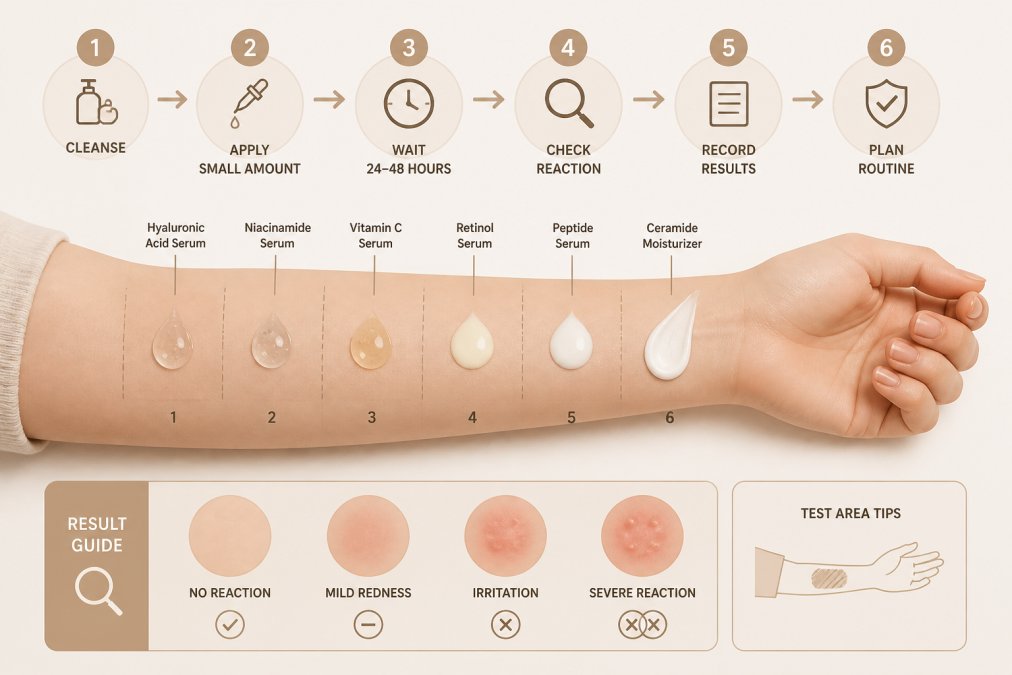
Patch testing is the most reliable way to identify which ingredients trigger your skin's sensitivity. Apply a small amount of the new product to clean skin in an inconspicuous area behind your ear or on your inner arm. Leave it on for 24 hours without washing or applying other products over it. If you see no redness, itching, or irritation after 24 hours, it's likely safe to use on your face.
Ingredient-specific sensitivity mapping goes deeper. Once you've identified that a product triggers a reaction, you can narrow down which ingredient is responsible by testing similar products with different ingredient lists. If one retinol product causes irritation but another doesn't, compare their ingredient lists to identify the difference.
Common problematic ingredients for sensitive skin include fragrance (both synthetic and natural), essential oils, alcohols, and preservatives like methylisothiazolinone. If you're consistently reacting to products, start by eliminating fragrance entirely, it serves no skincare function and is the most common trigger for reactive skin.
Preservatives are necessary for product stability, but some are more irritating than others. Phenoxyethanol is gentler than formaldehyde-releasers, and natural preservatives like sodium benzoate are often tolerated better by sensitive skin.
pH balance is another critical factor in ingredient sensitivity. A pH of 6.5-7.5 is neutral and least likely to trigger sensitivity. Many sensitive skin products aim for a pH closer to 7 to minimize irritation.
Conclusion
Skincare alternatives for sensitive skin work because they respect your barrier's current state instead of demanding it adapt to aggressive actives. The path forward isn't about finding the "best" products, it's about building a routine that repairs and protects your barrier, then slowly introducing actives only after your skin has stabilized.
EVERGRENE's curated collection simplifies this process by combining barrier-supporting ingredients with proven actives in formulations designed for sensitive skin. Start with EVERGRENE's Oil-Free Daily Moisturizer, Hyaluronic Acid Serum, and Kale Face Cleanser to establish a stable foundation. Once your skin responds well to this routine for 4-6 weeks, layer in gentle exfoliation or retinol alternatives based on your specific concerns. The results, calmer skin, reduced redness, improved texture, come from consistency and patience, not complexity.
Frequently Asked Questions
What is the best skincare alternative for sensitive aging skin?
The best skincare alternatives for sensitive aging skin prioritize barrier repair and gentle actives over aggressive exfoliation. Look for products with hyaluronic acid for hydration, vitamin E and antioxidants for anti-aging support, and retinol alternatives like bakuchiol that deliver anti-aging benefits without the irritation. EVERGRENE's Hyaluronic Acid Serum ($34) and Oil-Free Daily Moisturizer ($45) are designed specifically for sensitive skin, providing hydration and barrier support without harsh ingredients. Always patch test first and introduce new actives slowly.
What chemical peel solutions work for sensitive skin without causing irritation?
Gentle chemical peels for sensitive skin use lower concentrations of alpha hydroxy acids (AHAs) like glycolic acid or beta hydroxy acids (BHAs) like salicylic acid, typically at 5-10% strength rather than professional 20-30% formulations. Enzyme masks offer a non-peel alternative that gently exfoliates without downtime. Start with a single 10-15 minute application weekly, always follow with a soothing moisturizer like EVERGRENE's Embrace Collagen Moisturizer ($62.40), and avoid combining peels with other actives until your barrier is strengthened.
How can I exfoliate sensitive skin without irritation?
Exfoliate sensitive skin by choosing enzyme masks over chemical peels initially, using buffered acids at low concentrations, or alternating between gentle physical exfoliation and chemical methods. Enzyme masks break down dead skin without disrupting the barrier. If using acids, apply to completely dry skin, limit contact to 10-15 minutes, and always follow with hydrating serums and moisturizers. Patch test any new exfoliant on a small area first, and avoid exfoliating more than once weekly until your skin adapts.
What are the best retinol alternatives for pregnancy and sensitive skin?
Bakuchiol is the safest retinol alternative for pregnancy and sensitive skin, delivering anti-aging and skin-smoothing benefits without retinoid irritation or safety concerns. Vitamin C, niacinamide, and peptides also support anti-aging without sensitivity risk. These alternatives work best when paired with barrier-repair products like hyaluronic acid serums and moisturizers rich in fatty acids. Introduce any new active slowly, starting 2-3 times weekly, and always use SPF 30+ during the day since these actives can increase sun sensitivity.
Sensitive skin doesn't require a complicated routine or expensive actives. It requires the right alternatives designed specifically for barrier repair and protection. Get started with EVERGRENE's clinically formulated moisturizers and serums, and experience the difference that barrier-first skincare actually delivers.
This article was written using GrandRanker