
Retinol and Glycolic Acid Together: Safe Routine
Table of Contents
- Why Retinol and Glycolic Acid Together Needs a Plan
- The Risks of Mixing Actives Without a Strategy
- Skincare Layering Rules for Retinol and Glycolic Acid
- Alternating Nights Retinol and Glycolic Acid: A Weekly Schedule
- Signs of Over-Exfoliation and Barrier Damage
- Skin Barrier Repair Protocols for Recovery
- Conclusion: Start Slow, Protect the Barrier
- Frequently Asked Questions
Last Updated: September 5, 2026
Why Retinol and Glycolic Acid Together Needs a Plan
Using retinol and glycolic acid together safely is a common skincare question. Both are proven heavyweights: retinol accelerates cell turnover while glycolic acid dissolves the bonds holding dead skin cells to the surface. Used carelessly, this combination triggers irritation, redness, and peeling. Used strategically, it refines texture, softens fine lines, and brightens hyperpigmentation more effectively than either alone.
The key difference between glowing results and a damaged barrier comes down to timing and concentration. At EVERGRENE, we formulate both a collagen and retinol serum and a glycolic acid serum, so we have a direct interest in helping you use them correctly. Below, we give a specific weekly schedule, the science behind how these ingredients interact, and the exact signs that tell you to pull back.

The Risks of Mixing Actives Without a Strategy
The most common mistake is layering retinol and glycolic acid in the same evening. That approach almost guarantees irritation, because both accelerate shedding of the stratum corneum, the skin's outermost protective layer. When you strip that layer faster than your skin can rebuild it, you lose moisture and become vulnerable to environmental stress.

Over-exfoliation weakens the skin barrier, the lipid matrix that keeps hydration in and irritants out. A compromised barrier leads to increased sensitivity, persistent redness, and stinging when you apply even gentle products. In severe cases, it triggers breakouts in people with normally clear skin, because the skin overproduces oil to compensate for lost moisture.
pH Levels and Chemical Interaction
Glycolic acid works at a low pH, typically between 3.0 and 4.0, which allows it to exfoliate effectively (peer-reviewed research). Retinol is most stable and effective at a pH around 5.0 to 6.0. Applied simultaneously, glycolic acid lowers the skin's pH, causing retinol to convert to its active form too quickly, a recipe for irritation, not better results.
This pH incompatibility is why alternating nights is the smarter strategy. Separating the two ingredients by at least 24 hours lets your skin return to its natural pH balance before the next active. Many dermatologists also recommend waiting 20 to 30 minutes after cleansing before applying retinol, allowing the skin's pH to re-stabilize (the American Academy of Dermatology). This stepwise application reduces the chance of a chemical interaction that leaves you with peeling skin and no visible benefit.
Skincare Layering Rules for Retinol and Glycolic Acid
While alternating nights is the core strategy, the order and method of application on each active night separate a smooth routine from a reactive one. The rules differ because the two ingredients have different solubility and pH requirements.
On Glycolic Acid Nights: Exfoliate First, Then Rebalance
Glycolic acid is water-soluble and works best on a clean, dry surface. Here is the exact sequence:
- Cleanse with a gentle, non-foaming cleanser to remove surface oils without stripping the barrier.
- Wait 5 to 10 minutes. This is a step most guides omit. Your skin's pH naturally rises after cleansing; applying an acid immediately can cause a sharp sting. Waiting allows the skin to return to its natural pH of around 4.5 to 5.5, which is closer to the acid's optimal working range of 3.0 to 3.5.
- Apply the glycolic acid serum. Use a few drops and press it into the skin rather than rubbing. Avoid the eye contour and the corners of the mouth, where the stratum corneum is thinner.
- Wait 60 seconds. This is the 'contact time' needed for the acid to begin dissolving desmosome bonds. If you layer a moisturizer immediately, you dilute the acid and reduce its efficacy.
- Apply a moisturizer. Look for one with ceramides or squalane to immediately begin supporting the lipid barrier that the acid is loosening.
On Retinol Nights: The Buffer and the Wait
Retinol is oil-soluble and more finicky about its environment. The primary rule is to never apply it to damp skin, as water increases penetration and therefore irritation risk.
- Cleanse and wait 20 to 30 minutes. This is non-negotiable. Your skin must be completely dry. The wait also allows the skin's pH to re-stabilize, which is critical because retinol is most stable at a pH of 5.0 to 6.0.
- Apply a pea-sized amount. More is not better. Retinol spreads easily, and a larger amount only increases the chance of irritation without adding benefits.
- Use the 'buffer' method if you are sensitive. Apply a light layer of moisturizer before the retinol. This creates a physical barrier that slows absorption. For most people, applying moisturizer after retinol is sufficient, but the buffer method is a proven way to introduce retinol to reactive skin.
- Avoid the 'danger zones'. The corners of the nose, the corners of the mouth, and the eye area have a thinner barrier and will absorb retinol faster, leading to peeling and redness in those specific spots.
Why You Should Never Mix Them in the Same Bottle
A common question is whether you can mix a drop of each serum in your palm to save time. The answer is no, and the reason is pH. Glycolic acid works at a pH of 3.0 to 4.0; retinol requires a pH closer to 5.5 to 6.0 for optimal stability. When mixed, the acidic environment causes retinol to degrade or convert to retinoic acid too rapidly. This interaction does not make the products stronger; it makes them unstable and significantly more irritating. Always apply them as separate steps on separate nights.
Alternating Nights Retinol and Glycolic Acid: A Weekly Schedule
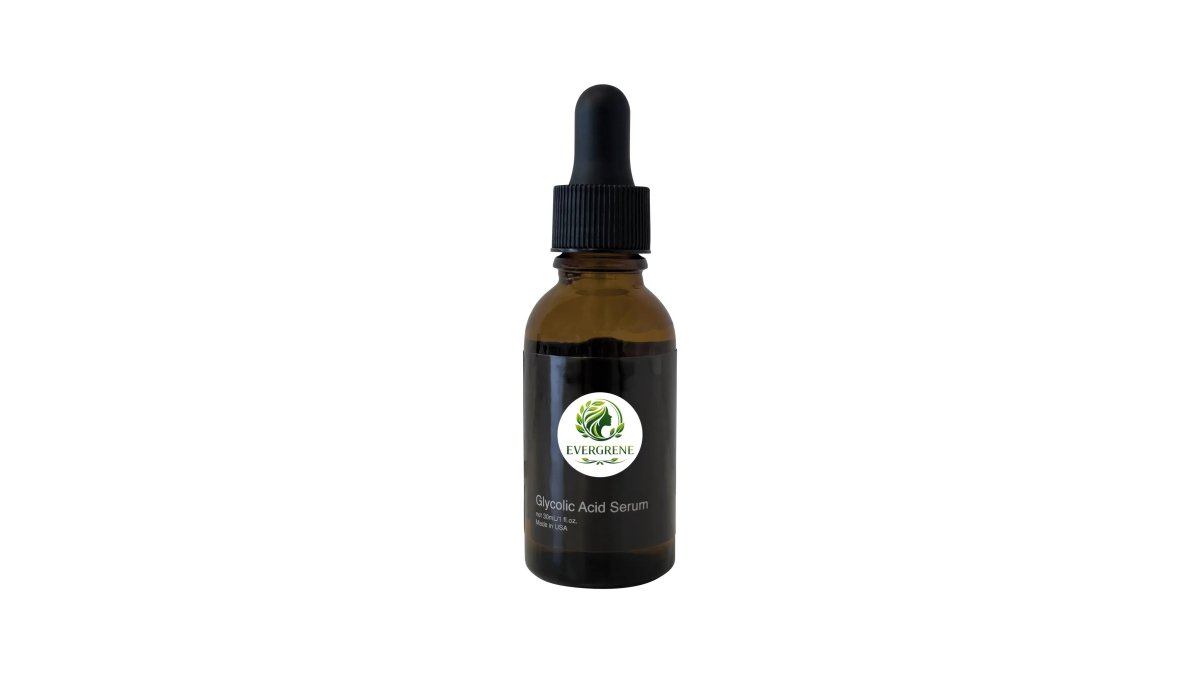
A simple and effective schedule is to use glycolic acid on Monday and Thursday, retinol on Tuesday and Friday, and give your skin three full rest days each week. This pattern gives every active at least 48 hours between applications while keeping both in your routine consistently. Consistency matters more than frequency, because skin needs regular exposure to build tolerance.
Weeks 1-2: The Acclimatization Phase
Start with one night per week for each ingredient, not two. This is the acclimatization phase, where your skin learns to handle each active without reacting. Choose a glycolic acid serum around 5 to 7 percent and a retinol serum with 0.1 to 0.3 percent retinol. Lower concentrations still deliver results with a much lower risk of irritation.
Apply each active on separate nights, and use only a moisturizer and cleanser on the other five nights. Expect some mild tingling in the first few applications; that is normal. What is not normal is persistent burning, visible redness lasting more than a few hours, or peeling that flakes. If you experience any of those, drop back to every other week and focus on barrier repair.
Weeks 3-4: Building Tolerance
Once your skin handles one night per week without irritation, add a second night for each ingredient, bringing you to the schedule described above: glycolic acid twice weekly and retinol twice weekly. At this stage, you can also increase the concentration if your current products are no longer producing results. Many people find that a collagen and retinol serum combined with a hydrating base works well here because the added collagen and hyaluronic acid support the skin while retinol does its work.
| Phase | Glycolic Acid Frequency | Retinol Frequency | Rest Days | Goal |
|---|---|---|---|---|
| Weeks 1-2 | 1 night/week | 1 night/week | 5 | Build initial tolerance |
| Weeks 3-4 | 2 nights/week | 2 nights/week | 3 | Establish maintenance routine |
| Week 5+ | 2-3 nights/week | 2-3 nights/week | 1-2 | Full routine with monitoring |
Signs of Over-Exfoliation and Barrier Damage
Knowing when to stop is as important as knowing how to start. The earliest signs of over-exfoliation are subtle: skin feels tight after cleansing, your usual moisturizer stings on application, and you notice a shiny, almost waxy appearance from a thinned barrier. Many people mistake this for their skin "adjusting" and push through, which only deepens the damage.
More advanced signs include visible peeling, patches of dry skin that flake, redness that persists beyond a few hours, and a sudden outbreak of small bumps that look like closed comedones. This last symptom confuses many people, because they assume exfoliation prevents breakouts. In reality, an irritated barrier triggers inflammation, which can clog pores and produce exactly the breakouts you were trying to prevent. If you notice your skin becoming more sensitive to products you have used for months, that is a clear signal to stop exfoliating. According to guidance from the American Academy of Dermatology, persistent irritation from active ingredients warrants a break from those products until the skin recovers.
Skin Barrier Repair Protocols for Recovery
Most articles warn you about over-exfoliation, but few tell you exactly what to do when it happens. This is a rescue protocol, not a general suggestion. If you are experiencing tightness, stinging, or visible peeling, follow this structured recovery plan.
Phase 1: The 72-Hour Shutdown (Days 1-3)
Your only job for the next three days is to stop the damage and calm inflammation.
- Stop all actives. This includes retinol, glycolic acid, salicylic acid, and vitamin C. Even your regular moisturizer may sting if it contains botanical extracts or fragrance.
- Cleanse with water only in the morning. At night, use a milky or cream cleanser that contains no surfactants that foam. Look for ingredients like glycerin or ceramides listed in the first five ingredients.
- Apply a barrier cream, not a lotion. Lotions are water-based and will evaporate. You need an occlusive layer. Look for a product with petrolatum, dimethicone, or shea butter as a top ingredient. A 1% to 2% concentration of niacinamide in this cream is helpful, as it supports ceramide production.
- Do not exfoliate physically. No washcloths, no scrubs, no sonic brushes. Pat your skin dry with a clean towel.
Phase 2: The Reintroduction Test (Days 4-7)
If the stinging has stopped and the tightness has resolved, you can begin testing your skin's recovery.
- Introduce a hydrating serum. On day 4, add a serum with hyaluronic acid (look for a concentration of 1% to 2%) or panthenol. Apply it to damp skin before your moisturizer.
- Do not reintroduce actives yet. Your barrier is still rebuilding. The lipid matrix takes about seven days to partially restore, but it can take up to two weeks for full function.
- Watch for the 'rebound' effect. Some people see a flare of breakouts during this phase. This is not a sign to resume exfoliating. It is a sign of inflammation. Treat it with a spot treatment containing 0.5% salicylic acid only on the active pimple, not all over.
Phase 3: The Slow Return (Week 2)
Once your skin feels normal for at least three consecutive days, you can begin the reintroduction process.
- Reintroduce one active at a time. Start with retinol at the lowest concentration (0.1% to 0.25%) once a week. Do not add glycolic acid back until you have completed two weeks of retinol without irritation.
- Use the 'sandwich' method for the first month. Apply moisturizer, then a pea-sized amount of retinol, then another layer of moisturizer. This dilutes the active and slows penetration.
- Track your skin's response. If you experience any stinging or redness that lasts more than 24 hours, stop and return to Phase 1 for another week. The barrier that took weeks to damage will not rebuild in a weekend.
The Sunscreen Rule That Is Non-Negotiable
During recovery, your skin is at its most vulnerable to UV damage. Both retinol and glycolic acid increase photosensitivity, and this effect persists for up to two weeks after you stop using them. Use a mineral sunscreen with zinc oxide or titanium dioxide at a concentration of at least 10% to 15%, as these physically block UV rays rather than absorbing them. Chemical sunscreens can sting a compromised barrier. Apply it every morning, even indoors, because UVA rays penetrate windows. This is not just about preventing burns; it is about preventing the hyperpigmentation that often follows a barrier injury.
Conclusion: Start Slow, Protect the Barrier
Retinol and glycolic acid together safely is not about doing more, it is about doing less, more consistently. The routine that works is the one your skin can tolerate week after week, not the aggressive one that forces recovery breaks every month. Start with one night per week for each ingredient, alternate them on separate evenings, and always finish with a moisturizer and morning sunscreen. When you are ready to add these actives, EVERGRENE offers a collagen and retinol serum for nighttime renewal and a glycolic acid serum for exfoliation nights, both designed to work with a simple, sustainable schedule. Pair either with our oil-free daily moisturizer to keep your barrier strong through every phase. Get started with EVERGRENE and build a routine that delivers visible results without the irritation.

Frequently Asked Questions
Can I use retinol and glycolic acid on the same night?
Using both on the same night is risky, especially for beginners, because it significantly increases irritation and disrupts the skin barrier. The safer method is alternating nights retinol and glycolic acid. If your skin has built high tolerance, you can apply glycolic acid in the morning and retinol at night, but always monitor for redness or peeling. For most people, a strict alternating schedule delivers the benefits of both without the damage.
How long should I wait between applying glycolic acid and retinol?
If you are determined to use them in the same routine, wait at least 30 minutes after cleansing before applying glycolic acid, then wait another 30 minutes for it to dry before applying retinol. This reduces the chance of irritation. However, dermatologists recommend against same-night use for most skin types. Alternating nights retinol and glycolic acid is the standard, safer approach that allows each active to work without competing for your skin's pH balance.
What are the signs of over-exfoliation from these actives?
Common signs of over-exfoliation include persistent redness, a burning or stinging sensation when applying moisturizer, visible peeling or flaking, and a shiny, tight feeling that indicates a compromised skin barrier. You might also notice increased breakouts or sensitivity to products you normally tolerate. If you experience these, stop both actives immediately and focus on a repair protocol with ceramides and hydration for 1-2 weeks before reintroducing them slowly.
What should you never mix with glycolic acid?
You should avoid layering glycolic acid with other strong exfoliants like salicylic acid (BHA) or benzoyl peroxide in the same routine. These combinations multiply irritation risk. The most critical rule is to avoid using glycolic acid and retinol together on the same night without a buffer. Always apply glycolic acid to clean, dry skin, wait for full absorption, and follow the skincare layering rules: thinnest to thickest, with a moisturizer as your final step.
Retinol and glycolic acid are powerful tools, but they demand respect. The difference between radiant skin and a damaged barrier comes down to how you schedule them, not which brand you choose. Start with the weekly plan above, listen to your skin, and adjust based on what you see. For more guidance on building a complete routine, explore the EVERGRENE collection of serums and moisturizers designed for real, lasting results.
This article was written using GrandRanker