
European Touch Alternatives: 5 Professional Serums
Table of Contents
- Why Seek European Touch Alternatives?
- How We Compared Professional-Grade Serums
- Quick Comparison: EVERGRENE Serum Lineup
- Best Retinol Alternatives for Pregnancy and Sensitive Skin
- Glycolic Acid Benefits for Skin: The Exfoliation Standard
- Building a Professional Skincare Routine for Beginners
- Which Serum Matches Your Skin Goals?
- Final Verdict on European Touch Alternatives
- Frequently Asked Questions
Last Updated: September 7, 2026
European touch alternatives are professional-grade serums that deliver the same active-ingredient results as luxury European pharmacy lines without the import markup or limited availability. At EVERGRENE, we curated this guide to help you identify which formulations genuinely match the performance of European pharmacy staples.
The European pharmacy model prioritizes cosmeceutical concentrations, fragrance-minimal formulas, and clinical testing. These standards are now met by accessible domestic brands, often at lower price points. Below, we compare five professional serums that replicate the key benefits of European Touch products and show you how to build a routine that delivers visible results.
Why Seek European Touch Alternatives?
The primary reason to seek European touch alternatives is cost and accessibility. European pharmacy brands often carry premium prices in the U.S. due to import fees and limited distribution. The deeper reason lies in the regulatory philosophy that shapes these products, and why American consumers increasingly want domestic equivalents that meet those standards.
The Regulatory Gap: EU vs. U.S. Cosmetic Standards
The perception that European skincare is 'higher quality' is not just marketing; it is rooted in a fundamentally different regulatory approach. The European Union's cosmetics regulation (EC No. 1223/2009) is a proactive, safety-first framework. It requires a 'Responsible Person' to register every product with the CPNP (Cosmetic Products Notification Portal) before it goes on sale. More importantly, the EU has banned over 1,300 ingredients from cosmetics, including many preservatives, colorants, and UV filters that are still permitted in the United States (ec.europa.eu).
In contrast, the U.S. Food and Drug Administration (FDA) operates under the Federal Food, Drug, and Cosmetic Act, which is largely reactive. With the exception of color additives and a few restricted substances, cosmetic ingredients do not require pre-market approval. The FDA can only take action after a product has been shown to be harmful. This means a brand can legally sell a product in the U.S. with ingredients that would be prohibited in the EU.
- Ingredient Safety: European formulations are often free of certain preservatives (like some parabens) and UV filters (like oxybenzone) that are common in American mass-market products. This is why many 'clean' beauty trends in the U.S. are simply standard practice in Europe.
- Sunscreen Efficacy: European sunscreens routinely include advanced filters like Mexoryl SX and Tinosorb S, which offer superior UVA protection compared to the older filters (like avobenzone) that dominate U.S. shelves. The EU also has a UVA protection requirement that is a third of the SPF value, a standard the FDA does not mandate (ec.europa.eu).
What This Means for the 'Alternative' Category
When you buy a European touch alternative from a domestic brand, you are buying a product formulated to meet a higher bar. The best American alternatives mirror these European standards by:
- Prioritizing Active Concentrations: Instead of burying actives in a long list of botanical extracts, they focus on clinically effective percentages of ingredients like retinol, glycolic acid, and peptides.
- Eliminating Unnecessary Additives: They are paraben-free, cruelty-free, and avoid heavy fragrance loads, which are common irritants and allergens.
- Maintaining pH Balance: Effective exfoliants like glycolic acid must be formulated at a specific pH (typically between 3.0 and 4.0) to penetrate the skin (PubMed). A product that is not pH-balanced will be ineffective, regardless of the percentage of active ingredient listed.
The Cost-Benefit Analysis of Imported vs. Domestic
Importing a French pharmacy serum involves international shipping, customs duties, and the overhead of a U.S. distributor. A product that costs €25 in Paris can easily be priced at $45 or more in New York.
By choosing a domestic alternative that uses the same ingredient logic and manufacturing standards, you pay for the formulation, not the logistics. This lets you allocate your budget toward a more complete routine, perhaps adding a vitamin C serum or richer moisturizer, rather than spending it all on a single imported bottle.
The Bottom Line
The switch to a European touch alternative is not a compromise; it is a calculated choice. It accesses the professional-grade, ingredient-focused philosophy of European pharmacy skincare without the import markup, while supporting brands that voluntarily adhere to stricter safety and efficacy standards than U.S. law currently requires.
How We Compared Professional-Grade Serums
Our comparison criteria focused on four factors: active ingredient concentration, formulation stability, skin compatibility, and price per ounce, benchmarked against what European pharmacy lines typically deliver.
We excluded products with heavy fragrance loads, those lacking third-party stability data, and any formula relying on "proprietary blends" that obscure actual percentages. The five serums below passed those filters.
Quick Comparison: EVERGRENE Serum Lineup
For a direct comparison, the EVERGRENE lineup offers five targeted serums that map cleanly onto the most common European pharmacy categories. Below is a summary of each product, its price, and its primary active ingredient.
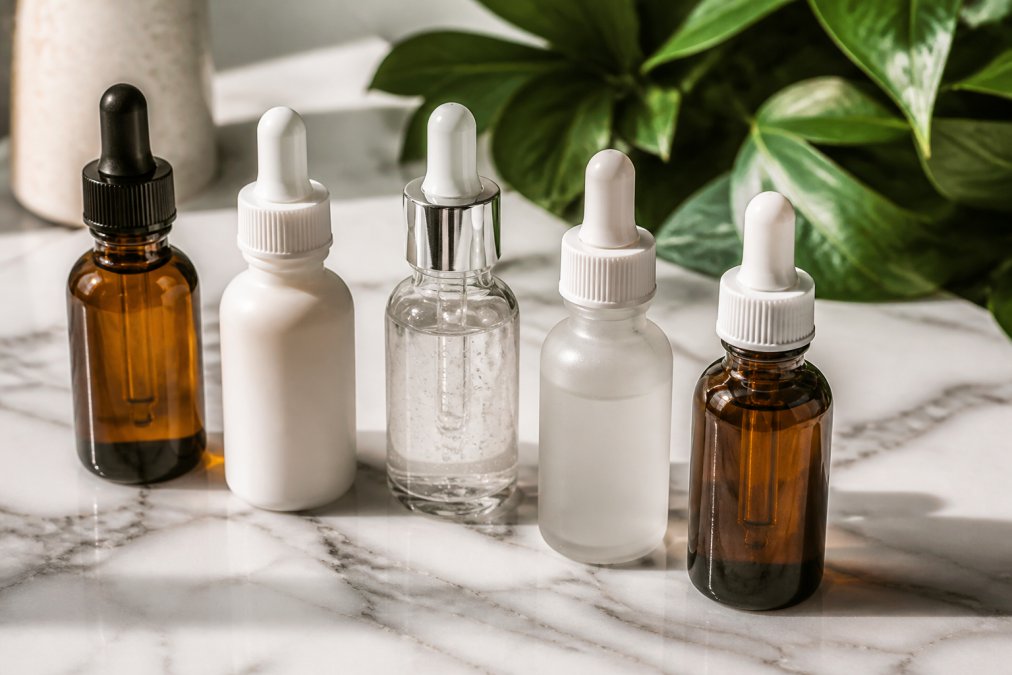
| Serum | Price | Primary Active | Best For |
|---|---|---|---|
| Anti-aging Rose Gold Oil | $41.60 | Rosehip oil, omega fatty acids | Dry skin, collagen support |
| Collagen and Retinol Serum | $49.80 | Retinol, collagen, hyaluronic acid | Fine lines, firmness |
| Age Defying Serum | $55.00 | Squalane, vitamin C, soy protein | Deep hydration, elasticity |
| Firm Serum | $57.90 | Firming peptides, cucumber | Eye area, dark circles |
| Glycolic Acid Serum | $46.70 | Glycolic acid, vitamin E | Texture, hyperpigmentation |
Pricing and Key Active Ingredients at a Glance
The pricing structure across the EVERGRENE range sits between $41.60 and $57.90, competitive with mid-tier American cosmeceutical brands and often below the import cost of equivalent European pharmacy products. Each formula is made in North America and is paraben-free and cruelty-free.

The ingredient philosophy mirrors the European approach: fewer, higher-concentration actives rather than long lists of botanical extracts at negligible percentages. For instance, the Glycolic Acid Serum pairs the exfoliant with squalane and vitamin E for barrier support, the same layering logic used in French pharmacy exfoliants.
Best Retinol Alternatives for Pregnancy and Sensitive Skin
For those researching best retinol alternatives for pregnancy, the Collagen and Retinol Serum is a strong candidate, but not the only option. Retinol is often restricted during pregnancy, so many dermatologists recommend switching to bakuchiol or peptide-based formulas.
The EVERGRENE Firm Serum offers a fragrance-free, oil-free option built on palmitoyl tripeptide-1 and palmitoyl tetrapeptide-7. These peptides stimulate collagen through a different pathway than retinol, making them suitable for sensitive skin and for those avoiding retinoids. The formula also includes cucumber extract to reduce puffiness.
For those who can use retinol but have sensitive skin, the Collagen and Retinol Serum pairs the active with hyaluronic acid and soybean oil to buffer irritation. Start with two applications per week and build up frequency over a month.
Glycolic Acid Benefits for Skin: The Exfoliation Standard
The glycolic acid benefits for skin are well documented: it is the smallest alpha-hydroxy acid molecule, allowing deeper penetration and faster exfoliation than lactic or mandelic acid. This makes it the standard for treating hyperpigmentation, uneven texture, and residual acne marks.
The EVERGRENE Glycolic Acid Serum delivers this active alongside aloe vera and sodium hyaluronate to counter potential dryness. Squalane locks in moisture post-exfoliation, which is critical because glycolic acid increases transepidermal water loss if not properly buffered.
The serum also contains salicylic acid in a small percentage, which helps keep pores clear.
Building a Professional Skincare Routine for Beginners
A professional skincare routine for beginners does not require a ten-step regimen. The most effective approach is a streamlined, three-step framework, cleanse, treat, and moisturize, with a broad-spectrum sunscreen applied every morning.
The Morning Routine: Protection and Prevention
- Cleanse: Use a gentle, non-foaming cleanser to remove overnight buildup without stripping the skin barrier. Look for ingredients like glycerin or ceramides.
- Treat (Optional): If your skin tolerates it, a few drops of a vitamin C serum (like the Age Defying Serum) can be applied before moisturizer. Vitamin C is an antioxidant that neutralizes free radicals from UV exposure and pollution.
- Moisturize: Apply a lightweight moisturizer to hydrate and lock in the previous steps.
- Protect: Finish with a sunscreen of at least SPF 30. This is non-negotiable. Sun exposure is the number one cause of fine lines, hyperpigmentation, and loss of elasticity. The most critical factor is consistent application of any broad-spectrum SPF 30 or higher.
The Evening Routine: Repair and Regenerate
- Cleanse: If you wore sunscreen or makeup, start with an oil-based cleanser to dissolve those products, then follow with your regular gentle cleanser. This double-cleansing method ensures pores are fully clear.
-
Treat: This is where your targeted serum goes. The key is to alternate your exfoliating actives to prevent barrier damage.
- Night 1 (e.g., Monday): Apply the Glycolic Acid Serum. This exfoliates the surface, smoothing texture and fading hyperpigmentation.
- Night 2 (e.g., Tuesday): Apply the Collagen and Retinol Serum. This works deeper to stimulate collagen and accelerate cell turnover.
- Night 3 (e.g., Wednesday): Rest. Use only a moisturizer or a nourishing oil like the Anti-aging Rose Gold Oil to allow your skin barrier to recover.
- Moisturize: Use a richer moisturizer at night to support the skin barrier while it works. For the eye area, a dedicated product like the Firm Serum can be applied before your moisturizer.
Adapting the Routine for Specific Skin Types
- For Oily or Acne-Prone Skin: You still need moisturizer. Skipping it can cause your skin to produce more oil to compensate. Opt for a gel-based moisturizer and use the Glycolic Acid Serum more frequently (up to three times a week) to keep pores clear.
- For Dry or Dehydrated Skin: Focus on layering hydrating ingredients. Apply the Age Defying Serum (with squalane and vitamin C) while your skin is still slightly damp to help lock in moisture. You can also mix a drop of the Anti-aging Rose Gold Oil into your moisturizer for an extra lipid boost.
- For Sensitive Skin: Introduce any active ingredient slowly. Start with the peptide-based Firm Serum, which is non-irritating, before attempting retinol or glycolic acid. When you do start retinol, use the 'sandwich method': apply moisturizer, then a pea-sized amount of retinol, then another layer of moisturizer to buffer the effect.
The First Month: A Pacing Guide
Patience is critical. The skin's cell renewal cycle takes roughly 28 days, so you will not see dramatic changes overnight. A common pattern is a 'purging' phase in the first two to three weeks when using retinol or glycolic acid, where existing congestion comes to the surface. This is normal and subsides. To minimize irritation, follow this schedule:

- Week 1: Use your chosen active (retinol or glycolic acid) once a week.
- Week 2: Increase to twice a week, with at least one rest day in between.
- Week 3: If no significant irritation, increase to three times a week.
- Week 4: Assess your skin. If it feels tight or looks flaky, scale back. Visible improvements to fine lines typically appear after eight to twelve weeks of consistent use.
Which Serum Matches Your Skin Goals?
Choosing between these European touch alternatives depends entirely on your primary skin concern. If fine lines and loss of firmness are the issue, the Collagen and Retinol Serum is the most direct match.
For uneven texture or post-acne marks, the Glycolic Acid Serum is the clear winner. If your skin feels tight and looks dull, the Age Defying Serum with squalane and vitamin C addresses dehydration and brightness simultaneously. Dark circles and puffiness point to the Firm Serum, while overall dryness and loss of elasticity call for the Anti-aging Rose Gold Oil.

Final Verdict on European Touch Alternatives
European touch alternatives deliver the same professional-grade outcomes as imported pharmacy lines when you prioritize active ingredients over branding. The EVERGRENE lineup covers the core categories, retinol, glycolic acid, peptides, and nourishing oils, at price points between $41.60 and $57.90, undercutting most imported equivalents.
The strongest argument for switching is not cost alone, it is formulation transparency. Every serum lists its key actives in plain language, is made in North America, and avoids parabens and animal testing. That clarity is now available without the import hassle.
Frequently Asked Questions
What makes these European Touch alternatives different from drugstore brands?
These alternatives focus on professional-grade formulations with active ingredients at effective concentrations. The Collagen and Retinol Serum pairs retinol with collagen and hyaluronic acid, targeting multiple aging signs at once. Drugstore products often rely on lower concentrations of actives that may not produce visible results. EVERGRENE's serums are also paraben-free, cruelty-free, and made in North America.
Are these serums safe for sensitive skin?
Yes, with the right approach. The Firm Serum is fragrance-free and oil-free, making it a safe starting point for sensitive skin. The Glycolic Acid Serum includes soothing ingredients like aloe vera and glycerin alongside the exfoliant. For sensitive skin, start by applying each serum only 2-3 times per week, then gradually increase frequency as your skin builds tolerance. Patch test on your jawline before applying to your full face.
Can I use retinol and glycolic acid together in one routine?
Yes, but not at the same time of day. Use the Glycolic Acid Serum in your evening routine on alternate nights from the Collagen and Retinol Serum. This prevents over-exfoliation and irritation. On off nights, focus on hydration with the Anti-aging Rose Gold Oil. This rotation allows each active ingredient to work effectively while maintaining your skin barrier.
How quickly will I see results from these professional serums?
Most users notice improved texture and hydration within 2-3 weeks of consistent use. The Glycolic Acid Serum works fastest on surface-level concerns like uneven tone and blackheads. The Collagen and Retinol Serum targets deeper signs of aging, and visible changes to fine lines typically appear after 8-12 weeks. Consistency matters more than how many products you use.
Choosing the right serum comes down to identifying your primary concern and matching it to the correct active ingredient. EVERGRENE simplifies this with a curated range that covers exfoliation, collagen support, and deep hydration, all designed to fit a straightforward routine. Start with the Collagen and Retinol Serum or the Glycolic Acid Serum depending on your goal, and build from there. Get started with EVERGRENE and build a routine that delivers consistent, visible results.