
How to Layer Skincare Products Correctly
Table of Contents
- The Golden Rule: Thinnest to Thickest
- Water-Based vs. Oil-Based Products and Layering Order
- How Long to Wait Between Skincare Steps
- Skincare Ingredients That Clash: What Not to Mix
- Step-by-Step Morning and Evening Routine Order
- Best Skincare Routine for Busy Moms
- Common Skincare Layering Mistakes to Avoid
- Frequently Asked Questions
Last Updated: September 26, 2026
The Golden Rule: Thinnest to Thickest
Apply products from lightest to heaviest consistency, water-based serums won't penetrate through oils and thick creams. This rule exists because molecular weight determines penetration depth. Start with the thinnest texture and work toward the thickest, allowing each product to absorb before moving to the next layer.
If you apply a heavy moisturizer first, lighter serums can't reach deeper layers where they're needed most. Many people waste expensive active ingredients by applying products in the wrong sequence. The practical order: cleanse, then apply toner or essence (water-thin), follow with serums (lightweight), add treatment products (medium consistency), and finish with moisturizer and sunscreen (heaviest).
Water-Based vs. Oil-Based Products and Layering Order
Water-based and oil-based products follow different rules when layering skincare products. Water-based formulations contain humectants like glycerin and hyaluronic acid, which draw moisture into the skin. Oil-based products create an occlusive barrier that seals hydration in. Oil repels water, so applying an oil-based product before a water-based one prevents absorption.
Layer water-based products first, then oil-based products last. This allows hydrating serums to penetrate while occlusive oils lock everything in. EVERGRENE's Hyaluronic Acid Serum is a water-based formula designed to be applied early in your routine, before heavier creams or oils.

Some modern formulations blur this line, many moisturizers combine both water and oil components in an emulsion, making them work at any point in your layering sequence. Check the ingredient list: if water is listed first, it's water-based; if oil appears first, it's oil-based. Understanding this distinction prevents pilling and ensures proper absorption.
How Long to Wait Between Skincare Steps
Patience matters when you layer skincare products correctly, but the right wait time isn't one-size-fits-all. Absorption speed depends on molecular weight, lipid solubility, and skin barrier condition.
Wait Times by Product Type
Toners and essences (water-based, lightweight): 15-30 seconds. These hydrate and prep skin for subsequent layers. You can feel when they're absorbed, the skin no longer feels wet, just dewy.
Hydrating serums (water-based, medium viscosity): 30-60 seconds. Serums with hyaluronic acid, niacinamide, or glycerin penetrate the epidermis relatively quickly. Wait until the serum feels tacky or slightly dry to the touch.
Treatment serums with actives (retinol, vitamin C, glycolic acid): 2-5 minutes. Active ingredients need time to penetrate and begin their work. Retinol must reach the basal layer to trigger cell turnover. Vitamin C serums are acidic and need time to stabilize before you apply other products. Glycolic acid exfoliants need 10-15 minutes because they work through pH-dependent chemistry; applying a neutral-pH moisturizer too soon neutralizes the exfoliant.

Lightweight moisturizers (water-in-oil emulsions): 1-2 minutes. These blend water and oil and absorb moderately fast.
Rich creams and balms (oil-based or heavy emulsions): 2-3 minutes. These form a barrier rather than fully penetrating. Wait until the product feels settled before layering the next product.
Facial oils (pure lipids): 3-5 minutes. Oils don't fully absorb; they form an occlusive layer. Wait until the oil feels integrated into skin and not slick.
Sunscreen (water-resistant formulations): 10-15 minutes. Sunscreen needs time to form a protective film on skin. Applying makeup or moisturizer over sunscreen before it sets reduces its effectiveness.
Skin Type Customization
Oily skin: Can use shorter wait times (reduce by 15-30 seconds per step) because sebum naturally speeds absorption and your barrier is typically robust.
Dry skin: Needs longer wait times (add 30-60 seconds per step) because a dry barrier absorbs products more slowly. Patience prevents products from sitting on the surface and causing flaking or irritation.
Sensitive skin: Requires the longest wait times (add 60 seconds to each step) because a reactive barrier needs time to process each product before the next one is introduced.
Combination skin: Use standard wait times for your T-zone (oily areas) and extended wait times for sensitive zones.
Environmental and Seasonal Adjustments
- Hot, humid weather: Products absorb faster. Reduce wait times by 15-30 seconds.
- Cold, dry weather: Products absorb slower. Add 30-60 seconds to each wait time.
- High altitude: Lower oxygen and humidity slow absorption slightly; add 15-30 seconds.
- Winter heating indoors: Dry air slows absorption; add 30 seconds to each step.
The Practical Absorption Test
Gently touch your skin with a clean finger. If it feels tacky, wet, or slick, the product hasn't fully absorbed, wait longer. If it feels smooth, dry, or slightly dewy, absorption is complete.
Common Wait-Time Mistakes
Waiting too long between every layer is excessive and unnecessary unless you're using multiple active ingredients. Standard wait times (30 seconds to 2 minutes for most products) are sufficient. Not waiting long enough for actives is more damaging, rushing prevents them from penetrating and working effectively. Applying products to visibly wet skin dilutes active ingredients and prevents proper absorption. Products should absorb into damp skin, not soaking wet skin.
When you layer skincare products correctly with adequate wait times, you'll notice better absorption, fewer texture issues, and more visible results. Active ingredients penetrate to their target layers, hydrating serums actually hydrate rather than sitting on the surface, and your skin barrier stays intact.
Skincare Ingredients That Clash: What Not to Mix
Certain active ingredients shouldn't be combined in the same routine because they can irritate skin, reduce each other's effectiveness, or destabilize formulations. Understanding which skincare ingredients clash helps you build a routine that actually works.
Ingredient conflicts occur due to pH incompatibility, oxidation risk, and cumulative irritation. When you layer products with vastly different pH levels, the higher-pH product can neutralize the lower-pH active, rendering it ineffective. Oxidation risk occurs when two actives compete for the same mechanism, vitamin C and retinol both work through antioxidant pathways, and layering them can cause one to degrade the other. Cumulative irritation happens when multiple actives stress the skin barrier simultaneously.
Common Ingredient Clashes and Timing Solutions
Retinol and vitamin C are popular actives but work best in separate routines: vitamin C in the morning (it's photostable and provides antioxidant protection), retinol in the evening (skin repairs itself overnight). If you want to use both, apply vitamin C in your morning routine and retinol in your evening routine, separated by at least 12 hours.
Glycolic acid (an exfoliant) and retinol together can over-exfoliate, damaging your skin barrier.
Skin Type Customization for Ingredient Layering
-
Oily skin: Can typically tolerate more frequent active use (3-4 times weekly) because the sebum barrier is naturally robust. Start conservatively anyway, introduce one active at a time over 2-3 weeks.
-
Dry skin: Should limit active ingredients to 2-3 times weekly and avoid combining multiple actives on the same night. Use retinol on one evening, glycolic acid on another, with 2-3 recovery nights in between.
-
Sensitive skin: Requires the most conservative approach. Use only one active ingredient per week initially, and always separate actives by at least 24 hours. Patch test any new active on a small area for 3-5 days before full-face application.
-
Combination skin: Treat the most sensitive zones as sensitive skin and the oilier zones as oily skin.
Step-by-Step Morning and Evening Routine Order
Your morning and evening routines should follow the same layering principle but with different active ingredients. Morning routines prioritize protection and hydration, while evening routines focus on repair and treatment.
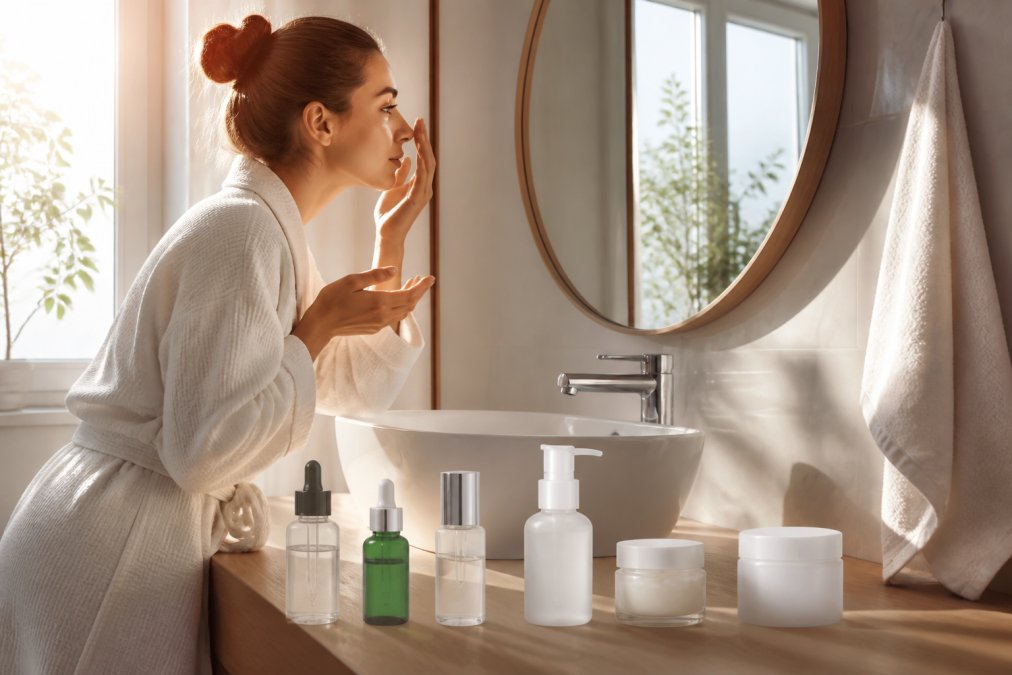
Morning routine order:
- Cleanser (removes overnight oil and debris)
- Toner or essence (balances pH, hydrates)
- Serum (hydrating or antioxidant, vitamin C works well here)
- Moisturizer (locks in hydration)
- Sunscreen (protects from UV damage)
Evening routine order:
- Cleanser (removes makeup, sunscreen, and daily grime)
- Toner or essence (prepares skin for treatments)
- Active treatment serum (retinol, glycolic acid, or hydrating serum)
- Moisturizer (supports skin barrier repair during sleep)
- Optional: facial oil (seals everything in for extra hydration)
Best Skincare Routine for Busy Moms
Complexity kills consistency. Busy moms need routines that deliver results without requiring 20 minutes every morning and night. The best skincare routine for busy moms focuses on essentials: cleanse, treat, hydrate, protect.
Common Skincare Layering Mistakes to Avoid
Most people make the same layering mistakes repeatedly. Recognizing these patterns helps you fix your routine and see better results.
Frequently Asked Questions
What is the golden rule of skincare layering?
The golden rule is to apply products from thinnest to thickest consistency. Start with lightweight water-based serums and toners, then move to heavier creams and oils. This order allows each product to absorb properly and prevents pilling. Molecular weight also matters, lighter molecules penetrate deeper when applied first, while heavier occlusive products seal in hydration and active ingredients.
How long should you wait between applying skincare layers?
Wait 30 seconds to 2 minutes between each layer, depending on product type. Water-based serums like the Hyaluronic Acid Serum typically absorb in 30-60 seconds. Oil-based products and moisturizers need 1-2 minutes. If you're using active ingredients like retinol or glycolic acid, allow 2-3 minutes before applying the next product. Applying products too quickly traps moisture and can cause pilling or reduce absorption.
Which skincare ingredients should never be mixed together?
Retinol and vitamin C can compete for skin penetration and may reduce each other's effectiveness, use them in separate routines (retinol at night, vitamin C in the morning). Glycolic acid and retinol together may over-exfoliate sensitive skin; alternate them on different nights instead. Niacinamide and acids can cause flushing in some people, so test separately first. Always patch test new combinations and introduce active ingredients gradually.
Is it okay to use multiple serums in one routine?
Yes, but limit yourself to 2-3 serums maximum to avoid overwhelming your skin barrier. Layer them by consistency and molecular weight, thinnest first. For example, apply the Glycolic Acid Serum first for exfoliation, wait 2 minutes, then add the Hyaluronic Acid Serum for hydration. Finish with the Collagen and Retinol Serum if using retinol at night. More serums don't equal better results; focus on complementary ingredients that address your specific concerns.