
Is Retinol Worth It for Fine Lines: A 2026 Review
Table of Contents
- Is Retinol Worth It for Fine Lines: The Honest Answer
- How Retinol Works to Reduce Fine Lines and Wrinkles
- How to Start Retinol Without Irritation
- Retinol Purging Period Timeline: What to Expect
- Retinol vs. Glycolic Acid for Anti-Aging
- Cost-Benefit Analysis: Retinol Concentrations and Results
- Common Myths vs. Facts About Retinol
- Frequently Asked Questions
Last Updated: October 1, 2026
Is Retinol Worth It for Fine Lines: The Honest Answer
Is retinol worth it for fine lines? The answer depends on your skin's tolerance, timeline expectations, and budget. Retinol works, but results take 8-12 weeks and require an adjustment period.
Retinol increases cellular turnover and stimulates collagen synthesis. Results take 8-12 weeks, with irritation common in the first 2-4 weeks. It's cost-effective for those willing to commit to a gradual approach.
How Retinol Works to Reduce Fine Lines and Wrinkles
Retinol converts to retinoic acid, which binds to skin cell receptors and triggers faster cell shedding and collagen production (Retinoids: active molecules influencing skin structure formation in cosmetic and...).
The result is thicker, more elastic skin with less visible fine lines due to increased structural support.
Cellular Turnover and Collagen Synthesis
Retinol accelerates skin renewal from 28 days to 3-4 weeks, delivering smoother texture and brightness within 4-6 weeks.
Retinol stimulates fibroblasts to produce more collagen, slowing age-related decline and encouraging new collagen synthesis.
Beyond Fine Lines: Other Skin Benefits
Retinol also manages acne, improves texture, reduces pore appearance, and fades hyperpigmentation by accelerating cell shedding.
How to Start Retinol Without Irritation
The biggest reason people quit retinol is irritation. Redness, flaking, and sensitivity are common in the first 2-4 weeks, a process called retinization. You can minimize this with a low-and-slow approach.
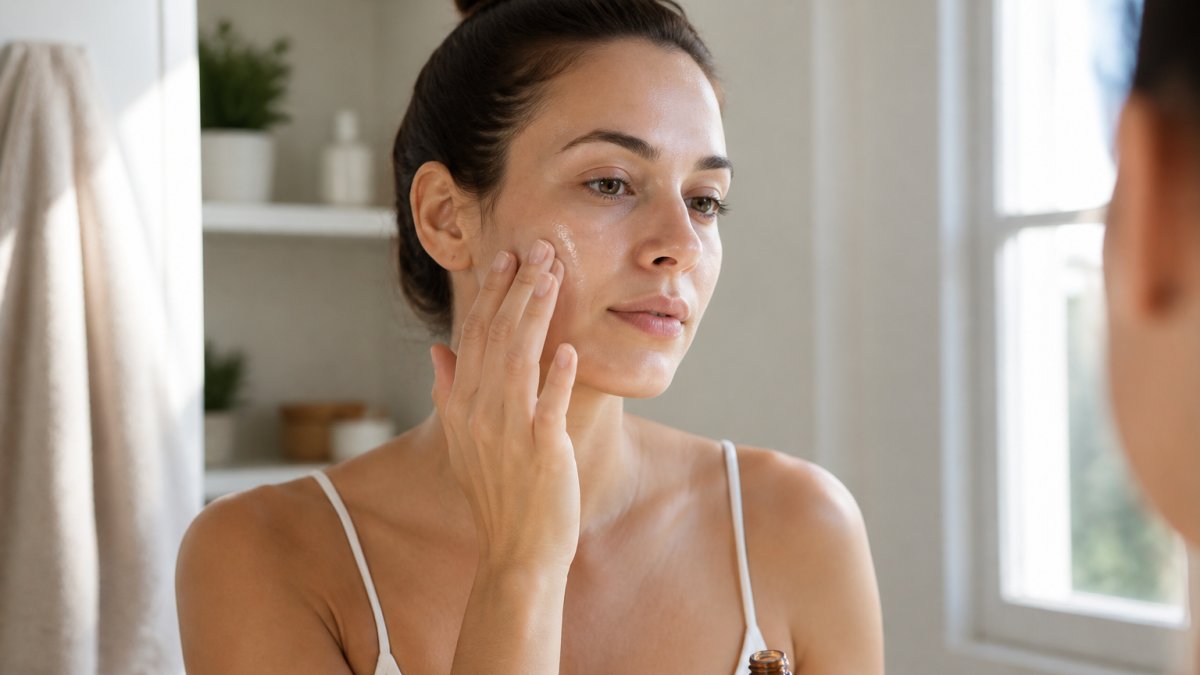
The Low-and-Slow Approach
Start with 0.25% retinol or lower, applied once or twice weekly, not nightly. Daily use from the start triggers severe irritation and abandonment.
Patch test on a small area for 3-5 days.
Apply retinol to completely dry skin (wait 20 minutes after cleansing) using a pea-sized amount. More doesn't mean faster results.
Patch Testing and Barrier Support
Apply a hydrating moisturizer 5-10 minutes after retinol to reduce irritation and prevent water loss. Look for hyaluronic acid, glycerin, or ceramics. EVERGRENE's Collagen and Retinol Serum includes hyaluronic acid for this purpose.

Use sunscreen daily during retinol use. Retinol increases sun sensitivity, and UV exposure can undo collagen-building benefits. SPF 30 minimum, applied 15 minutes before sun exposure.
Retinol Purging Period Timeline: What to Expect
The "retinol purge" is temporary.
Flaking peaks at week 2-3, breakouts clear by week 4-6, and visible improvement appears by week 8-12. Timeline varies by sensitivity, concentration, and frequency.
Don't confuse the purge with an allergic reaction. True allergic reactions involve swelling, hives, or severe burning that doesn't improve with reduced frequency.
Retinol vs. Glycolic Acid for Anti-Aging
Retinol and glycolic acid both fight aging but work differently. Understanding this prevents barrier damage from incompatible combinations.
How They Target Fine Lines Differently
Retinol speeds cell shedding and stimulates collagen production, with results in 8-12 weeks.
Glycolic acid exfoliates the surface, providing immediate smoothing and brightness within 1-2 weeks, but doesn't stimulate collagen like retinol.
The Critical Rule: What NOT to Layer with Retinol
Combining retinol with other actives overwhelms the barrier, causing severe irritation. Most "retinol irritation" is actually over-exfoliation from incompatible layering.
Do NOT combine retinol with:
AHAs and BHAs: Both accelerate cell turnover like retinol.
Vitamin C: Unstable with retinol and reduces both ingredients' efficacy.
High-dose niacinamide (above 5%): Increases retinol irritation.
Benzoyl peroxide: Oxidizes retinol, rendering it inactive. Use on alternate nights or switch to azelaic acid.
Retinoids (tretinoin, adapalene): Never combine with OTC retinol. If prescribed tretinoin, skip additional retinol.
What You CAN Layer Safely with Retinol
Hydrating ingredients: Support barrier and reduce irritation. Apply after retinol. EVERGRENE's Collagen and Retinol Serum includes hyaluronic acid.
Azelaic acid: Stable with retinol and adds anti-inflammatory benefits. Safe to use together.
Sunscreen (SPF 30+): Essential during the day. Retinol increases sun sensitivity, so daily SPF is non-negotiable.
Building a Retinol Routine Without Over-Exfoliating
Here's a sample weekly routine that maximizes retinol's benefits while avoiding ingredient conflicts:
Monday night: Retinol + hydrating moisturizer + squalane.
Tuesday night: Glycolic acid (if desired) + hydrating moisturizer.
Wednesday night: Retinol + hydrating moisturizer + squalane.
Thursday night: Glycolic acid (if desired) + hydrating moisturizer.
Friday night: Retinol + hydrating moisturizer + squalane.
Saturday & Sunday: Hydrating serum + moisturizer + peptide-based product (optional).
Every morning: Cleanser + Vitamin C serum (optional) + moisturizer + SPF 30+.
Cost-Benefit Analysis: Retinol Concentrations and Results
Retinol concentrations range from 0.25% to 1%, with higher concentrations delivering faster results but also higher irritation risk. The cost-benefit shifts based on your skin's tolerance, your timeline, and what you're actually trying to achieve. To decide if retinol is worth it, you need to map concentration to both cost and realistic outcome.
Entry-Level Retinol (0.25%-0.3%)
Cost: $15-$35 per bottle, lasting 6-8 weeks ($2-$6 per week).
Best for: First-time users, sensitive skin, prevention. Sufficient for mild fine lines over 6+ months.
Trade-off: Slower results; not suitable for quick improvement before events.
Mid-Range Retinol (0.5%-0.75%)
Cost: $35-$65 per bottle, lasting 4-6 weeks ($6-$15 per week).
Best for: Most people. Best cost-benefit ratio for fine lines with noticeable improvement in 10-12 weeks and manageable irritation.
EVERGRENE's Collagen and Retinol Serum at $49.80 per bottle lasts 4-6 weeks ($8-$12 per week).
Medical-Grade Retinol (0.75%-1%)
Cost: $60-$150+ per bottle, lasting 3-5 weeks ($12-$35 per week).
Best for: Experienced users with resilient skin and moderate-to-severe lines. Upgrade after 6+ months at 0.5% or for significant photodamage.
Trade-off: High cost and irritation risk. Severe flaking common. Not for sensitive skin or first-time users.
The Real ROI Question: When Is Retinol Worth It?
Retinol is worth the investment if:
-
You can commit to 12+ weeks of consistent use. Retinol's ROI compounds over time. If you use it sporadically or abandon it after 4 weeks of irritation, you won't see results and the cost is wasted. Consistency beats concentration.
-
Your fine lines are moderate or worse. If you have only very subtle lines and healthy skin, hydration and sun protection may deliver 70% of retinol's benefit at 20% of the cost. Retinol shines when fine lines are visible enough to bother you.
-
You're willing to invest in barrier support. Retinol alone costs $2-$35 per week, but you'll also need a hydrating moisturizer ($15-$40) and SPF 30+ sunscreen ($10-$30). Total weekly skincare cost during retinol use is typically $5-$50 depending on product tier. If you're already spending this on skincare, retinol is a logical addition. If you're budget-conscious, retinol may not be the priority.
-
You want long-term prevention, not quick fixes. Retinol's benefit compounds: 12 weeks of use prevents 6-12 months of additional fine line formation. If you're 30+ and want to slow visible aging, the cost-per-month ($8-$30) is lower than most professional treatments (microneedling, laser, injectables) and has no downtime.
Retinol vs. Alternative Anti-Aging Approaches
To truly evaluate if retinol is worth it, compare it to alternatives:
Hydration-focused approach (hyaluronic acid, glycerin, peptides): Cost $5-$20 per week. Results in 2-4 weeks for fine lines caused by dehydration. Does not address collagen loss. Best for plumping fine lines temporarily; doesn't prevent new wrinkles.
Chemical exfoliation (glycolic acid, lactic acid): Cost $10-$30 per week. Results in 1-2 weeks for texture and brightness. Does not stimulate collagen. Best for immediate smoothing; doesn't address underlying wrinkle structure.
Professional treatments (microneedling, laser resurfacing, injectables): Cost $200-$2,000+ per session, typically 3-6 sessions needed. Results in 4-8 weeks.
Retinol: Cost $8-$30 per week. Results in 8-12 weeks. Stimulates collagen production, preventing future wrinkles while improving existing ones.
For fine lines specifically, retinol offers the best cost-per-month-of-benefit when you factor in long-term prevention.
Common Myths vs. Facts About Retinol
Myth: Retinol works immediately. Fact: Visible results take 8-12 weeks minimum.
Myth: More retinol means faster results. Fact: Higher concentrations increase irritation risk without proportionally speeding up collagen production.
Myth: Retinol thins the skin. Fact: Retinol thickens the epidermis and dermal matrix by stimulating collagen production.
Myth: Retinol is the only ingredient that addresses fine lines. Fact: Retinol is highly effective, but hydration, sun protection, and peptides also improve fine lines. A multi-pronged approach often works better than retinol alone. EVERGRENE's Firm Serum uses firming peptides and cucumber extract to tighten fine lines without retinol's irritation risk, making it a complementary option.

Is retinol worth it for fine lines?
Start low, go slow, and support your skin barrier. EVERGRENE's curated collection of retinol and supportive serums simplifies the process: the Collagen and Retinol Serum combines retinol with hydration, reducing the irritation risk while delivering anti-aging results. Pair it with consistent sun protection and a hydrating moisturizer, and you'll see real improvement in fine lines within 12 weeks.
| Retinol Concentration | Timeline to Results | Irritation Level | Best For |
|---|---|---|---|
| 0.25% | 12-16 weeks | Minimal | Sensitive skin, first-time users |
| 0.5% | 8-12 weeks | Moderate | Most people, balanced results |
| 1% | 6-8 weeks | High | Experienced users, resilient skin |
Frequently Asked Questions
How long does it take for retinol to show results on fine lines?
Most users notice visible improvement in fine lines after 8-12 weeks of consistent use, though some see subtle changes within 4-6 weeks. Results depend on retinol concentration, skin type, and how often you use it. Deeper wrinkles may take 3-6 months of daily application. Patience and consistency matter more than the speed of results. Avoid expecting overnight transformation; retinol works gradually by increasing cellular turnover and collagen synthesis.
Can retinol cause more harm than good for sensitive skin?
Retinol can irritate sensitive skin if introduced too quickly or at high concentrations. Starting with a low concentration (0.25%-0.3%) and using it just 1-2 times per week minimizes risk. Always patch test first, apply to clean, completely dry skin, and follow with a moisturizer to support skin barrier integrity. If irritation persists after 2-3 weeks, reduce frequency or discontinue. Sensitive skin isn't a reason to avoid retinol entirely, it's a reason to start slowly.
Is retinol worth it compared to other anti-aging ingredients?
Retinol has strong clinical evidence for reducing fine lines and improving skin texture, making it one of the most effective anti-aging ingredients available. However, cost and tolerance matter. Products like the Collagen and Retinol Serum ($49.80) combine retinol with hydrating ingredients like hyaluronic acid and collagen, offering good value for all skin types. If you have budget constraints or extreme sensitivity, alternatives like squalane-based serums or peptide formulations may deliver results with fewer side effects.
What is the 123 rule of retinol?
The 123 rule is a beginner's guideline: use retinol 1 night per week for the first week, 2 nights per week in week two, and 3 nights per week by week three. This gradual introduction allows your skin to build tolerance and reduces irritation. After retinization (the adjustment period), most people can increase to nightly use if desired. This method works well for those new to retinol or with sensitive skin. Always start with a low concentration and adjust based on how your skin responds.