
Serum vs Moisturizer for Hydration: Which You Need
Table of Contents
- What Is a Facial Serum?
- What Is a Moisturizer?
- Key Differences Between Serums and Moisturizers
- Signs of Dehydrated Skin and How Each Product Helps
- Best Order to Apply Skincare Products
-
How to Fix Dull Dehydrated Skin With Serums and Moisturizers
- Step 1: Assess Your Dehydration Level and Environmental Context
- Step 2: Choose Your Serum-to-Moisturizer Ratio Based on Environment
- Step 3: Select Serum and Moisturizer Textures for Your Environment
- Step 4: Adjust Your Routine Seasonally
- Step 5: Be Consistent for 4-6 Weeks
- Common Mistakes That Prevent Results
- Can You Use Both Serum and Moisturizer Together?
- Frequently Asked Questions
Last Updated: September 22, 2026
What Is a Facial Serum?
Understanding the difference in serum vs moisturizer starts with knowing that a facial serum is a lightweight liquid treatment designed to deliver concentrated active ingredients deep into your skin. Serums work by using smaller molecular weight compounds that penetrate the skin barrier effectively, allowing ingredients like hyaluronic acid and glycerin to reach deeper layers where they can provide targeted hydration and repair.

Serums are water-based or oil-based formulations applied to clean skin before moisturizer, using just 2-3 drops. They address specific concerns with higher concentrations of active ingredients rather than provide occlusive protection.
What Is a Moisturizer?
A moisturizer is a topical product designed to lock in hydration and protect your skin barrier. Moisturizers work through three main mechanisms: humectants (which draw water into the skin), emollients (which smooth and soften), and occlusives (which create a protective barrier to prevent transepidermal water loss).
Moisturizers are thicker than serums and sit on the surface, forming a protective barrier that prevents moisture loss and shields skin from environmental stressors.
The best moisturizers blend humectants (glycerin), emollients (fatty acids, squalane), and occlusives to draw moisture in and lock it in.
Moisturizers come in various textures, lightweight lotions for oily skin, richer creams for dry skin, gel-based formulas for sensitive skin, each affecting absorption and feel.
Key Differences Between Serums and Moisturizers
The main difference between serums and moisturizers comes down to function and molecular structure. Serums deliver concentrated active ingredients deep into the skin through smaller molecular weight compounds. Moisturizers create a protective barrier on the surface while providing hydration through humectants and occlusives.
Penetration depth differs significantly: serums reach deeper layers, while moisturizers work on the surface to seal in moisture.
Ingredient concentration differs: serums contain higher concentrations of active ingredients, making them potent for specific concerns.
Texture and feel vary: serums absorb quickly and feel lightweight; moisturizers feel more occlusive.
Here's how they complement each other:
| Feature | Serum | Moisturizer |
|---|---|---|
| Primary Function | Deliver active ingredients | Lock in hydration |
| Molecular Weight | Smaller (penetrates deeper) | Larger (surface protection) |
| Application Order | Before moisturizer | After serum |
| Best For | Targeted treatment | Barrier support |
| Texture | Lightweight, absorbs fast | Thicker, occlusive |
| Ingredient Concentration | High | Moderate |
The reason dermatologists recommend using both in a serum vs moisturizer routine is simple: they serve different purposes. A serum alone won't prevent moisture loss. A moisturizer alone won't deliver concentrated active ingredients where they're needed most.
Signs of Dehydrated Skin and How Each Product Helps
Dehydrated skin shows tightness after cleansing, dullness, lack of elasticity, and pronounced fine lines from lack of internal plumpness.
Flaking, rough patches, and increased sensitivity indicate barrier dysfunction and accelerated transepidermal water loss.
Understanding Ingredient Compatibility: Serum + Moisturizer Pairing
Not all serums work equally well with all moisturizers. The most effective hydration routines pair serums and moisturizers with complementary mechanisms of action. Here's how to build a routine that actually works:
Hyaluronic Acid Serum + Ceramide Moisturizer Hyaluronic acid draws water into skin; ceramides seal the barrier and lock in hydration. The serum "pulls" moisture; the moisturizer "locks" it in. Ideal for all dehydrated skin types.
Glycerin Serum + Fatty Acid Moisturizer Glycerin works quickly but can feel sticky; pairing with plant-derived fatty acids creates a smooth, non-greasy finish. Ideal for combination skin needing hydration without heaviness.
Niacinamide Serum + Squalane Moisturizer Niacinamide reduces inflammation and strengthens the barrier; squalane provides lightweight occlusion without clogging. Effective for reactive or compromised skin.
Peptide Serum + Hyaluronic Acid Moisturizer Peptides stimulate collagen and improve firmness; hyaluronic acid provides hydration. Targets both structural damage and moisture deficit.
Ingredient Incompatibilities to Avoid
While most serums and moisturizers work together, a few combinations reduce effectiveness:
- Vitamin C Serum + Oil-Based Moisturizer: Vitamin C is water-soluble and oxidizes in the presence of oils. If you use a Vitamin C serum, follow with a water-based or gel moisturizer, not an oil-rich cream.
- Retinol Serum + Heavy Occlusive Moisturizer: Retinol needs some air exposure to work; a heavy occlusive can trap it and reduce penetration. Use a lightweight moisturizer or wait 2-3 minutes before applying one.
- Salicylic Acid Serum + Thick Cream Moisturizer: Salicylic acid exfoliates; a heavy cream can re-clog pores immediately after treatment. Use a lightweight, non-comedogenic moisturizer instead.
How Serums Address Dehydration
A hydrating serum works by drawing water into the skin cells themselves. Hyaluronic acid can hold up to 1000 times its weight in water, plumping skin from within. Glycerin in the formula strengthens the barrier while adding moisture. This approach tackles dehydration at the source, inside the skin cell. Serums penetrate deeper than moisturizers because their smaller molecular weight allows them to cross the stratum corneum and reach the epidermis and dermis where structural hydration happens.
How Moisturizers Address Dehydration
A moisturizer prevents the water that serums deliver from escaping. It creates a breathable barrier using fatty acids and occlusives, locking in hydration without necessarily feeling greasy. The type of occlusive matters: ceramides and cholesterol are natural to skin and feel lighter, while petrolatum and dimethicone are heavier but more occlusive. For combination or oily skin types, choose a moisturizer with lighter occlusives like squalane or jojoba oil. For very dry skin, a richer occlusive provides more barrier support.
Using both together means you're addressing dehydration from two angles: delivering moisture deep into skin cells and preventing that moisture from evaporating. The serum is the treatment; the moisturizer is the seal.
Best Order to Apply Skincare Products
Apply products from thinnest to thickest, this is the golden rule of skincare layering, as molecular weight and penetration depth determine effectiveness.
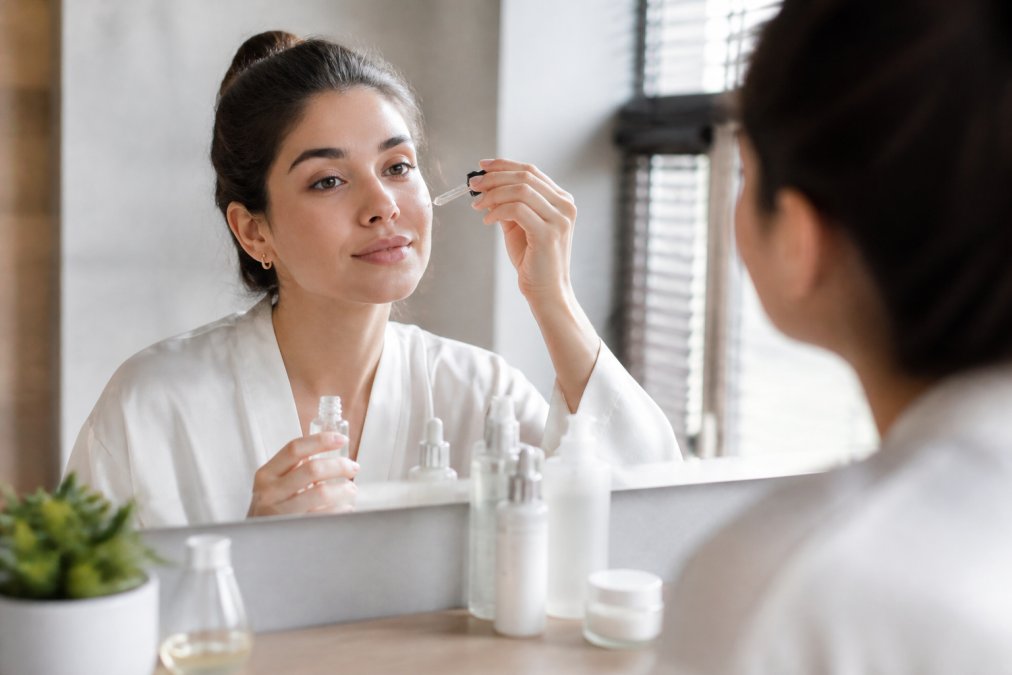
Here's the correct sequence:
- Cleanse - Remove dirt, oil, and makeup
- Tone (optional) - Balance pH
- Apply serum - Wait 30-60 seconds to absorb
- Apply moisturizer - Lock in serum benefits
- Apply SPF (daytime only) - Protect against UV damage
- Apply eye cream (optional) - Extra care for delicate area
Serums need direct contact with clean skin to penetrate effectively. Applying moisturizer first blocks deeper penetration, wasting the serum's concentrated actives.
Wait 30-60 seconds between serum and moisturizer to allow absorption and ingredient activation.
If using multiple serums, apply thinnest first. Most people need only one hydrating serum and one moisturizer for dramatic improvements.
How to Fix Dull Dehydrated Skin With Serums and Moisturizers
Dull dehydrated skin looks flat and feels uncomfortable. Fixing it requires addressing moisture deficit and barrier dysfunction, combining serums and moisturizers, tailored to your environment.
Step 1: Assess Your Dehydration Level and Environmental Context
Pinch cheek skin gently. Tightness, slow bounce-back, flaking, sensitivity, or papery texture indicate significant dehydration requiring more frequent application or richer moisturizer.
Identify your environmental conditions: low humidity (below 30%) accelerates water loss; high humidity (above 60%) reduces need for heavy occlusives.
Step 2: Choose Your Serum-to-Moisturizer Ratio Based on Environment
In dry climates or winter (humidity below 40%): Apply serums twice daily. Use a richer, occlusive moisturizer, or layer two: a lighter hydrating one, then a heavier cream. Goal: constant moisture replenishment as environment pulls water from skin.
Step 3: Select Serum and Moisturizer Textures for Your Environment
Dry environments require:
- Serums with humectants (hyaluronic acid, glycerin)
- Moisturizers with multiple occlusive layers: ceramides, fatty acids, squalane or plant oils
- Gel-cream hybrids for hydration and light occlusion
Moderate environments work with:
- Serums with balanced hydration (hyaluronic acid, glycerin, niacinamide)
- Lotions and lightweight creams; gel-based for daytime, creams for nighttime
Humid environments benefit from:
- Lightweight serums with fast-absorbing ingredients (niacinamide, peptides, amino acids)
- Gel moisturizers or water-based lotions; avoid heavy oils and thick creams
Step 4: Adjust Your Routine Seasonally
Fall/Winter transition: As heating systems turn on and humidity drops, increase serum frequency to twice daily and switch to richer moisturizer 2-3 weeks before winter.
Step 5: Be Consistent for 4-6 Weeks
Most people notice reduced dullness and improved texture within 2-3 weeks; by week 6, results are usually significant if routine matches environment.
Common Mistakes That Prevent Results
Using only a moisturizer for dehydrated skin: While moisturizers help, they can't deliver the concentrated hydration that serums provide. The combination is what creates lasting results.
Can You Use Both Serum and Moisturizer Together?
Yes, and for most people dealing with dehydration, using both is the most effective approach. They're designed to work together, not compete. In fact, using them together amplifies results compared to using either alone.
Frequently Asked Questions
Can I skip moisturizer and just use serum?
Not if you want complete hydration. Serums deliver active ingredients and humectants deep into the skin, but they lack occlusives that lock moisture in. Moisturizers create a protective barrier that prevents transepidermal water loss. Using only a serum leaves your skin barrier vulnerable to dryness, especially in dry climates or harsh seasons. Both work together to maintain skin health.
What goes first, hydrating serum or moisturizer?
Serum always comes first. Apply serum to clean, slightly damp skin, then follow with moisturizer while the serum is still wet. This layering order allows the serum's active ingredients to penetrate effectively before the moisturizer seals everything in. The Hyaluronic Acid Serum from EVERGRENE works best applied this way, followed by your daily moisturizer.
How do I know if my skin is dehydrated versus dry?
Dehydrated skin lacks water content and feels tight, flaky, or dull even if it produces oil. Dry skin is a skin type that naturally produces less sebum. Dehydrated skin can occur in any skin type and responds well to hydrating serums and moisturizers with humectants like hyaluronic acid and glycerin. If your skin feels uncomfortable after cleansing but becomes oily by midday, you likely have dehydration, not dryness.
Is serum enough or do you need moisturizer for dry skin?
You need both for dry skin. Serums deliver concentrated active ingredients and water-based hydration, but without an occlusive moisturizer, that hydration evaporates quickly through transepidermal water loss. A moisturizer with emollients and occlusives seals the skin barrier and keeps moisture locked in all day. EVERGRENE's Oil-Free Daily Moisturizer provides panthenol and fatty acids that strengthen barrier function alongside your serum.