
Why Premium Skincare Delivers Better Results: 2026 Guide
Table of Contents
- The Science Behind Why Premium Skincare Delivers Better Results
- The Benefits of Clinical Grade Skincare: Beyond Marketing Claims
- Active Ingredients in Luxury Skincare: What Separates Them from Drugstore Formulas
- The Diminishing Returns Threshold: When Paying More Stops Mattering
- How to Build a Premium Skincare Routine That Actually Works
- Sustainability and Ethical Sourcing in Premium Skincare
- Frequently Asked Questions
Last Updated: September 18, 2026
The Science Behind Why Premium Skincare Delivers Better Results
Premium skincare is formulated with higher concentrations of active ingredients, advanced delivery systems, and rigorous quality control that distinguish it from mass-market alternatives. The answer rarely comes down to a single ingredient, it comes down to how that ingredient is delivered, stabilized, and absorbed.
A common mistake is assuming that all retinol serums work the same way. They don't. The difference between a $15 drugstore retinol and a $50 clinical-grade formula often comes down to molecular weight, encapsulation technology, and pH balance. These factors determine whether an active ingredient actually reaches the dermis or evaporates before it can do anything useful. According to the American Academy of Dermatology's skincare guidance, formulation quality directly affects how well active ingredients penetrate the skin barrier.
Concentration vs. Delivery: What Actually Matters
Higher concentration does not automatically mean better results. What matters more is bioavailability, the proportion of an active ingredient that actually reaches living skin cells. A retinol formula with poor delivery can underperform one built with encapsulated, time-released technology. This is why two products with identical ingredient lists can produce wildly different outcomes.
Formulation stability plays a role too. Retinol, vitamin C, and peptides degrade when exposed to light, heat, or oxygen, so premium brands invest in packaging and stabilizers that keep them potent from first use to last.
The Benefits of Clinical Grade Skincare: Beyond Marketing Claims
"Clinical grade" is one of the most abused phrases in skincare. No federal agency regulates it, so any brand can print it on a jar. What separates a clinically validated formula from a marketing claim is the testing infrastructure behind it, expensive, slow, and largely invisible to the consumer.
What "Clinical Grade" Actually Means
In practice, the term describes products evaluated through controlled human trials rather than only lab-bench or animal testing. A legitimate trial follows a defined protocol: a set number of participants, a fixed duration, a control or baseline comparison, and blinded assessment by trained evaluators. Results are scored with standardized instruments, corneometry for hydration, cutometry for elasticity, and validated photographic grading scales for fine lines and texture.
The FDA does not pre-approve cosmetic claims the way it approves drug claims. A product can only claim to "treat" or "prevent" a condition if it meets the drug definition under the Federal Food, Drug, and Cosmetic Act. That is why brands often say "visibly reduces the appearance of fine lines" rather than "eliminates wrinkles", the former is a cosmetic claim, the latter crosses into drug territory.
Clinical Testing and Scientific Validation
Clinical efficacy is measured through controlled trials that track visible improvement over defined periods, assessing hydration retention, texture refinement, and fine line mitigation using standardized scoring systems.
Clinical testing also catches formulation failures early: a product that irritates a significant percentage of trial participants gets reformulated before launch, an expensive feedback loop that is one reason premium products cost more.
The Testing Standards Behind the Label
Several third-party frameworks give buyers something concrete to look for. The Cosmetic Ingredient Review (CIR) Expert Panel publishes independent safety assessments on individual ingredients. The Personal Care Products Council maintains the International Nomenclature of Cosmetic Ingredients (INCI), which standardizes label listings so you can compare formulas across brands. Dermatologist-tested and hypoallergenic designations, while not legally defined, typically signal patch testing and repeat-insult patch testing on human volunteers before release.
Non-comedogenic validation is another marker: it usually means the finished formula was tested on human subjects and did not produce comedones (clogged pores) at a statistically meaningful rate. That matters most for acne-prone or reactive skin, because a single pore-clogging emollient can undo an otherwise well-built formula.
Why This Costs More, and Why It Matters
Running a properly controlled trial with dermatologist oversight, instrument-based measurement, and a statistically valid sample size is a significant investment per formula. That investment is one reason a premium serum costs more: you are paying for the testing that happened before the product reached the shelf, not just the ingredients inside it.
Formulators often run both an efficacy trial and a tolerability trial. The first asks "does it work?"; the second asks "does it work without causing irritation, sensitization, or barrier disruption?" A formula that passes the first but fails the second goes back to the lab, an iterative loop invisible to the buyer, but the difference between performing on paper and performing on skin.
Active Ingredients in Luxury Skincare: What Separates Them from Drugstore Formulas
Active ingredients in luxury skincare differ from drugstore formulas in purity, sourcing, and supporting compounds. A retinol serum might pair the active with supporting compounds that reduce irritation and boost results.

But the more important difference is what happens after the ingredient is in the bottle. Two products can list identical actives at identical concentrations and still perform nothing alike, because efficacy depends on three variables most labels never disclose: molecular form, delivery vehicle, and stability over time.
Molecular Form: The Same Name, Different Behavior
Take vitamin C. The label might say "ascorbic acid," but that name covers derivatives with very different skin behavior. L-ascorbic acid is the most studied and biologically active form, but also the least stable, it oxidizes rapidly in light, heat, and oxygen. Magnesium ascorbyl phosphate and sodium ascorbyl phosphate are more stable but require conversion in the skin, so less of the dose reaches living cells.
Delivery Systems: Getting the Active Past the Barrier
The stratum corneum, the outermost layer of dead skin cells, is designed to keep things out. Getting a water-soluble active like niacinamide or a large molecule like hyaluronic acid past that barrier requires a chemical penetration enhancer, a physical delivery vehicle, or a molecular size small enough to slip through the intercellular spaces.
Consider the difference in how these products are built:
- Retinoid delivery: Encapsulated retinol releases gradually, reducing redness and peeling
- Antioxidant profile: Stabilized vitamin C combined with vitamin E and ferulic acid lasts longer in the bottle
- Penetration depth: Liposomal encapsulation carries actives past the stratum corneum
- pH balance: Formulas buffered to optimal pH ensure actives remain effective
Stability: The Variable Nobody Talks About
Retinol, vitamin C, and peptides degrade in light, heat, or oxygen. A formula that tests well on day one can lose meaningful potency by month three if packaging does not protect it. That is why brands invest in packaging that protects the product.
Supporting Compounds: The Buffer Between Active and Irritation
A retinol serum rarely contains retinol alone. It pairs the active with supporting compounds to support the skin barrier while the retinoid works. These compounds do not make retinol stronger, they make it tolerable, so you can use it consistently enough to see results.
The Diminishing Returns Threshold: When Paying More Stops Mattering
There is a point where spending more stops producing better results, the diminishing returns threshold. In practice, the biggest quality jumps happen between budget and mid-tier products; once you cross into well-formulated clinical territory, gains become incremental.
How to Build a Premium Skincare Routine That Actually Works
Building a premium skincare routine starts with fewer products, not more. Three well-chosen items outperform ten mediocre ones. The goal is to support skin barrier function, cellular turnover, and hydration retention without overwhelming your skin.
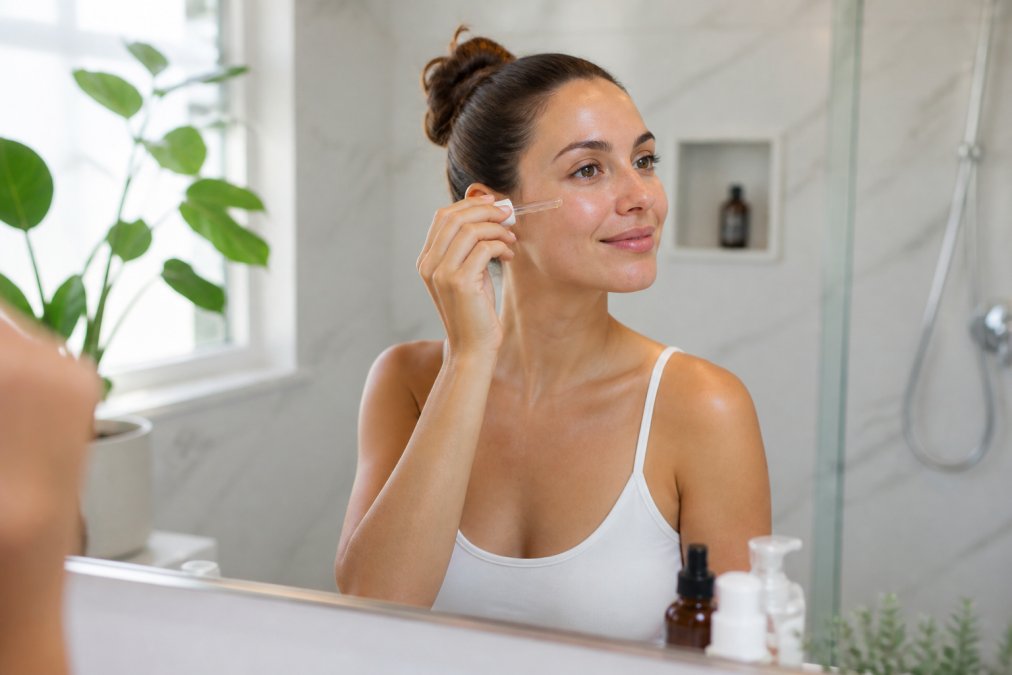
A practical framework looks like this:
- Morning: Gentle cleanser, antioxidant serum, moisturizer, SPF
- Evening: Cleanser, treatment serum (retinol or glycolic acid), moisturizer or facial oil
- Weekly: One exfoliation session, one hydrating mask
Simplifying with Multi-Functional Serums
Multi-functional serums reduce steps without sacrificing results. EVERGRENE's Collagen and Retinol Serum combines collagen, retinol, and hyaluronic acid in one formula for firmness support, cell turnover, and deep hydration. For a lighter approach, the Hyaluronic Acid Serum focuses entirely on hydration and elasticity.

Sustainability and Ethical Sourcing in Premium Skincare
Sustainability and ethical sourcing have become genuine differentiators in premium skincare. Brands that invest in traceable supply chains, cruelty-free testing, and recyclable packaging tend to also invest in formulation quality. The two priorities often go hand in hand.
Frequently Asked Questions
Does expensive skincare really make a difference compared to drugstore options?
Yes, but not simply because of the price. Premium skincare often uses higher concentrations of active ingredients like retinol and vitamin C, along with advanced delivery systems that help these ingredients penetrate deeper into the skin. The difference can show up in formulation stability and ingredient purity. That said, price alone does not guarantee results. Look for products with proven active ingredients and transparent formulation practices.
What active ingredients should I look for in luxury skincare products?
Focus on ingredients with clinical backing: retinol for cellular turnover and collagen production, hyaluronic acid for hydration retention, vitamin C for antioxidant protection and brightening, and peptides for skin barrier support. Formulations often combine these with delivery systems that improve bioavailability. Ingredients like squalane and glycerin also help maintain hydration without clogging pores. The key is not just which ingredients are listed, but how they are formulated to work together and absorb effectively.
How long does it take to see results from premium skincare?
Visible improvement typically takes 4 to 12 weeks, depending on the active ingredients and your skin's condition. Retinol products often show fine line mitigation and skin texture refinement. Hydration-focused products like hyaluronic acid serums can show results in 1 to 2 weeks. Consistency matters. Using products as directed, especially with retinol, will determine how quickly you see changes.
Can I use retinol and glycolic acid together in a premium skincare routine?
Yes, but timing and formulation matter. Many dermatologists recommend using them at different times of day or on alternating days to avoid irritation. Some formulations combine these ingredients with delivery systems that reduce irritation while maintaining effectiveness. If you have sensitive skin, start with one product and introduce the second gradually. Always follow with a moisturizer and use SPF during the day, since both ingredients can increase sun sensitivity.