
Glycolic Acid for Acne Scars: Benefits & How to Use
Last Updated: October 23, 2026
Quick Summary
Glycolic acid acne scars fade by accelerating cellular turnover, which removes pigmented dead skin cells and brings fresh, unpigmented skin to the surface. It works best on post-inflammatory hyperpigmentation and dark marks rather than indented or raised scars, with visible fading typically taking 6-8 weeks of consistent use.
- Start with glycolic acid 2-3 times per week, increasing to 3-4 times weekly only after 2-3 weeks if tolerated.
- Most people notice subtle improvements within 2-3 weeks and significant improvement in tone and texture after 3-4 months.
- Always use broad-spectrum sunscreen daily, as glycolic acid increases sun sensitivity and unprotected exposure can darken marks.
- Glycolic acid cannot fill indented or raise smooth raised scars; professional treatments like laser therapy work better for structural damage.
- Stop use and consult a dermatologist if you develop blistering, spreading redness, or dark patches that worsen.
Table of Contents
- What Glycolic Acid Does for Acne Scars and Post-Acne Marks
- How Chemical Exfoliation Speeds Cellular Turnover
- Glycolic Acid for Post-Acne Marks: What the Evidence Shows
- How to Use Glycolic Acid on the Face: A Step-by-Step Routine
- Glycolic Acid and Retinol Routine: Using Both Effectively
- Glycolic Peel for Acne Scars: Professional vs. At-Home Options
- Frequently Asked Questions
What Glycolic Acid Does for Acne Scars and Post-Acne Marks
Glycolic acid is an alpha hydroxy acid (AHA) that works on your skin's surface to address glycolic acid acne scars and post-acne marks.
The key distinction is understanding what glycolic acid can and cannot do. It excels at fading post-inflammatory hyperpigmentation (those dark marks left behind) and improving overall skin texture. Indented or raised scars, however, require a different approach.
How Glycolic Acid Works on Pigmented Marks vs. Indented Scars
Glycolic acid targets pigmented marks because it accelerates skin cell renewal. When melanin-rich cells sit at the surface, exfoliation brings fresh, unpigmented skin to the top, gradually lightening dark spots and evening your complexion.
Indented or raised scars are structural, involving changes in collagen beneath the skin (the American Academy of Dermatology). Glycolic acid alone cannot fill pitted scars or smooth raised tissue; professional treatments like laser therapy or dermal fillers work better.
How Chemical Exfoliation Speeds Cellular Turnover
Your skin naturally sheds dead cells, but this slows with age and acne damage. Glycolic acid accelerates cellular turnover by breaking the bonds between dead cells and the fresh layer beneath, so newer, healthier skin reaches the surface faster.
When cellular turnover speeds up, several things happen:
- Dead skin cells that trap discoloration are removed more quickly
- Fresh skin cells replace damaged ones at a faster rate
- Collagen production gets stimulated as the skin responds to the gentle chemical exfoliation
The result is brighter, smoother skin. It doesn't happen overnight, it takes consistent use over weeks, but improvements compound as renewal accelerates.
Glycolic Acid for Post-Acne Marks: What the Evidence Shows
Post-acne marks respond well to glycolic acid acne scars treatment.
The most common benefit is gradual lightening of dark spots as pigmented cells are exfoliated away and new, unpigmented skin surfaces. Texture also improves, reducing the appearance of fine lines and refining pores.
Results depend on your skin tone, the depth of the marks, and consistency of use. Glycolic acid works best on surface-level discoloration rather than deep structural damage.
Realistic Timelines for Fading Hyperpigmentation
Most people notice subtle improvements within 2-3 weeks. Visible fading of dark spots typically takes 6-8 weeks, and significant improvement in tone and texture often requires 3-4 months.
These timelines assume:
- Using glycolic acid 2-3 times per week initially
- Gradually increasing frequency as your skin builds tolerance
- Consistent daily sunscreen use (glycolic acid increases sun sensitivity)
Darker skin tones may see results at a similar pace, though individual variation is significant. Consistency is key, skipping applications or stopping early prevents the cumulative effect that drives real change.
How to Use Glycolic Acid on the Face: A Step-by-Step Routine
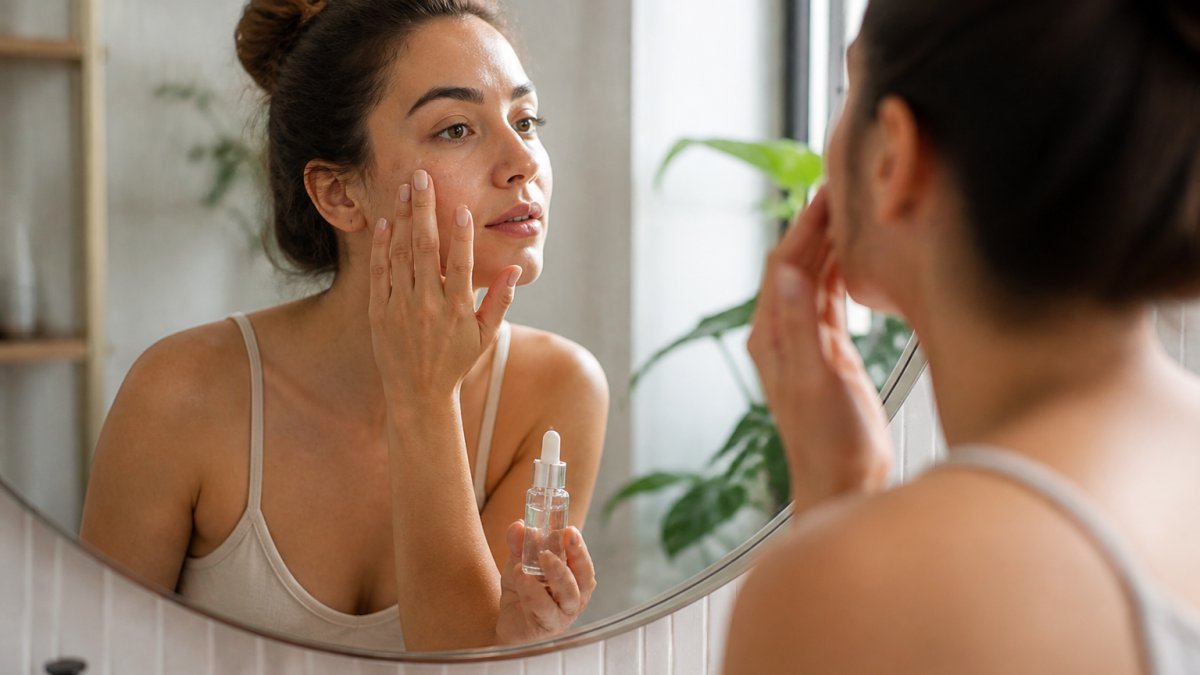
Start with a clean, dry face, glycolic acid works best on bare skin. Here's a simple routine that minimizes irritation while you build tolerance:
Step 1: Cleanse thoroughly Wash with a gentle, non-stripping cleanser and pat dry completely, water can dilute the glycolic acid. Avoid cleansers with added exfoliating acids or scrubs, since stacking exfoliation raises irritation risk.
Step 2: Apply the serum Use 2-3 drops of EVERGRENE's Glycolic Acid Serum and gently massage into face and neck. The serum contains glycerin for hydration and squalane to lock in moisture. Apply to the thinnest, most breakout-prone areas first and use less on reactive cheeks and jaw.

Step 3: Wait before layering Give the glycolic acid 5-10 minutes to penetrate before applying other products, so a moisturizer or serum doesn't dilute it before it has done its job.
Step 4: Follow with moisturizer Apply your regular moisturizer to seal in hydration, glycolic acid can be drying, so this step is essential.
Step 5: Apply SPF during the day If using glycolic acid in the morning, always follow with broad-spectrum sunscreen, it increases sun sensitivity, making skin prone to damage and darkening if unprotected.
Starting Safely: Patch Testing and Frequency
Before applying glycolic acid to your entire face, patch test on your inner arm or behind your ear. Learn what strength to start with to ensure you begin at the right concentration for your skin.
If no reaction occurs, start with the product 2 times per week so your skin can acclimate. After 2-3 weeks, increase to 3 times weekly if tolerated. Stay at 2-3 times weekly for the first month, then add a fourth night only if there is no persistent redness, stinging, or flaking.
Signs that you're using it too frequently include:
- Persistent redness or burning sensation
- Excessive dryness or flaking
- Sensitivity to other products
If irritation occurs, reduce frequency immediately, your barrier needs time to adapt. Stop use entirely for 5-7 days if you see cracking, oozing, or widespread redness, and resume at a lower frequency only after skin has calmed.
Application Order When You Use Other Actives
Glycolic acid goes on clean, dry skin before hydrating serums and moisturizers. A practical sequence for a glycolic-acid night:
- Cleanser
- Glycolic acid serum (wait 5-10 minutes)
- Hydrating serum such as hyaluronic acid or niacinamide
- Moisturizer
- Occlusive balm on dry patches if needed
Do not apply glycolic acid after vitamin C, benzoyl peroxide, or another exfoliating acid in the same sitting, those combinations raise the risk of stinging, redness, and barrier disruption. Keep prescription retinoids on a separate night until your skin has adapted to both.
Common Mistakes That Reduce Results or Cause Irritation
Using too much product: More glycolic acid doesn't mean faster results. A few drops are enough; excess product increases irritation without improving effectiveness.
Skipping sunscreen: This is the biggest mistake. Glycolic acid makes your skin more photosensitive.
Combining with other strong actives too soon: Layering glycolic acid with retinol, vitamin C, or other exfoliants can trigger severe irritation. Learn if retinol and glycolic acid can work together safely before using both in the same routine.
Expecting instant results: Glycolic acid works gradually. Abandoning it after 2-3 weeks because you don't see dramatic change is a common reason people miss out on real improvement.
Not adjusting for sensitive skin or deeper skin tones: If you have reactive skin or a medium-to-deep skin tone, explore chemical exfoliants formulated for sensitive skin before starting with standard glycolic acid strength.
Follow this sequence to apply glycolic acid safely and effectively while minimizing irritation.
| Step | Action | Timing |
|---|---|---|
| 1 | Cleanse with gentle, non-stripping cleanser and pat dry | Before application |
| 2 | Apply 2-3 drops of glycolic acid serum to face and neck | Immediately after cleanse |
| 3 | Wait before layering other products | 5-10 minutes |
| 4 | Apply regular moisturizer to seal in hydration | After waiting period |
| 5 | Apply broad-spectrum sunscreen if using in morning | Final step for daytime |
| Starting frequency | Use glycolic acid 2 times per week | First 2-3 weeks |
| Increase frequency | Move to 3 times weekly if tolerated | After 2-3 weeks |
| Maximum frequency | Add fourth night only if no irritation | After first month |
Glycolic Acid and Retinol Routine: Using Both Effectively
Glycolic acid and retinol both drive cellular turnover, making them powerful together, but only if used correctly. Both increase sun sensitivity and can irritate if layered improperly.
The safest approach is to use them on different nights:
- Monday, Wednesday, Friday: Glycolic acid
- Tuesday, Thursday: Retinol
- Saturday, Sunday: Rest days with just cleanser and moisturizer
This schedule gives skin recovery time between actives and prevents over-exfoliation, which damages the barrier and causes redness, dryness, and sensitivity.
For detailed guidance on layering these actives safely, check EVERGRENE's full compatibility guide before combining them in your routine.
Glycolic Peel for Acne Scars: Professional vs. At-Home Options
At-home glycolic acid products like EVERGRENE's serum deliver consistent exfoliation. Professional peels use higher concentrations applied by a dermatologist or licensed esthetician. The right choice depends on what kind of mark you're treating and how your skin responds.
At-home glycolic acid:
- Lower concentration (typically 5-10% in over-the-counter serums and pads)
- Milder, gradual results over weeks
- Lower cost and lower risk of irritation when used as directed
Professional glycolic peels:
- Higher concentration (often 20-70%, applied in a controlled setting)
- More dramatic results in fewer sessions
- Requires professional application and post-peel care instructions
For most post-acne marks, at-home glycolic acid is an excellent starting point, affordable and safe when used as directed. Many people see fading.
What the Evidence Supports and What It Does Not
Glycolic acid has a reasonable evidence base for improving surface pigmentation and texture, and dermatologists commonly recommend it for hyperpigmentation (Glycolic acid peel therapy - a current review).
Results vary with skin tone, mark depth and age, consistency, and daily sun protection. Daily sunscreen users see more even fading, because unprotected sun exposure darkens existing marks and creates new ones.
Suitability Across Skin Tones and Sensitive Skin
Glycolic acid can be used across skin tones, but the risk profile differs. In medium-to-deep skin tones, irritation from any exfoliant can trigger post-inflammatory hyperpigmentation, making marks look darker rather than fading. Start at a lower concentration, use 1-2 times per week, and stop if you notice new darkening or persistent redness. Sensitive skin should patch test and consider buffering with moisturizer if stinging is significant.
When to Consider Professional Treatment
Professional glycolic peels or dermatologist-led options make sense when:
- At-home glycolic acid has not produced enough improvement after 3-4 months of consistent use with daily sunscreen
- Your marks are deep, widespread, or have been present for years
- You want faster results and can tolerate stronger treatment and the recovery time that may follow
A dermatologist can assess whether your marks are pigmented or structural. Indented scars may respond better to laser therapy, microneedling, or dermal fillers than to chemical peels, and raised scars may require different treatment entirely. A clinician can help you avoid spending money on the wrong approach.
Frequently Asked Questions
How long does glycolic acid take to fade acne scars and post-acne marks?
Post-inflammatory hyperpigmentation (dark marks) typically begins to fade within 4-8 weeks of consistent use, though more noticeable results appear after 8-12 weeks. Indented or raised scars require longer timelines and may need professional treatments. Consistency matters: glycolic acid works through gradual cellular turnover, so results depend on regular application and sun protection. Individual skin type and mark severity affect how quickly you'll see improvement.
Can I use glycolic acid and retinol together in the same routine?
Yes, but with careful spacing and gradual introduction. Both increase skin sensitivity, so start by using them on alternate nights rather than the same evening. Once your skin adapts (after 4-6 weeks), you may alternate nights or use glycolic acid in the morning and retinol at night, always with sunscreen during the day. Never layer them directly on the same application, and patch test first if your skin is sensitive.
Does glycolic acid work on indented acne scars?
Glycolic acid primarily addresses post-inflammatory hyperpigmentation and surface texture irregularities by promoting cellular renewal. Indented or pitted scars (atrophic scars) have limited response to topical glycolic acid alone because they involve structural loss beneath the skin surface. For indented scars, professional treatments like microneedling, laser resurfacing, or dermal fillers are more effective. Glycolic acid can support healing after professional treatment and prevent new marks from forming.
What should I avoid mixing with glycolic acid?
Avoid combining glycolic acid with other strong exfoliants (physical scrubs, salicylic acid) on the same day, as this causes excessive irritation and compromises your skin barrier. Do not mix with vitamin C serums immediately before or after application. Be cautious pairing it with benzoyl peroxide without spacing, use one in the morning and one at night. Always introduce one active ingredient at a time and allow 2-3 weeks of adjustment before adding another.
