
Chemical Exfoliants for Sensitive Skin: A Safe Guide
Table of Contents
- Understanding Chemical Exfoliants for Sensitive Skin
- AHA vs. BHA for Sensitive Skin: Which Acid Works Best
- Lactic Acid for Sensitive Skin: The Gentler Alpha Hydroxy Acid
- How Often to Exfoliate Sensitive Skin Without Damage
- Building a Sensitive Skin Exfoliation Routine That Works
- Patch Testing and Gradual Introduction: Your Safety Protocol
- What to Avoid When Exfoliating Sensitive Skin
- Frequently Asked Questions
Last Updated: October 17, 2026
Understanding Chemical Exfoliants for Sensitive Skin
Chemical exfoliants sensitive skin requires a different approach than standard exfoliation. At EVERGRENE, we believe sensitive skin doesn't mean skipping exfoliation, it means being strategic about which acids you choose and how you introduce them.
Chemical exfoliation dissolves the bonds between dead skin cells so they shed naturally.
The key difference lies in acid strength and formulation. Some chemical exfoliants are far better suited to reactive skin, and knowing which acids to use and avoid is the foundation of a sustainable routine.
AHA vs. BHA for Sensitive Skin: Which Acid Works Best
AHAs and BHAs behave differently on skin, and the right choice depends on your sensitivity subtype. Treating "sensitive skin" as one category is the fastest route to a bad reaction: a rosacea-prone complexion and an oily, acne-prone one both need different acids, concentrations, and supporting formulas.
How the main acid families compare for sensitive skin:
- PHAs (polyhydroxy acids), such as gluconolactone and lactobionic acid: The largest molecules in the category, so they penetrate slowest and sit closest to the surface. Best for reactive, rosacea-prone, or newly sensitized skin that reacts to almost everything. Trade-off: slower visible results and fewer widely available formulations.
- Lactic acid: A mid-size AHA and a humectant, so it exfoliates while drawing in water. The most common entry point for dry and reactive sensitive skin. Typical starter range is 5-7%; move toward 8-10% only after 4-6 weeks of tolerance.
- Mandelic acid: A larger-molecule AHA than glycolic acid, often formulated at 5-10%. A reasonable option for sensitive skin that still wants AHA-level surface renewal, though it is less widely stocked than lactic acid.
- Glycolic acid: The smallest AHA molecule and the fastest-penetrating, which also makes it the most irritation-prone. For sensitive skin, look for lower concentrations buffered with humectants and barrier ingredients rather than a high-percentage peel.
- Salicylic acid: Oil-soluble and pore-penetrating, typically 0.5-2% in leave-on products. The right pick only when sensitivity overlaps with oiliness and congestion; it is a poor starting point for dry, redness-prone, or barrier-compromised skin.
Match the acid to your sensitivity subtype:

- Reactive or rosacea-prone skin: Start with a PHA (gluconolactone) or a low-strength lactic acid, once weekly. Avoid high-percentage glycolic acid and any product with fragrance or essential oils.
- Dry, tight, or flaky sensitive skin: Lactic acid at 5-7% is the usual first choice because of its humectant behavior. Pair it with ceramide- or glycerin-rich moisturizer.
- Oily and acne-prone sensitive skin: Salicylic acid at 0.5-2% is the targeted option; if it stings or dries you out, step down to a PHA or alternate the two.
- Sensitized skin (stinging after products that used to be fine): Pause exfoliation entirely until the barrier settles, then restart with a PHA at the lowest available strength.
Read the whole formula, not just the headline acid. The exfoliating acid is only one variable.
Do not stack acid families. Combining an AHA with a BHA in the same routine, or layering two AHA products, multiplies penetration and irritation.
Lactic Acid for Sensitive Skin: The Gentler Alpha Hydroxy Acid
Lactic acid is derived from milk and is the mildest alpha hydroxy acid. Its larger molecular structure than glycolic acid means it works more slowly with less irritation, an advantage for sensitive skin that adapts gradually rather than experiencing shock.
Lactic acid is also a humectant, drawing moisture into the skin. While other exfoliating acids can leave skin temporarily dehydrated, lactic acid supports hydration, making it particularly valuable for dry, sensitive skin.
Concentration matters: a 5-7% lactic acid toner is appropriate for beginning exfoliation, and once your skin adapts over 4-6 weeks you can move to 8-10% if needed.
EVERGRENE's Glycolic Acid Serum combines glycolic acid with hydrating ingredients like glycerin, squalane, and hyaluronic acid.
How Often to Exfoliate Sensitive Skin Without Damage
Frequency is where most people with sensitive skin make critical mistakes. Exfoliating too often, even with gentle acids, accelerates barrier damage and increases sensitivity over time.
Start once per week so your skin adapts without overwhelming its barrier.
Never exfoliate more than three times per week, regardless of tolerance.
If you use retinol, vitamin C, or other actives, reduce exfoliation by one session per week. Combining multiple actives too aggressively is a primary cause of compromised barriers in sensitive skin.
Building a Sensitive Skin Exfoliation Routine That Works
A sustainable routine requires careful sequencing. Your exfoliant works best as part of a coordinated system, never as the only active ingredient.
The basic structure:
- Cleanser: Use a gentle, fragrance-free cleanser. Avoid foaming cleansers, which can strip the skin barrier.
- Exfoliant: Apply your chemical exfoliant 2-3 times per week on clean, dry skin. Wait 15-20 minutes before applying other products, this allows the acid to work effectively.
- Hydrating toner or essence: Follow with a hydrating product to support barrier repair.
- Serum: Apply a supporting serum like EVERGRENE's Glycolic Acid Serum, which includes hydrating ingredients alongside the active.
- Moisturizer: Use a barrier-supporting moisturizer with ceramides or peptides.
- SPF: Always use sunscreen during the day, exfoliated skin is more sun-sensitive.
The key is layering support around your exfoliant: sensitive skin needs hydration and barrier support to tolerate actives, and a routine combining exfoliation with hydration and protection works far better than exfoliation alone.
Avoid combining your chemical exfoliant with other exfoliating acids, retinol, or vitamin C on the same day. If you use retinol, apply it on non-exfoliation nights.
Patch Testing and Gradual Introduction: Your Safety Protocol
Patch testing separates a workable routine from weeks of barrier damage.
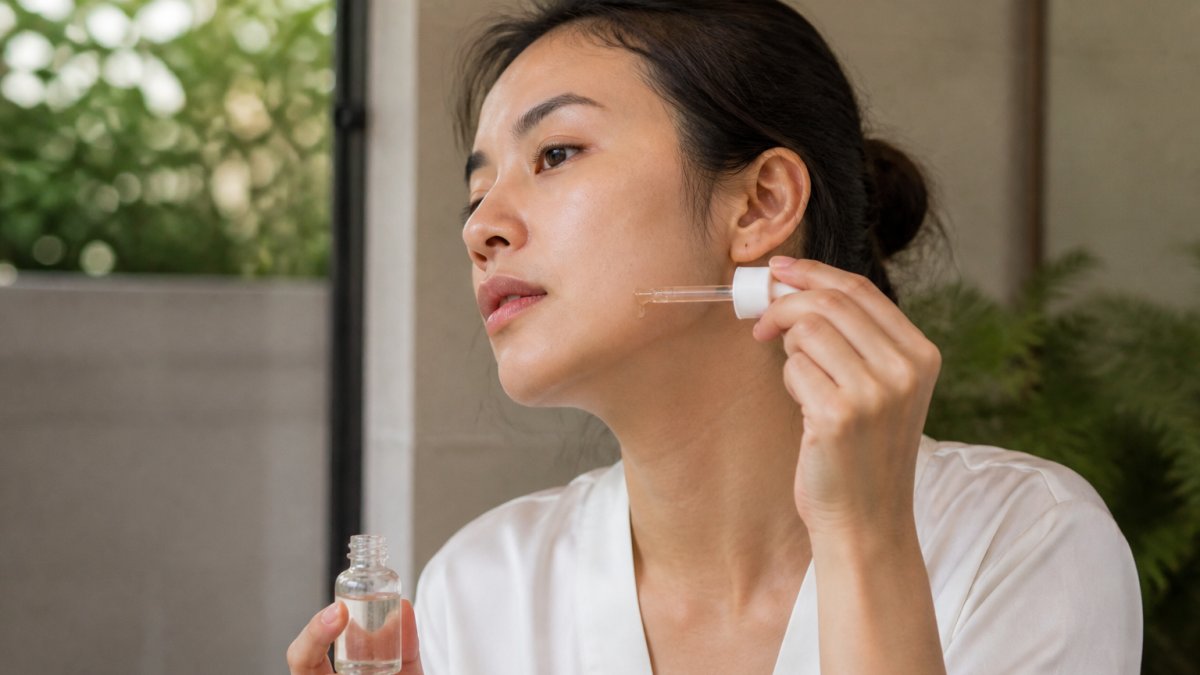
Step 1: The patch test (48-72 hours, not 24).
Apply a pea-sized amount to one of two sites: the jawline near the ear, or the inner forearm. Leave it on for 10-15 minutes, then rinse. Observe at 24, 48, and 72 hours. A mild transient tingle during application is common; the following are stop signals:
- Redness, warmth, or swelling that persists past an hour
- Burning rather than tingling
- Itching, hives, or a rash
- Dryness or flaking at the test site the next day
If any stop signal appears, do not proceed to full-face use.
Step 2: The four-week introduction schedule.
- Week 1: One full-face application. Wait at least 5 days before the next.
- Week 2: One application, then assess for 7 days. If no irritation, proceed.
- Week 3: Two applications, spaced at least 3 days apart.
- Week 4: Two applications again; do not increase yet.
Only after four stable weeks should you consider a third weekly application, and most sensitive skin does best capping at two to three sessions per week.
Step 3: Ingredient compatibility and routine conflicts.
This is where most irritation actually happens, not from the exfoliant alone, but from stacking it with other actives.
- Retinoids (retinol, adapalene, tretinoin): Do not use on the same night as a chemical exfoliant. Alternate nights, and if your skin is reactive, keep at least one rest night between the retinoid and the exfoliant.
- Benzoyl peroxide: Can be drying and irritating on its own; do not layer it with an AHA or BHA in the same routine. Use benzoyl peroxide in the morning and the exfoliant at night only if your skin has been stable, or alternate days.
- Vitamin C (L-ascorbic acid): Often formulated at low pH, which can sting sensitized skin. Use vitamin C in the morning and the exfoliant at night rather than layering them.
- Niacinamide: Generally well tolerated and often paired with exfoliants in barrier-supportive formulas; introduce it separately so you can tell which product caused a reaction.
- Physical exfoliation (scrubs, brushes, washcloths): Skip entirely on exfoliation days and for 24 hours after.
Step 4: Know when to pause.
Step 5: Document the trial.
Record the start date, product name, acid and concentration, application frequency, and a weekly note on redness, stinging, flaking, and texture.
What to Avoid When Exfoliating Sensitive Skin
Certain combinations trigger sensitivity in ways individual ingredients might not. Knowing what to avoid is as important as knowing what to use.
Avoid these combinations:
- Chemical exfoliant + retinol on the same day
- Chemical exfoliant + vitamin C on the same day
- Chemical exfoliant + physical exfoliation (scrubs, brushes, washcloths)
- Multiple different chemical exfoliants in one routine
- Exfoliation immediately after sun exposure
Avoid these formulation choices:
- Exfoliants with fragrance or essential oils (these are irritants, not benefits)
- Products with alcohol as a primary ingredient (alcohol disrupts the skin barrier)
- Exfoliants combined with other actives like niacinamide or AHAs mixed with BHAs
- Products without hydrating ingredients (exfoliants should include humectants like glycerin or hyaluronic acid)
Fragrance is particularly problematic for sensitive skin. According to FDA guidance on cosmetic ingredient disclosure, fragrance is listed as a single ingredient on labels but can contain dozens of undisclosed components.
Barrier-disrupting behaviors matter too.
The research on sensitive skin care emphasizes that dermatological studies on skin barrier function consistently show that barrier support is foundational.
Chemical exfoliants sensitive skin is entirely possible when approached strategically. Success comes down to acid selection, gradual introduction, and consistent barrier support: start with lactic acid or gentle glycolic acid formulations, begin once weekly, and always patch test first.
EVERGRENE's approach emphasizes formulations that combine actives with hydrating support. Our Glycolic Acid Serum at $46.70 includes glycerin, squalane, and hyaluronic acid to maintain hydration while exfoliating.
Frequently Asked Questions
Is lactic acid or glycolic acid gentler for sensitive skin?
Lactic acid is generally gentler for sensitive skin because it has a larger molecular structure, which means it works more slowly and causes less irritation. Glycolic acid penetrates faster, making it stronger but potentially more irritating for reactive skin. If you're new to chemical exfoliants, lactic acid is the better starting point. Glycolic acid can work for sensitive skin when used at lower concentrations and less frequently, typically once or twice weekly rather than daily. The EVERGRENE Glycolic Acid Serum includes glycerin and squalane to buffer the acid and support skin hydration, making it suitable for multiple skin types when introduced gradually.
How often should sensitive skin use a chemical exfoliant?
Most people with sensitive skin should start with once weekly and assess tolerance before increasing frequency. Some can tolerate twice weekly after 4-6 weeks of consistent use, but daily exfoliation is rarely appropriate for reactive skin. The key is observing your skin's response: if you notice increased redness, dryness, or irritation, reduce frequency. Always allow at least one rest day between exfoliation sessions. Barrier health matters more than frequency, a compromised skin barrier will feel irritated even at low doses, so prioritize repair over aggressive treatment.
What should you avoid when exfoliating sensitive skin?
Avoid combining multiple exfoliants in one routine, mixing chemical and physical exfoliation on the same day, and using products with fragrance or essential oils, which trigger irritation in reactive skin. Don't exfoliate if your skin barrier is already compromised (visible redness, burning, or peeling). Skip exfoliation during active breakouts or if you're using other potent actives like retinol without spacing them properly. Never start at maximum strength or frequency; sensitive skin needs a gradual introduction period of at least 2-3 weeks before you assess true tolerance.
Can sensitive skin use salicylic acid?
Salicylic acid (a BHA) can work for sensitive, acne-prone skin because it targets oil and bacteria inside pores rather than just the surface. However, it's drying and can irritate reactive skin, so it requires careful introduction. Start with the lowest concentration (0.5-1%) once weekly, and only increase if your skin tolerates it without redness or excessive dryness. Salicylic acid works best for oily or combination sensitive skin with congestion; if your sensitivity manifests as dryness or rosacea, lactic or glycolic acid may suit you better. Always pair it with hydrating ingredients like hyaluronic acid and follow with moisturizer.