
Glycolic Acid Serum for Sensitive Skin: A Practical Guide
Table of Contents
- Understanding Glycolic Acid and How It Works on Sensitive Skin
- Why Glycolic Acid Benefits Sensitive Skin Types
- Glycolic Acid Serum Percentage for Sensitive Skin: Finding Your Strength
- How to Use Glycolic Acid Serum Safely and Effectively
- Glycolic Acid with Hyaluronic Acid: Pairing for Maximum Hydration
- Understanding Glycolic Acid Serum Side Effects and How to Minimize Them
- Who Should Avoid Glycolic Acid and When to Stop
- Frequently Asked Questions
Last Updated: October 14, 2026
Understanding Glycolic Acid and How It Works on Sensitive Skin
A glycolic acid serum sensitive skin types require needs a different approach than standard formulations. Glycolic acid is an alpha hydroxy acid (AHA) that dissolves the bonds between dead skin cells so they shed naturally, revealing fresher skin without the scrubbing that irritates reactive skin (pubmed.ncbi.nlm.nih.gov).

Sensitive skin has a compromised barrier that reacts readily to irritants. Introducing glycolic acid without preparation risks redness, stinging, and increased sensitivity, so concentration, pH, and formulation matter enormously.
At EVERGRENE, we understand that sensitivity doesn't mean skipping exfoliation, it means choosing the right product and using it strategically. A well-formulated glycolic acid serum with supporting ingredients can strengthen your barrier while delivering chemical exfoliation's benefits.
Why Glycolic Acid Benefits Sensitive Skin Types
Many people assume sensitive skin should avoid all exfoliants.
Chemical exfoliation through glycolic acid is gentler than mechanical methods because it creates no micro-tears.
The benefits appear over time. Dead skin cells clog pores and trap bacteria, while uneven turnover creates dullness and rough texture.
The key is starting low and building tolerance gradually. Your skin barrier strengthens through gradual exposure, not sudden shock.
Glycolic Acid Serum Percentage for Sensitive Skin: Finding Your Strength
Concentration is the number on the front of the bottle; tolerability is everything behind it. For sensitive skin, percentage is only one variable alongside pH, buffering, delivery, and soothing ingredients, which often matter more.
What the percentage actually tells you
A glycolic acid serum for sensitive skin typically ranges from 5% to 10%, with some formulas going lower:
- 5% glycolic acid: Entry-level strength for very sensitive or reactive skin. Effective for mild congestion and dullness, with minimal irritation risk, a reasonable starting point.
- 7-8% glycolic acid: Mid-range strength for most sensitive skin types. Noticeable exfoliation without excessive stinging or redness; works well for texture and uneven tone.
- 10% glycolic acid: Higher strength for sensitive skin that has built tolerance. More effective for stubborn congestion and deeper discoloration. Requires careful frequency and daily sun protection.
Start with the lowest concentration that addresses your concern; rushing to higher percentages is the most common mistake.
Why percentage alone is a poor predictor of irritation
Glycolic acid is a small-molecule AHA, so it penetrates quickly, and can sting reactive skin. But the free acid available to penetrate depends on pH, not just concentration. A 10% formula buffered to pH 4.0 can feel gentler than a 5% formula at pH 3.2, so two serums with the same percentage can behave completely differently.
The formula-level checklist that matters more than the number
When comparing serums for sensitive skin, read past the percentage and check five things:
- pH. Glycolic acid exfoliates best between pH 3.0 and 4.0. Below pH 3 it becomes harsh; above pH 4.5 it loses exfoliating power. A well-formulated serum lists pH on the label, if a brand won't disclose it, treat that as a yellow flag.
- Buffering. Buffered formulas use pH-adjusting agents to raise the working pH and slow free-acid release. For sensitive skin, a buffered formula at a slightly higher pH is often more tolerable than an unbuffered one at the same percentage.
- Delivery system. Encapsulated or time-release glycolic acid delivers gradually rather than all at once, reducing the sharp sting reactive skin notices in the first minute. Look for "encapsulated," "time-release," or "sustained delivery."
- Fragrance and essential oils. Added fragrance, citrus oils, and many botanical extracts are common irritants unrelated to exfoliation. A fragrance-free formula removes an entire category of potential reactions.
- Soothing and barrier ingredients. Look for humectants and barrier-support ingredients alongside the acid: hyaluronic acid, glycerin, panthenol, allantoin, squalane, ceramides, and colloidal oatmeal. They don't neutralize the acid but buffer the experience and support recovery.
How to compare two serums side by side
Put the two bottles side by side and answer these questions in order:
- What is the glycolic acid percentage?
- What is the pH (or is it disclosed at all)?
- Is it buffered or unbuffered?
The serum that wins on pH disclosure, buffering, fragrance-free status, and soothing ingredients is usually the better match for sensitive skin, regardless of the bigger number on the front.
A note on "beginner" and "advanced" labels
Marketing terms like "gentle," "beginner," and "daily" are unregulated, a serum labeled "gentle" can still sit at pH 3.2 with fragrance. Use the checklist above, not front-of-bottle language, to judge tolerability.
If you can't decide between two concentrations, start lower. You can always move up; you cannot undo a reaction that sets your barrier back by weeks.
How to Use Glycolic Acid Serum Safely and Effectively
Using a glycolic acid serum sensitive skin requires a deliberate approach, rushing will set you back weeks.
Patch test first. Apply a small amount to your inner forearm or behind your ear for 24 hours.
Build tolerance gradually. Week 1-2: once weekly. Week 3-4: twice weekly if tolerated.
Watch for signs of over-use: persistent redness, burning, flaking, or increased sensitivity to other products.
Glycolic Acid with Hyaluronic Acid: Pairing for Maximum Hydration
The combination of glycolic acid with hyaluronic acid is designed for sensitive skin: glycolic acid exfoliates while hyaluronic acid hydrates and supports barrier repair.
Hyaluronic acid is a humectant that draws water into the skin, and exfoliated skin needs hydration to recover.
Apply your glycolic acid serum first, then a heavier moisturizer: the serum preps and hydrates, while the moisturizer seals it in.
Understanding Glycolic Acid Serum Side Effects and How to Minimize Them
Glycolic acid can cause side effects, especially in sensitive skin. Knowing what's normal versus a warning sign helps you use it safely.
Common, expected reactions:
- Mild stinging or tingling during the first 1-2 uses (usually subsides as skin adjusts)
- Light flaking or dryness as dead skin sheds
- Slight redness that fades within an hour
Warning signs to stop immediately:
- Severe burning or stinging that doesn't fade
- Hives, welts, or widespread redness
- Swelling around the eyes or lips
The difference between adjustment and allergy is timing and intensity. Mild tingling that resolves is normal. Intense burning that lasts hours is not.
Minimize side effects by starting at the lowest concentration, applying to completely dry skin, waiting 10-15 minutes before moisturizing, and always using SPF during the day.
Who Should Avoid Glycolic Acid and When to Stop
Glycolic acid is not suitable for everyone, and for some skin types a gentler exfoliant is the better long-term choice. Knowing who should skip it, and what to use instead, matters as much as knowing how to use it.
Who should avoid glycolic acid
Skip it, or consult a dermatologist first, if you have:
- Active eczema or dermatitis flare-ups (exfoliation will worsen inflammation)
- Open wounds, cuts, or a compromised skin barrier (wait until healed)
- Extreme sensitivity to fragrance or preservatives (some serums contain irritating additives)
- A history of severe allergic reactions to skincare products (patch testing is mandatory)
When to stop using glycolic acid
Stop and reassess if you experience:
- Persistent redness or irritation that does not improve after reducing frequency
- Signs of barrier damage (extreme dryness, sensitivity to water, stinging from products that previously felt fine)
- Worsening acne or congestion instead of improvement after 4-6 weeks
- Any signs of allergic reaction (hives, swelling, difficulty breathing)
Glycolic acid is a tool, not a cure-all. If your skin is already compromised, exfoliation will make it worse. Repair your barrier first with gentle, hydrating products, then reintroduce glycolic acid slowly.
A stepwise tolerance framework for sensitive skin
If you're unsure whether glycolic acid is right for you, work through these steps in order, do not skip ahead.
- Repair first. Spend two to four weeks on a minimal routine: gentle cleanser, fragrance-free moisturizer, and sunscreen. If your skin still stings from water or basic products, you're not ready for an acid.
- Patch test. Apply a small amount to your inner forearm or behind your ear for 24 hours. If no redness or irritation develops, you're likely safe to try it on your face.
- Start at once weekly, at night. Apply to clean, completely dry skin, damp skin increases penetration and irritation risk.
- Hold for two weeks. Don't increase frequency even if your skin feels fine, tolerance builds slowly, and reactions often appear on day 10-14, not day one.
- Increase to twice weekly only if the first two weeks were uneventful. Some very sensitive skin never goes beyond once weekly, consistency matters more than frequency.
- Reassess at six weeks. Improvement without irritation: continue. Irritation: drop back a step. Neither: the concentration may be too low, consider a slightly higher percentage rather than more frequent use.
- Stop if warning signs appear. Persistent redness, burning, flaking, or new sensitivity to other products means the barrier is unhappy. Pause the acid and return to step one.
Gentler exfoliating alternatives worth comparing
If glycolic acid proves too much, these options are generally better tolerated by reactive skin. They aren't identical, each has a different molecule size, pH range, and mechanism, but can deliver similar benefits with less irritation risk.
- Lactic acid. A larger-molecule AHA than glycolic acid, so it penetrates more slowly and stings less. Often formulated at 5-10% for sensitive skin; good for surface texture and mild brightening.
- Mandelic acid. The largest common AHA molecule, making it one of the gentlest options. Frequently recommended for reactive and acne-prone skin; slower results than glycolic acid but a lower irritation profile.
- Polyhydroxy acids (PHAs), such as gluconolactone and lactobionic acid. Larger molecules still, with humectant properties. Often the first acid a dermatologist suggests for very reactive skin.
- Salicylic acid (BHA). Oil-soluble and better suited to congestion and blackheads than surface texture. Can be drying, so it isn't automatically gentler than glycolic acid for sensitive skin.
How to choose between them
Match the alternative to your primary concern:
- Dullness and uneven tone → lactic acid or mandelic acid
- Congestion and blackheads → salicylic acid, used cautiously
- Very reactive skin that needs something → PHAs or enzymatic exfoliants
- Barrier is currently compromised → none of the above; repair first
Some people with reactive skin discover glycolic acid simply isn't for them, even at low concentrations. That's valid, other exfoliation methods work better for certain skin types, and forcing a product that irritates your skin defeats the purpose of a simplified routine.
Frequently Asked Questions
What glycolic acid strength is best for sensitive skin?
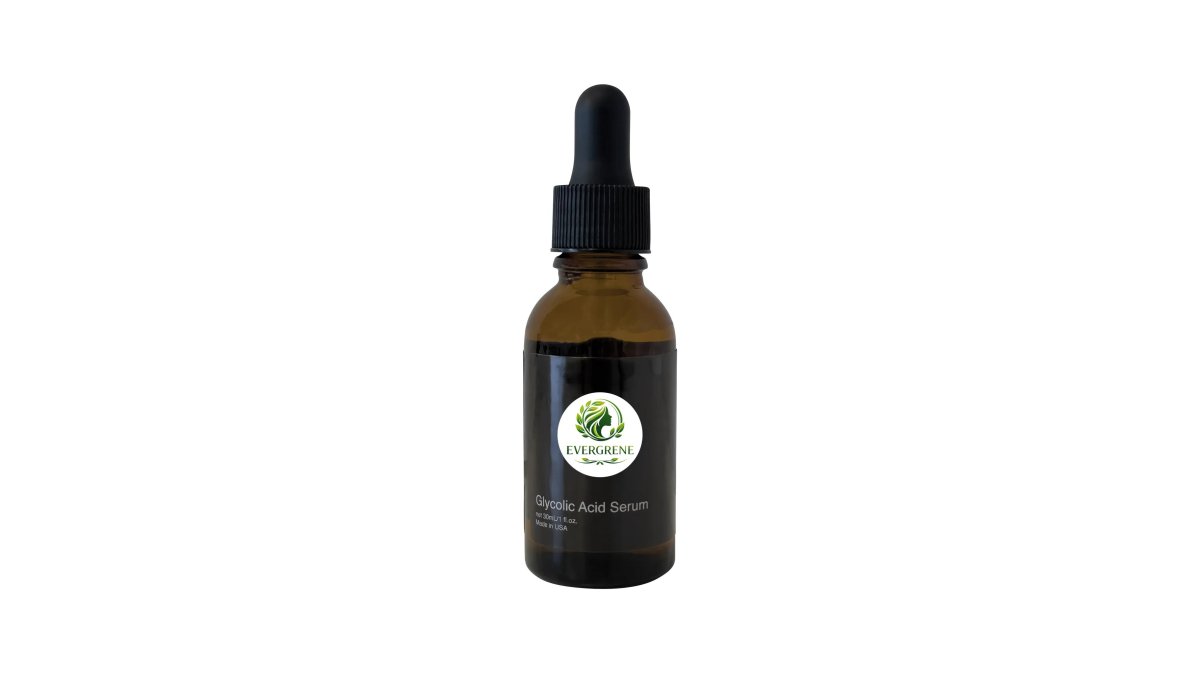
For sensitive skin, start with concentrations between 5-10% glycolic acid. The EVERGRENE Glycolic Acid Serum is formulated to be gentle yet effective, suitable for all skin types including sensitive skin. Begin at the lowest strength and gradually increase frequency over several weeks as your skin builds tolerance. Always patch test first and monitor for irritation before full application.
Can you use glycolic acid serum if you have sensitive skin?
Yes, sensitive skin can tolerate glycolic acid when introduced carefully. The key is starting slowly with lower concentrations, using it once or twice weekly initially, and always following with a moisturizer and sunscreen. Look for formulations that include soothing and hydrating ingredients like hyaluronic acid, glycerin, and vitamin E to support your skin barrier while exfoliating.
What should you avoid using with glycolic acid?
Avoid combining glycolic acid with other active chemical exfoliants like salicylic acid, retinol, or vitamin C in the same routine, especially when starting out. Don't skip sunscreen during the day, as glycolic acid increases sun sensitivity. Avoid products with high concentrations of alcohol or fragrance that can irritate sensitive skin. If using other actives, use them on alternate nights.
How often should you use glycolic acid serum if you have sensitive skin?
Begin with once or twice weekly applications, allowing at least 3-4 days between uses for sensitive skin. After 4-6 weeks of consistent use without irritation, you may increase to 2-3 times per week. Never apply daily when starting out. Listen to your skin, if redness, stinging, or excessive dryness develops, reduce frequency immediately and allow your skin barrier to recover.
Finding the right glycolic acid serum for sensitive skin types means matching concentration to your tolerance, using it strategically, and supporting your skin barrier with hydration. EVERGRENE's Glycolic Acid Serum combines a gentle concentration with hydrating ingredients like hyaluronic acid, glycerin, and squalane, designed specifically for people who want exfoliation without compromise. Start low, be patient, and listen to your skin. The results come from consistency, not aggression.