
Is Luxury Skincare Better for Anti-Aging?
Table of Contents
- Is Luxury Skincare Better for Anti-Aging? The Real Answer
- Luxury vs Drugstore Skincare: What the Price Difference Actually Buys
- Best Anti-Aging Skincare Ingredients: Active vs Hype
- How Long Does Retinol Take to Work? Setting Realistic Timelines
- Ingredient Quality and Concentration: Where Luxury Often Wins
- Building an Affordable Anti-Aging Skincare Routine That Works
- The Real Cost-Effectiveness Question: Price Per Use Over Time
- Frequently Asked Questions
Last Updated: October 21, 2026
Is Luxury Skincare Better for Anti-Aging? The Real Answer
A luxury serum can cost three times an affordable alternative. Does that premium deliver better anti-aging results? At EVERGRENE, we've analyzed ingredients, formulations, and outcomes to answer directly: is luxury skincare better for anti-aging, or are you paying for packaging and branding?
The truth is nuanced. Luxury skincare sometimes wins on ingredient quality and concentration, but affordable options can deliver measurable anti-aging benefits too. What matters is understanding what you're buying and matching it to your skin concerns and budget.
Luxury vs Drugstore Skincare: What the Price Difference Actually Buys
The cost difference doesn't always reflect ingredient superiority. Luxury brands spend heavily on marketing and packaging, while drugstore brands focus on formulation efficiency.
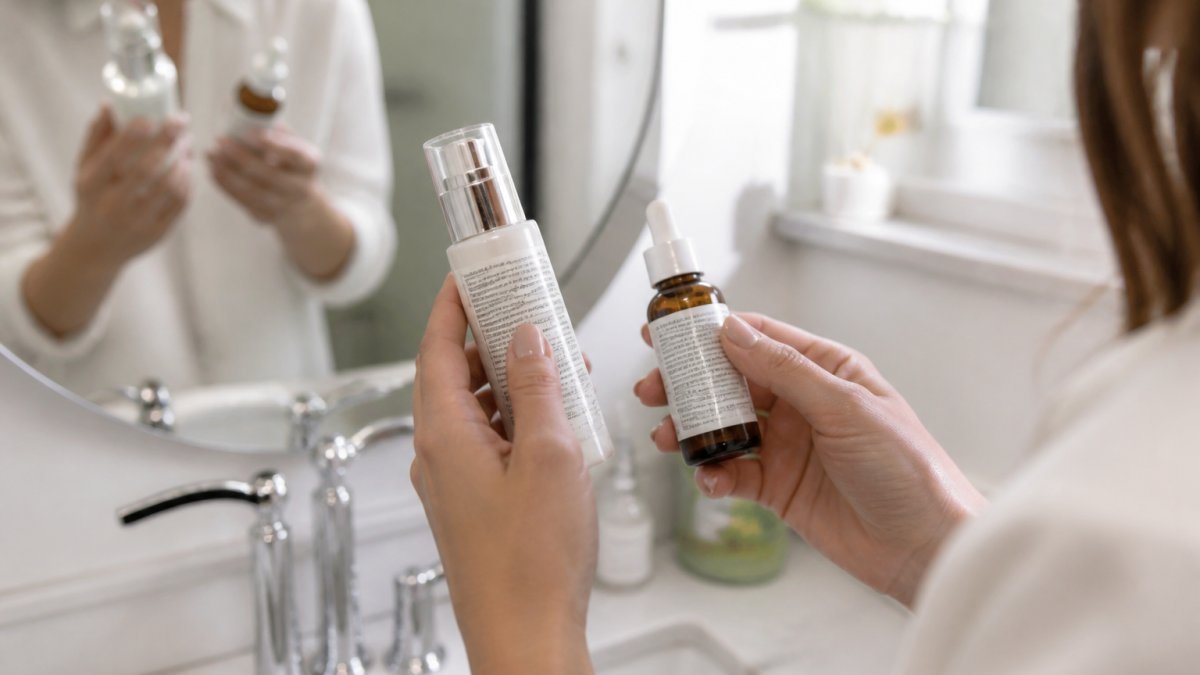
Luxury brands sometimes invest more in R&D, higher active concentrations, more stable delivery systems, proprietary extraction. But many affordable serums contain the same core actives at comparable concentrations.
The real distinction comes down to three factors: ingredient concentration, formulation stability, and quality control. A luxury brand might use 10% retinol in a stabilized form while a drugstore option uses 0.5%, a meaningful difference.
Texture and feel also factor into price. Luxury formulations prioritize sensory experience, which doesn't affect efficacy but influences whether you'll use the product consistently, and consistency matters far more than price.
Best Anti-Aging Skincare Ingredients: Active vs Hype
Some anti-aging ingredients have decades of clinical research behind them; others are marketing buzzwords with minimal evidence. Understanding the difference changes how you evaluate any product, regardless of price.
Retinoids (including retinol and prescription retinoids like tretinoin) are the gold standard for anti-aging. EVERGRENE's Collagen and Retinol Serum combines retinol with hydrolyzed collagen and hyaluronic acid to address multiple aging concerns simultaneously.

Hyaluronic acid holds up to 1,000 times its weight in water, hydrating skin and plumping fine lines while supporting barrier function. The Hyaluronic Acid Serum from EVERGRENE delivers this at an affordable price point for consistent use.
Vitamin C (as tetrahexyldecyl ascorbate or L-ascorbic acid) brightens skin and provides antioxidant protection, but it oxidizes easily. The Age Defying Serum uses tetrahexyldecyl ascorbate, a stable form that delivers antioxidant benefits without instability.

Peptides signal your skin to produce more collagen. They're effective but work gradually. The Firm Serum contains firming peptides specifically designed to tighten fine lines around the eyes and face.
Niacinamide (vitamin B3) reduces inflammation, strengthens the skin barrier, and minimizes pore appearance. It's affordable, effective, and found in products across all price points.
Be skeptical of: topical collagen, which doesn't penetrate to the dermis (though it hydrates); "stem cells," typically plant-derived extracts, not human stem cells; and "miracle" ingredients backed by only one or two studies.
How Long Does Retinol Take to Work? Setting Realistic Timelines
Many people give up on retinol after two weeks, assuming it doesn't work. How long does retinol take to work depends on your starting skin condition, concentration, frequency, and sensitivity.
Most people see initial results within 4-8 weeks: softer fine lines, improved texture, more even tone. Significant results, visible reduction in deeper wrinkles and firmness improvement, typically take 12-16 weeks or longer.
The delay is because retinol increases cell turnover and stimulates collagen production, both gradual. Your skin's cell cycle is about 28 days, so meaningful changes require multiple cycles.
Start with 0.25% to 0.5%, 2-3 times per week, and increase as your skin adapts. The Collagen and Retinol Serum is formulated for all skin types, letting you introduce retinol without the irritation of stronger formulations.
Common mistakes: applying too much, using it nightly before your skin is ready, combining it with other actives too quickly, and skipping sunscreen (retinol increases sun sensitivity). Patience and consistency beat aggressive experimentation.
Ingredient Quality and Concentration: Where Luxury Often Wins
Most comparisons argue about price. The useful comparison is like-for-like: same active, same concentration, same intended use, then examine formulation and evidence.
Start with the actives that have the strongest evidence behind them.
Retinoids. Tretinoin is the prescription benchmark for photoaging. OTC retinol converts to retinaldehyde then retinoic acid, making it weaker per application but better tolerated.
Vitamin C. L-ascorbic acid at 10-20% with vitamin E and ferulic acid is the most studied combination for antioxidant protection and brightening.
Sunscreen. The most important anti-aging product, and where price tier matters least. Broad-spectrum SPF 30+, applied generously and reapplied, prevents more visible aging than any serum.
Peptides and niacinamide. Niacinamide at 2-5% is inexpensive, well tolerated, and supported for barrier function and tone.
Hyaluronic acid. Molecular weight matters more than brand. Multi-weight formulas hydrate at different depths and feel less tacky, a formulation choice, not a luxury exclusive.
Here is the like-for-like framing that answers the question directly:
| Active | Evidence strength | What luxury often adds | What it costs you |
|---|---|---|---|
| Retinoids | Strong | Encapsulation, time-release, elegant texture | Less irritation, better adherence |
| Vitamin C | Strong (L-ascorbic acid) | Airless packaging, stabilization | Potency retained longer |
| Sunscreen | Strong | Texture, finish, cosmetic elegance | More daily use |
| Niacinamide | Moderate | Little meaningful difference | Rarely worth a premium |
| Peptides | Moderate | Proprietary blends, marketing | Uncertain incremental benefit |
The honest conclusion: luxury wins on formulation craft, stability, and sensory experience, which can improve adherence and tolerability. It rarely wins on the active itself, since the same actives are available across price tiers. EVERGRENE uses stable, well-documented forms, tetrahexyldecyl ascorbate in the Age Defying Serum and retinol paired with hydrating ingredients in the Collagen and Retinol Serum, so the formulation supports the active, not the price tag. Judge any product on three questions: which proven active, at what concentration, in a stable formula.
Building an Affordable Anti-Aging Skincare Routine That Works
You don't need a ten-step routine or a luxury price tag. A focused, consistent approach with proven actives beats complexity.
The foundation: cleanser, hydrating toner or essence, active serum, moisturizer, sunscreen.
Start with a gentle cleanser suited to your skin type. Layer a hydrating toner to prep your skin for serums. This increases absorption and reduces irritation risk.
Add one active at a time. If new to retinol, begin with the Collagen and Retinol Serum at 2-3 drops, 2-3 times per week, and wait two weeks before adding another active.
For hydration, layer the Hyaluronic Acid Serum under a moisturizer on damp skin to maximize absorption. This addresses dehydration-related fine lines while supporting barrier function.
The Anti-aging Rose Gold Oil works well as an evening treatment: rosehip oil boosts collagen formation and brightens skin through antioxidants, particularly for mature skin or early signs of aging.

Always finish with sunscreen during the day. UV damage is the primary driver of visible aging; sunscreen prevents new damage while your serums address existing concerns.
| Product | Purpose | Frequency | Best For |
|---|---|---|---|
| Collagen and Retinol Serum | Stimulate collagen, increase cell turnover | 2-3x/week initially | Mature skin, fine lines |
| Hyaluronic Acid Serum | Deep hydration, plump fine lines | Daily | All skin types, dehydration |
| Age Defying Serum | Brighten, antioxidant protection | Daily or 3-4x/week | Dull skin, sun damage |
| Anti-aging Rose Gold Oil | Nourish, boost collagen | 3-4x/week evening | Mature skin, texture concerns |
| Firm Serum | Tighten fine lines, reduce puffiness | Daily, morning and night | Eyes, fine lines around face |
This routine costs far less than luxury alternatives while delivering measurable results. Consistency is key: an affordable serum used daily outperforms an expensive one used sporadically.
The Real Cost-Effectiveness Question: Price Per Use Over Time
Shelf price tells you almost nothing about value. The useful number is cost per application, then cost per month for a complete routine, that's where the luxury-versus-affordable question gets answered.
The math: divide price by ounces, then by applications per ounce. A 1 fl. oz. serum at 2-3 drops per application yields roughly 150-200 applications, or 5-6 months of daily use.
Run the numbers on three common scenarios:
| Product type | Size | Price | Price per fl. oz. | Applications per bottle | Cost per application |
|---|---|---|---|---|---|
| Luxury retinol serum | 1 fl. oz. | $120 | $120 | ~180 | ~$0.67 |
| Mid-tier retinol serum | 1 fl. oz. | $49.80 | $49.80 | ~180 | ~$0.28 |
| Drugstore retinol serum | 1 fl. oz. | $18 | $18 | ~180 | ~$0.10 |
Those figures look small, which is why people underestimate routine cost. Multiply by 30: about $20 per month for the luxury serum, $8.40 for mid-tier, $3 for drugstore.
Now build the full routine. A basic anti-aging regimen is cleanser, one active serum, moisturizer, and sunscreen. Add an eye product if that is a concern.
| Routine step | Luxury routine (monthly) | Accessible routine (monthly) |
|---|---|---|
| Cleanser | $45 | $12 |
| Active serum | $20 | $8.40 |
| Moisturizer | $85 | $18 |
| Sunscreen (daily, generous use) | $40 | $15 |
| Eye product | $65 | $22 |
| Total per month | ~$255 | ~$75 |
| Total per year | ~$3,060 | ~$900 |
The yearly difference is roughly $2,160. Does the luxury routine deliver $2,160 more in visible results?
Three adjustments change the math in luxury's favor, and they are worth knowing:
- Concentration efficiency. If a luxury formula lets you use less product per application because it spreads better or is more concentrated, applications per bottle rise. A serum that yields 300 applications instead of 180 cuts cost per application by about 40%.
- Fewer steps. A multi-tasking formula that replaces two products can beat a cheaper single-purpose product on total routine cost. Compare routine totals, not bottle prices.
- Wastage. Pump and airless packaging reduce oxidation and product loss. A $120 serum that stays stable for six months can be cheaper per effective application than a $30 serum that oxidizes in eight weeks and gets tossed.
People often stretch expensive products, using half the intended amount and cutting frequency. That destroys cost-effectiveness, because the effective dose is what you're paying for.
EVERGRENE's Collagen and Retinol Serum at $49.80 sits mid-tier: roughly $0.28 per application and about $8.40 per month at daily use. Paired with the Hyaluronic Acid Serum and daily sunscreen, a complete evidence-based routine lands near the accessible column without dropping to the cheapest formulations. That's the value case: not the lowest price, but the lowest cost per effective application of proven actives.
Frequently Asked Questions
Do expensive anti-aging skincare products actually work better than drugstore options?
Results depend on active ingredients and concentration, not price alone. Luxury formulations often contain higher concentrations of proven actives like retinol, peptides, and hyaluronic acid. However, affordable products with the same ingredients can deliver similar results if concentrations are adequate. The difference lies in formulation quality, research investment, and ingredient sourcing rather than the price tag itself. Test products based on their active ingredients, not their cost.
What are the best anti-aging skincare ingredients I should look for?
Retinol increases cell turnover and collagen production, making it one of the most effective anti-aging actives. Hyaluronic acid hydrates and plumps fine lines, while peptides support skin firmness and elasticity. Vitamin C brightens and provides antioxidant protection, and niacinamide strengthens the skin barrier. Look for products listing these actives early in the ingredient list, which indicates higher concentration.
How long does retinol take to work for fine lines and wrinkles?
Most people notice visible improvements in fine lines and skin texture within 8-12 weeks of consistent retinol use. However, significant anti-aging results typically take 3-6 months. Start with lower concentrations two to three times per week to build tolerance, then increase frequency as your skin adapts. Results improve over time as retinol stimulates natural collagen production. Patience and consistency matter more than product price.
Can I build an effective anti-aging routine without expensive products?
Yes. An affordable anti-aging routine needs three core elements: a retinol or retinoid product, a hydrating serum with hyaluronic acid, and daily SPF 30 or higher. The Hyaluronic Acid Serum ($34.00) delivers deep hydration at an accessible price point, while the Collagen and Retinol Serum ($49.80) combines multiple anti-aging actives in one formula. Consistency and ingredient quality matter far more than luxury branding. Focus on proven actives rather than packaging or price.