
How to Use Glycolic Acid for Dark Spots
Table of Contents
- What Is Glycolic Acid and How It Works for Dark Spots
- Choosing the Right Concentration for At-Home Use
- Step-by-Step Application Guide for Dark Spots
- How Often to Use Glycolic Acid Without Overdoing It
- How Long Does Glycolic Acid Take to Fade Dark Spots
- Glycolic Acid Toner for Dark Spots vs. Serums
- Using Glycolic Acid and Retinol Together Safely
- Managing Side Effects and Sensitivity
- Frequently Asked Questions
Last Updated: October 5, 2026
What Is Glycolic Acid and How It Works for Dark Spots
Glycolic acid is an alpha hydroxy acid that exfoliates dead skin cells from the surface of your skin, and learning how to use glycolic acid for dark spots is key to fading hyperpigmentation. It dissolves the bonds holding old cells together, revealing fresh, new skin underneath. This process directly targets hyperpigmentation and dark spots by accelerating cell turnover and fading discolored areas over time.

Dark spots form when melanin production becomes uneven, from sun damage, acne scars, or post-inflammatory hyperpigmentation. Glycolic acid interrupts this cycle by promoting faster skin renewal, fading darker patches as new, evenly-toned skin surfaces.
Why glycolic acid targets hyperpigmentation
Chemical exfoliation with glycolic acid penetrates deeper than physical scrubs, signaling your skin to shed damaged cells faster than normal. Melanin sits in the upper layers of skin; glycolic acid speeds up the natural shedding process that would take months, compressing it into weeks. The result: dark spots lighten noticeably.
Choosing the Right Concentration for At-Home Use
Glycolic acid strength varies widely. Concentrations range from 5% to 20% for at-home products, with higher percentages reserved for professional treatments. Your skin type and sensitivity determine the best starting point.
Beginners with sensitive skin should start with 5-10% glycolic acid; those with resilient skin can begin at 10-15%. Most dermatologists recommend staying under 15% for at-home use without professional guidance.
pH level matters: glycolic acid works best below 3.5. Higher pH means less activity and lower irritation risk. Check this specification when shopping to gauge formula potency.
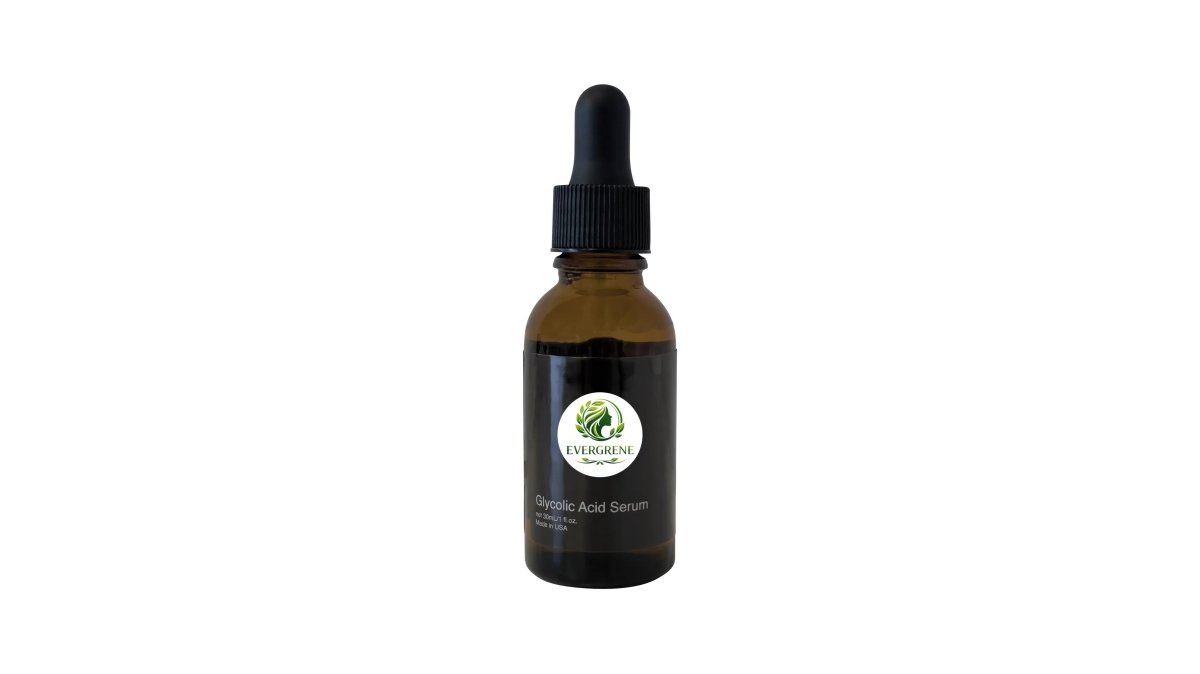
EVERGRENE's Glycolic Acid Serum delivers effective exfoliation at a well-formulated concentration designed for daily use on all skin types. The formula includes glycerin and squalane to maintain hydration while the glycolic acid works, preventing the dryness that often accompanies exfoliation.
Step-by-Step Application Guide for Dark Spots
Facial application technique
Preparing your skin before application
Start with a clean, completely dry face, wet skin dilutes glycolic acid and reduces effectiveness. Check for cuts, active breakouts, or irritated patches; skip these areas as glycolic acid penetrates open wounds. If using glycolic acid for the first time, apply a test patch on your inner arm or behind your ear and wait 24 hours to catch sensitivity reactions.
Application technique and timing
To understand how to use glycolic acid for dark spots, use 2-3 drops of glycolic acid serum. Warm between your palms, then press gently onto skin and massage in light circular motions for 30-60 seconds. Focus on areas with dark spots (cheeks, forehead, chin), but avoid eyes and lips.
Wait 5-10 minutes before applying other products. This gives the acid time to work. Then follow with your regular moisturizer. At night, this is your final step before bed. During the day, always finish with SPF 30 or higher; glycolic acid increases photosensitivity, meaning your skin burns more easily in sunlight.
Body area application for hyperpigmentation
Dark spots and hyperpigmentation commonly appear on the chest, neck, hands, elbows, knees, and bikini line. Body skin thickness varies by area, affecting how you apply glycolic acid.
Chest and neck
The chest and neck receive significant UV exposure but are often neglected in sunscreen application. Use the same concentration as your face, but start at 2-3 times weekly.
Hands and forearms
Hands show age quickly because they're frequently exposed to sun and harsh conditions but rarely treated with active ingredients.
Apply 2-3 drops to the back of each hand and forearm, massaging gently. The skin here absorbs products differently than facial skin, so you may see results more slowly.
Elbows and knees
Elbows and knees have significantly thicker skin, so use 10-15% glycolic acid 3-4 times weekly. Apply 2-3 drops, massaging in circular motions for 60-90 seconds. Results typically take 10-14 weeks.
Bikini line and inner thighs
Post-inflammatory hyperpigmentation from shaving, waxing, or ingrown hairs commonly affects the bikini line and inner thighs. This skin is extremely sensitive and prone to irritation.
Apply 1-2 drops to the affected area and massage gently for 30 seconds. Avoid applying glycolic acid immediately before or after hair removal; wait at least 2-3 days after waxing or shaving.
Underarms
Underarms are thin and sensitive. Use 5-10% glycolic acid once or twice weekly. Apply 1-2 drops and massage gently for 30 seconds.
General body application guidelines
Concentration by body area:
- Face and neck: 10-15% (start at 5-10% if sensitive)
- Chest: 10-15%
- Hands and forearms: 5-10%
- Elbows and knees: 10-15%
- Bikini line and underarms: 5-10%
- Inner thighs: 5%
Frequency by body area:
- Face and neck: 2-5 times weekly
- Chest: 2-3 times weekly
- Hands and forearms: 1-2 times weekly
- Elbows and knees: 3-4 times weekly
- Bikini line and underarms: 1-2 times weekly
- Inner thighs: 1 time weekly
Body-specific precautions:
Body skin has fewer oil glands; moisturize thoroughly after every glycolic acid application with a body lotion or cream. Avoid applying to areas with active irritation, razor burn, ingrown hairs, or open wounds. Apply SPF 30 or higher to all treated body areas daily, reapplying every two hours if outdoors.
How Often to Use Glycolic Acid Without Overdoing It
Most people start with 2-3 times per week. After 4-6 weeks, you can increase to 4-5 times weekly if your skin shows no irritation. Daily use isn't necessary for results.
Watch for persistent redness, burning beyond 10 minutes, unrelenting flaking, or intensifying tingling, signs you're using it too often. Back off to once or twice weekly if this happens. Consider skin cycling: use glycolic acid three nights, then switch to a gentle routine for three nights.
How Long Does Glycolic Acid Take to Fade Dark Spots
Most people notice subtle lightening within 2-4 weeks; significant improvement typically takes 8-12 weeks with consistent use and sun protection. Post-inflammatory hyperpigmentation fades faster than melasma (16-24 weeks) or sun damage. Patience matters, rushing the process triggers irritation without accelerating results.
Glycolic Acid Toner for Dark Spots vs. Serums
Serums contain higher concentrations and penetrate deeply, making them more potent for targeting dark spots. Toners are lighter formulations with lower percentages, better for sensitive skin and maintenance. For aggressive dark spot treatment, serums win. EVERGRENE's Glycolic Acid Serum includes vitamin E and squalane for antioxidant protection and hydration. If your skin is very sensitive, start with a toner and graduate to a serum once tolerance builds.
Using Glycolic Acid and Retinol Together Safely
Glycolic acid is a powerful exfoliant, but combining it with other active ingredients requires careful planning. Layering the wrong actives can compromise your skin barrier, trigger irritation, or reduce efficacy of both products. Understanding which ingredients work together and which don't is essential for a safe, effective routine.
Actives to avoid mixing with glycolic acid
Retinol and retinoids are the most common conflict. Both increase cell turnover and can cause excessive flaking, redness, and barrier damage if used on the same night. Use glycolic acid 3-4 times weekly and apply retinol on alternate nights. Never apply both on the same night.
Other alpha hydroxy acids (AHAs) and beta hydroxy acids (BHAs) should not be combined with glycolic acid. Choose one chemical exfoliant per routine and rotate it with rest days.
Vitamin C serums (L-ascorbic acid) are unstable in acidic environments. Apply vitamin C in the morning and glycolic acid at night, allowing at least 12 hours between applications.
Actives that work safely with glycolic acid
Niacinamide (vitamin B3) pairs well with glycolic acid, strengthening the skin barrier and complementing exfoliation. You can use them together in the same routine without concern.
Hyaluronic acid is a humectant that draws moisture into skin. Layer it under or over glycolic acid to enhance hydration and support barrier recovery.
Peptides support skin firmness and barrier function. They don't conflict with glycolic acid and can be used in the same routine. Apply peptide serums after glycolic acid has fully absorbed (5-10 minutes), then follow with moisturizer.
Azelaic acid, used for rosacea and post-inflammatory hyperpigmentation, can be alternated with glycolic acid on different nights. Both target discoloration but through different mechanisms, so staggering them prevents over-exfoliation.
Safe layering protocol for multi-active routines
If you want to use glycolic acid alongside compatible actives, follow this sequence:
- Cleanse with a gentle, pH-balanced cleanser.
- Apply glycolic acid to completely dry skin. Wait 5-10 minutes for full absorption.
- Apply compatible actives (niacinamide serum, peptide serum, or azelaic acid) once glycolic acid has dried.
- Moisturize with a hydrating formula containing ceramides or squalane to reinforce barrier function.
- Apply SPF 30 or higher during the day (glycolic acid increases photosensitivity).
On non-glycolic acid nights, you can use retinol, vitamin C, or other exfoliants, but never on the same evening as glycolic acid.
Barrier support during multi-active routines
When using glycolic acid regularly, your skin barrier needs reinforcement. Use a rich moisturizer every single night, even if your skin feels oily. Apply a hydrating face mask 1-2 times weekly to replenish moisture and strengthen the barrier. Consider adding a facial oil (jojoba, squalane, or rosehip) as the final step on glycolic acid nights for extra protection.
If you notice persistent redness, flaking that won't stop, or a tight, uncomfortable feeling, you're likely over-exfoliating. Scale back glycolic acid frequency to once or twice weekly and give your skin 2-3 weeks to recover before increasing again.
Managing Side Effects and Sensitivity
Mild tingling and light redness are normal when you first start glycolic acid. These sensations typically fade within 10 minutes. If they persist beyond 15-20 minutes, rinse your face immediately.
Flaking and dryness happen as dead skin sheds. This is the exfoliation working, but it feels uncomfortable. Combat it with a hydrating moisturizer applied while skin is still slightly damp. Hyaluronic acid serums under your moisturizer add extra moisture.
Photosensitivity is real. Glycolic acid thins the outer layer of skin temporarily, making it more vulnerable to UV damage. SPF 30 minimum during the day, SPF 50 is better. Reapply every two hours if you're outside.
If you develop a rash, severe burning, or signs of an allergic reaction, stop using glycolic acid immediately. Rinse thoroughly and apply a gentle, fragrance-free moisturizer. Contact a dermatologist if symptoms don't improve within a few hours.
Some people experience increased breakouts initially, this is purging, not a bad reaction. Your skin is accelerating the cycle of dead cells and congestion clearing out. This usually resolves within 2-3 weeks. If breakouts worsen beyond that, glycolic acid may not be right for your skin type.
Using glycolic acid for dark spots requires patience and consistency, but results are worth the commitment. Start low with concentration and frequency, protect your skin from sun exposure religiously, and give the process time to work.
Frequently Asked Questions
How long does it take for glycolic acid to fade dark spots?
Most people notice visible improvement in dark spots within 4-8 weeks of consistent use, though results vary based on spot severity and skin type. Deeper hyperpigmentation or melasma may require 8-12 weeks of regular application. The timeline depends on concentration strength, frequency of use, and whether you're using glycolic acid as part of a broader skincare routine with sunscreen protection. Consistency matters more than speed, skipping applications extends the timeline significantly.
Can you use glycolic acid and retinol together?
Yes, but with careful planning. Both are active ingredients that increase cell turnover and can cause irritation if used simultaneously. Start by alternating nights: glycolic acid one evening, retinol the next. Always use sunscreen during the day and monitor for excessive redness or flaking. If irritation develops, return to alternating nights.
How often should I use glycolic acid for dark spots?
Beginners should start with 2-3 times per week, applying in the evening. After 2-3 weeks, if your skin tolerates it well, increase to 4-5 times weekly. Do not exceed daily use unless specifically directed by a dermatologist. Those with sensitive skin may need to stay at 1-2 times per week indefinitely. Overuse causes irritation, redness, and a compromised skin barrier, which actually slows healing. Listen to your skin, if you experience persistent tingling or flaking, reduce frequency.
What concentration of glycolic acid is safe for at-home use?
At-home glycolic acid products typically range from 5-15%. For beginners or sensitive skin, start with 5-7% and work up gradually. The EVERGRENE Glycolic Acid Serum is formulated for all skin types and provides effective exfoliation without the harshness of higher concentrations. Products above 15% are usually reserved for professional treatments. Concentration matters less than pH level and how your individual skin responds, a lower concentration with proper buffering can outperform a high-concentration product that damages your skin barrier.