
Facial Sculpting Tools for Beginners: A Practical Guide
Table of Contents
- Why Beginners Need the Right Facial Sculpting Tools
- Gua Sha for Beginners: What You Need to Know
- Best Face Massagers for Sculpting and Toning
- How to Use a Gua Sha Tool: Technique and Frequency
- Building Your Facial Sculpting Tool Routine
- Safety, Sensitivity, and When to Avoid Facial Sculpting
- Common Beginner Mistakes and How to Avoid Them
- Frequently Asked Questions
Last Updated: October 19, 2026
Why Beginners Need the Right Facial Sculpting Tools
Facial sculpting tools for beginners are designed to be straightforward and forgiving. They help you contour, lift, and tone your face without requiring professional training or expensive equipment. The right tool can make a real difference in how your skin looks and feels, but choosing one matters more than you'd think.
Most beginners make the same mistake: they buy whatever looks pretty or costs the least. Then they use it wrong, see no results, and assume facial sculpting doesn't work. The truth is simpler. You need a tool that matches your skill level, your skin type, and the specific concern you're trying to address.
At EVERGRENE, we've watched this pattern repeat for years. The tools themselves are solid. The technique is learnable. What separates people who see results from those who don't is understanding what each tool actually does and how to use it consistently.
This guide walks you through the main types of facial sculpting tools beginners should know about. We'll cover what works, what doesn't, common mistakes, and how to build a routine you'll actually stick with.
Gua Sha for Beginners: What You Need to Know
Gua sha is a traditional practice that uses a smooth, flat stone to massage and sculpt the face. For beginners, it's one of the most accessible facial sculpting tools because there's almost no learning curve and the risk of injury is minimal.
The basic idea is simple: you hold the tool at a 45-degree angle and use gentle, upward strokes along your jawline, cheekbones, and forehead. The pressure helps promote circulation and can reduce puffiness. Many people report that their skin looks more defined and glowing after consistent use.
What makes gua sha appealing to beginners is the low barrier to entry. You don't need batteries, charging cables, or special knowledge. The tool costs less than most skincare devices, and you can start using it today. The main limitation is that gua sha works best as a massage and drainage tool rather than a true sculpting device. It won't tighten skin the way microcurrent or LED devices can, but it will help your face look less puffy and more contoured.
The best gua sha stones for beginners are made from jade or rose quartz. These materials are durable, affordable, and gentle on sensitive skin. Avoid anything too porous or fragile, you want a tool that will last years, not weeks.
Best Face Massagers for Sculpting and Toning
Face massagers designed for sculpting come in several types, each with a different mechanism, learning curve, and ongoing cost.
Facial rollers combine the benefits of gua sha with a rolling motion. They're easy to use and effective at reducing puffiness and promoting lymphatic drainage. A roller with two different-sized heads (one for the face, one for the eye area) gives you more flexibility.
Microcurrent facial toning devices are a step up in complexity but worth considering if you want visible lifting results. These devices send low-level electrical currents through your skin to stimulate facial muscles. The effect is subtle but measurable over time.
LED facial devices offer another approach. Red light promotes collagen production and reduces inflammation, while blue light targets acne-causing bacteria. For beginners concerned with early signs of aging or skin texture, LED devices are gentler and more forgiving than microcurrent.
Ice rollers and cooling massagers are the lowest-commitment option. Pricing for ice rollers and cooling massagers varies. They require no technique beyond gentle rolling and are ideal for morning puffiness. They don't lift or tighten, but they're a safe entry point if you're unsure whether you'll stick with a routine.
| Tool Type | Best For | Learning Curve | Time Per Session | Typical Upfront Cost | Ongoing Cost |
|---|---|---|---|---|---|
| Gua Sha | Puffiness, drainage, sculpting | Very low | 5-10 minutes | $10-$40 | None |
| Facial Roller | Circulation, de-puffing | Very low | 5-10 minutes | $15-$80 | None |
| Ice Roller | Morning puffiness | Very low | 3-5 minutes | $10-$30 | None |
| Microcurrent | Lifting, toning, definition | Moderate | 10-15 minutes | $100-$400+ | Conductive gel $15-$30/tube |
| LED Device | Anti-aging, skin health | Low | 10-15 minutes | $50-$150 | Occasional replacement parts |
For beginners exploring facial sculpting tools beginners should prioritize, the practical sequence is: master a manual tool first (gua sha or roller), then add a device once your routine is habitual. That order keeps your upfront spend low and lets you learn technique on a forgiving tool before you invest in electronics.
How to Use a Gua Sha Tool: Technique and Frequency
The correct technique for gua sha is straightforward, but precision matters. Hold your tool at a 45-degree angle to your skin and use gentle, upward strokes. Never drag downward, always work against gravity to lift and sculpt.
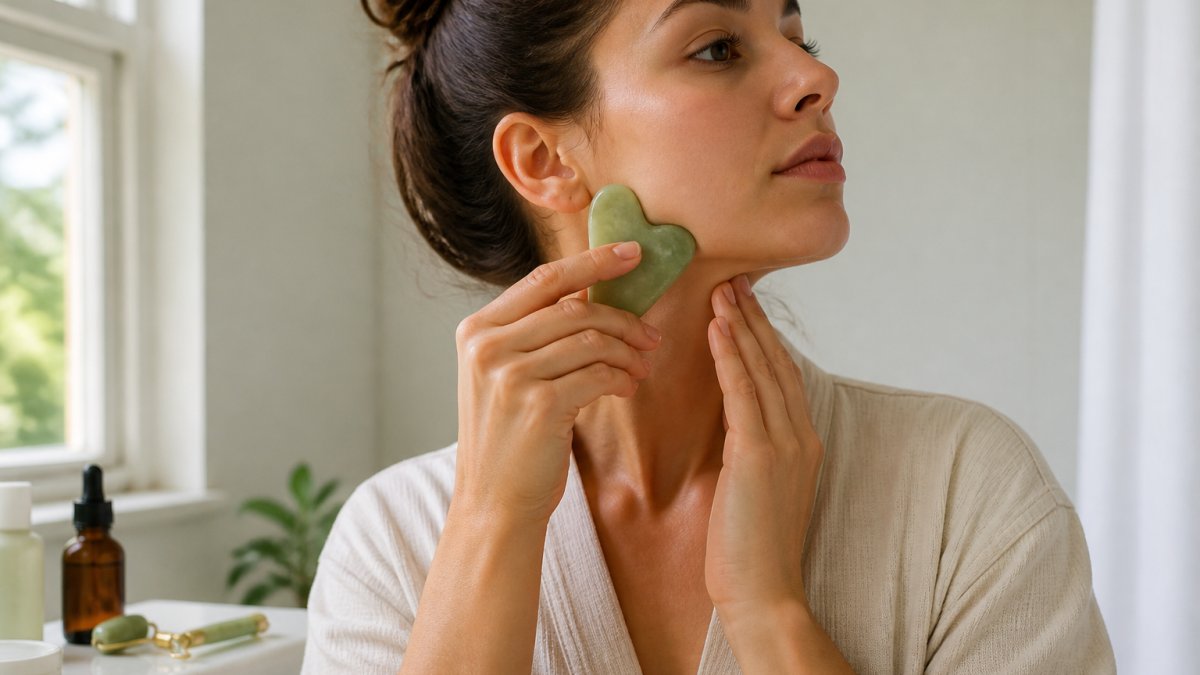
Start with your neck. Use long, upward strokes from your collarbone to your jawline. This warms up the area and promotes drainage. Move to your jawline next, using shorter strokes along the bone. Press slightly harder here, this is where you'll see the most sculpting effect.
Frequency matters. Most beginners do best with 3-5 minutes of gua sha daily or every other day. More isn't better. Overuse can irritate your skin or cause temporary redness.
The best time to use gua sha is after cleansing and before applying serums or moisturizer. Some people prefer doing it in the morning to reduce overnight puffiness. Others use it at night as part of their wind-down routine. Either works, consistency matters more than timing.
Building Your Facial Sculpting Tool Routine
A sustainable routine is one you'll actually use. Most beginners fail because they try to do too much too fast. Start with one tool and master it before adding another.
If you're starting from scratch, begin with gua sha. It requires the least commitment, costs the least, and teaches you the basics of facial massage and sculpting. Use it daily for two weeks and notice how your skin responds. Once you're comfortable, consider adding a facial roller for days when you're short on time.
If you want faster results, start with a microcurrent device instead. These deliver measurable lifting and toning, but they require more attention to technique. Follow the manufacturer's instructions carefully, using microcurrent incorrectly can cause temporary puffiness or sensitivity.
The EVERGRENE approach is to choose tools that complement your existing skincare routine. If you're already using retinol or glycolic acid serums, facial sculpting tools help those ingredients penetrate deeper and work more effectively. Apply your tool after cleansing but before active ingredients, so the massage promotes absorption without diluting the product.
A beginner-friendly routine looks like this:
- Cleanser
- Gua sha or facial roller (3-5 minutes)
- Toner or essence
- Serum (retinol, glycolic acid, or hydrating)
- Moisturizer
- Sunscreen (morning only)
This takes about 10-15 minutes total and delivers noticeable results within 4 weeks if you're consistent.
Safety, Sensitivity, and When to Avoid Facial Sculpting
Facial sculpting tools are safe for most people, but the safety profile differs sharply by tool type, and beginners often treat all tools as interchangeable. They aren't.
Manual tools (gua sha, rollers, ice rollers). These are the lowest-risk category. The main risks are friction irritation and bruising from too much pressure.
Microcurrent devices. These carry the most contraindications of any beginner tool, and the cautions are easy to miss because the devices look harmless. Avoid microcurrent if you:
- Are pregnant or nursing (unless your OB/GYN approves)
- Have a pacemaker, implanted defibrillator, or other electronic implant
- Have epilepsy or a seizure disorder
- Have active cancer or are undergoing cancer treatment
- Have metal implants, plates, or screws in the treatment area
- Have active acne, eczema, or broken skin in the treatment area
Microcurrent should not be used over the thyroid, the eyes, or the temples. If you're unsure whether a condition applies to you, ask your dermatologist before your first session, not after.
LED devices. LED is generally the most forgiving device category, but it isn't risk-free. Avoid LED if you're taking photosensitizing medications (some antibiotics, isotretinoin, and certain diuretics increase sensitivity).
Heat-based and cooling tools. Ice rollers are safe for most people but should not be applied directly to skin for extended periods, limit contact to a few minutes and never press hard on one spot.
After professional treatments. Wait at least one week after a chemical peel, laser treatment, microneedling, or injectable before resuming any facial sculpting tool.
When to seek professional advice. Talk to a dermatologist before starting if you have a diagnosed skin condition (rosacea, eczema, psoriasis, melasma), are on prescription topicals, have had recent facial procedures, or are considering a microcurrent device and have any implanted medical device. A five-minute conversation can save you weeks of irritation.
Cold or flu symptoms sometimes make facial massage uncomfortable. If your skin feels tender or inflamed, skip your routine that day. Consistency over weeks matters far more than daily perfection.
Common Beginner Mistakes and How to Avoid Them
The most common mistake is using too much pressure. Beginners assume harder pressure means better results. It doesn't. Gentle, consistent pressure works better and won't irritate your skin. Think of gua sha as a massage, not a scrub.
Another frequent error is inconsistency. You can't use a facial sculpting tool once and expect results. These tools work through repetition. Aim for at least 3-4 sessions per week to see meaningful changes. Once you see results, you'll be motivated to keep going.
Many beginners also skip the basics. They buy an expensive microcurrent device without learning proper technique, then wonder why they don't see results. Start simple. Master gua sha or a basic roller first. Then layer in more advanced tools.
Using facial sculpting tools on dirty skin is another common mistake. Always cleanse first. Massage on clean skin allows better contact and prevents dragging bacteria across your face.
Finally, beginners often expect overnight results. Facial sculpting works, but it takes time. Expect to see subtle improvements in puffiness within days and more noticeable lifting and definition within 3-6 weeks. Patience and consistency beat expensive shortcuts every time.
Frequently Asked Questions
Do facial sculpting tools actually work, or are they just a trend?
Facial sculpting tools can improve lymphatic drainage, reduce puffiness, and enhance product absorption into the skin. Results depend on consistent use and proper technique. Many users report a more sculpted appearance and improved skin texture within 2-4 weeks of regular use, though individual results vary. The key is choosing a tool suited to your skin type and using it correctly, not all devices work the same way.
What should I apply before using a facial sculpting tool?
Apply a hydrating serum, facial oil, or lightweight moisturizer before using any facial sculpting tool. This reduces friction, allows the tool to glide smoothly, and helps your skin absorb active ingredients more effectively. Avoid using tools on completely dry skin, as this can irritate sensitive areas. A facial mist or hydrating essence also works well, especially if you prefer a lightweight application.
How often should beginners use a facial sculpting tool?
Start with 2-3 times per week for 5-10 minutes per session. As your skin adapts, you can increase to daily use if desired. More frequent use doesn't always mean better results, consistency matters more than duration. If you experience redness or sensitivity, reduce frequency and check that you're using gentle pressure. Listen to your skin and adjust based on how it responds.
Can I use gua sha and facial rollers together in the same routine?
Yes, you can combine them, but use them strategically. Gua sha tools are better for sculpting and targeting specific areas like the jawline, while facial rollers excel at lymphatic drainage and covering larger areas. Apply your serums first, use the roller for 2-3 minutes to boost circulation, then follow with gua sha on areas needing extra sculpting. Keep the total routine under 15 minutes to avoid over-stimulating your skin.
Facial sculpting doesn't have to be complicated. With the right tool and a clear routine, you can see real results at home. EVERGRENE's curated collection of facial sculpting tools and complementary serums, including our glycolic acid and retinol formulations, helps you build a routine that actually works. Start with one tool, use it consistently, and let your skin show you what's possible.